


Key actors — tap for context

Donald Trump
47th President of the United States, celebrating his 80th birthday
Why here: Downplayed the reason for the Israeli strike and urged all sides to back down — he wants to secure the deal in time for his birthday.
More info →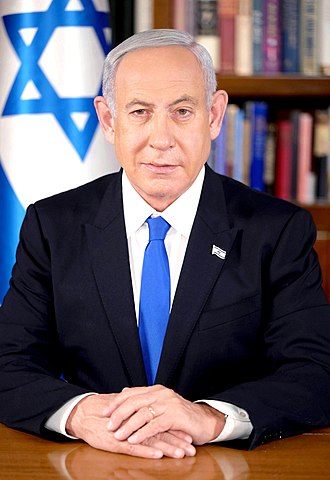
Benjamin Netanyahu
Prime Minister of Israel
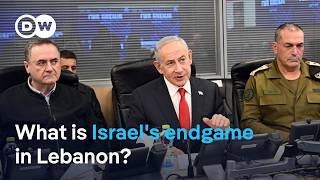
Why here: His office claimed responsibility for the strike on Dahiyeh; Israel is not a party to the deal and refuses to withdraw from Lebanon.
More info →
Mohammad Bagher Ghalibaf
Speaker of Iran's Parliament
Why here: Directly linked the strike on Beirut to the negotiations and called the path to a deal "impossible."
More info →
Abbas Araghchi
Iran's Foreign Minister
Why here: Made the deal conditional on Israel halting its strikes in Lebanon.
More info →Hezbollah
Lebanese pro-Iranian movement and Tehran's strongest ally in the region
Why here: Its fire on Israel triggered the strikes; Israel and the US frame its disarmament as a key condition for peace.
More info →
Joseph Aoun
President of Lebanon
Why here: Warned that the country stands at a "fateful crossroads" between being a sovereign state and being "held hostage by militias."
More info →What happened in Dahiyeh
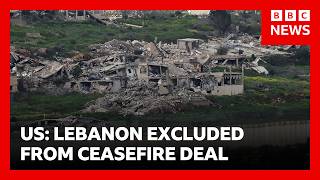
Israeli fighter jets struck the Ghobeiry district, which the military described as a Hezbollah command center. The office of Prime Minister Benjamin Netanyahu stated that "all targets belonged to the Hezbollah terrorist organization" and that the attack was a response to the group's fire on Israeli territory; according to the military, Hezbollah had earlier fired rockets at northern Israel. Euronews/AP ↗It was already the second airstrike of the weekend. Saturday's strikes in southern Lebanon killed at least five people, including the mayor of the town of Ar-Rihan, and on Sunday the Israeli military expanded its evacuation warnings to 29 towns. Grief and fear thus once again settled over areas that Hezbollah has used as its stronghold for years. Al Jazeera ↗
Trump caught between an ally and his own deal
The White House's response exposed the core of the problem. Israel is not a party to the US-Iran deal, and its leaders keep repeating that they will not withdraw from Lebanon — so on the very day he wanted to announce a peace deal, Trump publicly pressured his closest ally. "We are very close to a deal that will bring peace to the region, including Lebanon, and all sides should back down," he wrote on Truth Social. Fox News ↗At the same time, the president downplayed the very reason for the strike: according to him, the Hezbollah attack that the Israeli military cited had injured or killed no one and "should not disrupt this important process." He thus publicly questioned the justification for his own ally's action — showing both how badly he needs the escalation not to derail the deal announced for his 80th birthday, and how limited his ability to influence Israel is at this moment.
Why Lebanon is deciding the fate of the American deal
For Tehran, Lebanon is not a side front but leverage. Hezbollah is Iran's strongest ally in the region, and Foreign Minister Abbas Araghchi already said on Friday that although the deal "has never been closer," Tehran "will not abandon Lebanon" and will not accept a deal that allows Israel to keep attacking. Al Jazeera ↗The risk is not theoretical. The last time Israel struck Beirut's suburbs — a week ago — Iran responded with missile strikes on Israeli territory. That is precisely why Sunday's attack on Dahiyeh is more dangerous than its scale would suggest. CNN ↗
Also read: The US-Iran deal is to be signed today, Hormuz is to reopen right after
Beirut at a "fateful crossroads"
Pressure is also rising within Lebanon. President Joseph Aoun declared on Saturday that the country is at a "fateful crossroads" and must decide whether it will be "a sovereign state with a monopoly on weapons" or remain "hostage to the logic of militias." His words are aimed at Hezbollah, whose disarmament, under the Israeli and American framing, is one of the key — though unspoken — conditions of the entire peace process. Euronews/AP ↗What hotinfo is watching
- Whether Iran will actually walk away from the talks after Beirut, or use the strike only to negotiate better terms.
- Whether Israel will ease up under Trump's pressure, or bypass the deal with its own escalation in Lebanon.
- Iran's response — a repeat of last week's missile strikes would likely bury the deal.
- A test of real American influence over an ally, if Netanyahu rejects the call to back down.
- The fate of the 60-day window on the nuclear program and the question of Hezbollah's disarmament.