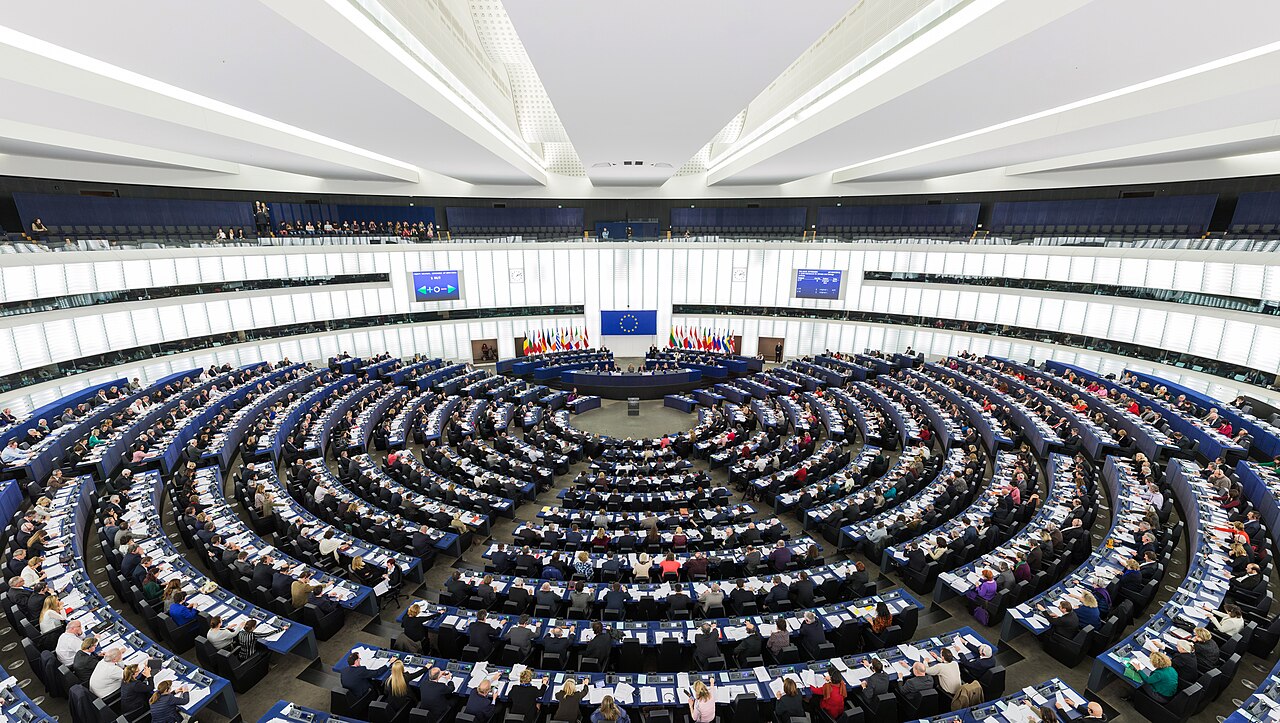







NATO told the British BBC that the founding treaty "contains no provision for suspending membership or for expulsion." A legal instrument for punishing Madrid through the alliance therefore does not exist. BBC ↗
The second part of the email — reassessing American support for British sovereignty over the Falklands — is, however, a different matter. There, according to experts contacted by the BBC, Washington does have diplomatic leverage and has been using it for decades; at a time of Trump's rapprochement with Argentine President Javier Milei, it could become a real point of pressure. BBC ↗
An article about NATO that isn't in the treaty
The 1949 Washington Treaty recognizes only voluntary withdrawal after a twenty-year period. There is no mechanism there for expelling or suspending a member. In the alliance's seventy-six years of existence, no member has ever been expelled. BBC ↗Two historical parallels show the limit. France left NATO's integrated military structure voluntarily in 1966, and Paris managed to retain full political membership. Greece withdrew from the structure in 1974 after the Cyprus crisis and returned six years later. Both cases were decisions made by the governments in Paris and Athens — not an external sanction.
Why Washington is angry
The context is specific. According to the BBC, the US and Israel attacked Iranian nuclear facilities in late February 2026, and Tehran subsequently restricted shipping through the Strait of Hormuz. The Pentagon expected broader support from its European allies. Spain refused to make its air bases available for strikes against Iran, even though it hosts two American military facilities — Naval Station Rota and Morón Air Base. BBC ↗Trump wrote last month that NATO is a "one-way street" — "we'll protect them, but they won't do anything for us." According to Reuters, the Pentagon email proposed that access, bases, and overflight rights (ABO) are the "absolute baseline" expected from allies; those who fail to provide them should be sidelined from important positions within the alliance. BBC ↗
Reactions: a unity that is holding so far
Spanish Prime Minister Pedro Sánchez rejected the statement, saying his government "does not work on the basis of emails, it works with official documents and positions of the US government." Italian Prime Minister Giorgia Meloni, at the EU summit in Cyprus, called on the alliance to "stick together" and reminded that NATO is a "source of strength" and that the European pillar must complement the American one. A spokesperson for the German government added at a press conference in Berlin: "Spain is a member of NATO. I see no reason why that should change." BBC ↗British Prime Minister Keir Starmer refused broader involvement in the war with Iran, saying it was "not in Britain's interest." RAF aircraft did take part in shooting down Iranian drones, and Britain's bases are used by the US, but London refused to participate in the blockade of the Strait of Hormuz. BBC ↗
Pentagon spokesperson Kingsley Wilson did not directly confirm the existence of the email, but by saying "we have no further comment on internal deliberations of this nature," she also avoided directly denying it. BBC ↗
The Falklands: here leverage really does exist
The Falkland Islands are in a different legal situation. The official American position for decades has been "neutrality while maintaining recognition of British control." The practical effect, however, is clear: according to James Rogers of the London-based Council on Geostrategy, American diplomats "systematically soften or block resolutions pushing Argentine sovereignty" both at the UN and at the Organization of American States. BBC ↗Ed Power of the British institute RUSI told the BBC that a change in the American position would be "quite significant" — it could trigger a chain of reactions in other states leaning toward Argentine claims. The difference between actively blocking a resolution at the UN and passively "not blocking" is real diplomatic leverage. BBC ↗
An ideological factor has also entered the equation: Argentine President Javier Milei and Trump describe each other as allies. Milei announced back in April 2024 a "roadmap" for peacefully regaining the islands. Downing Street responded strictly on Friday — sovereignty over the Falklands "rests with the United Kingdom," and this position has "been repeatedly and clearly communicated to every US administration." BBC ↗
A precedent that the NATO treaty will not resolve
The email — combined with Trump's repeated statements about NATO as a "one-way street" — signals a shift for which the alliance treaty itself provides no tool. For countries the US wants to punish directly within NATO's structure, the treaty remains a barrier. For action outside it — in UN votes, in bilateral diplomacy, in supporting third parties' territorial claims — the treaty imposes no limitation.In practice, this means a difference between a threat and actual leverage: against Madrid, the legal instrument is missing; against London, Washington retains a passive but effective step — to stop blocking Argentine diplomatic initiatives.
What hotinfo is watching
- Charles III and Camilla in the US, meeting Trump (Monday April 27) — the White House response on the Falklands
- Whether the email is reflected in official documents or votes
- How durable Madrid–Rome–Berlin unity proves on a concrete American initiative
- Spain (Sánchez) — further pressure from the Pentagon, announcements at the NATO summit
- Argentina (Milei) — a new initiative on the Falklands→ Izraelský minister žiada uznať Falklandy za argentínske. Ropu pri nich má ťažiť…Milei ohlásil sankcie na firmy pripravujúce ťažbu pri Falklandách a Argentína oznámila trestné oznámenie na izraelskú Navitas Petroleum.