Druzhba and the 90 billion — the condition Orbán said out loud
The flow of oil through Ukraine had been interrupted since January, when Kyiv reported infrastructure damage following a Russian strike. Hungary and Slovakia thus went nearly three months without receiving Russian oil via Druzhba, and Orbán had blocked the EU's 90-billion loan for Ukraine since February. On April 19, the Hungarian prime minister explicitly said: "If there's no oil, there will be no money. As soon as supplies resume, we will stop blocking approval of the loan." Kyiv Independent ↗On April 21, Zelensky announced that the repair could be completed. Both Bloomberg and Al Jazeera noted that this was a partial repair, sufficient to restart flow but not a full restoration of the infrastructure. Al Jazeera ↗ Meduza ↗ Flow through the Ukrainian section resumed on April 22, and deliveries to Slovakia and Hungary were reported on April 23. Reuters ↗ NBC News ↗
Cyprus, which holds the EU Council presidency, meanwhile added approval of the loan to the ambassadors' meeting agenda even before Zelensky formally announced the repair. Euronews ↗ At the meeting on April 23, both Hungary and Slovakia withdrew their vetoes; the loan passed along with the 20th package of sanctions against Russia. AP ↗ Bloomberg ↗ Of the 90 billion, 45 billion is to fall in 2026 — 16.7 billion as financial support and 28.3 billion as military support; the first tranche will arrive, according to Zelensky, in May–June.
The EU has not officially confirmed a direct causal link between the resumption of Druzhba and the release of the loan. The loan passed through the standard ambassadors' consensus procedure, and in its official communication Brussels speaks only of the withdrawal of the Hungarian and Slovak vetoes. The timing overlap is evident, and Orbán himself publicly mentioned the condition — but formally these are two processes that intersected within a single week.
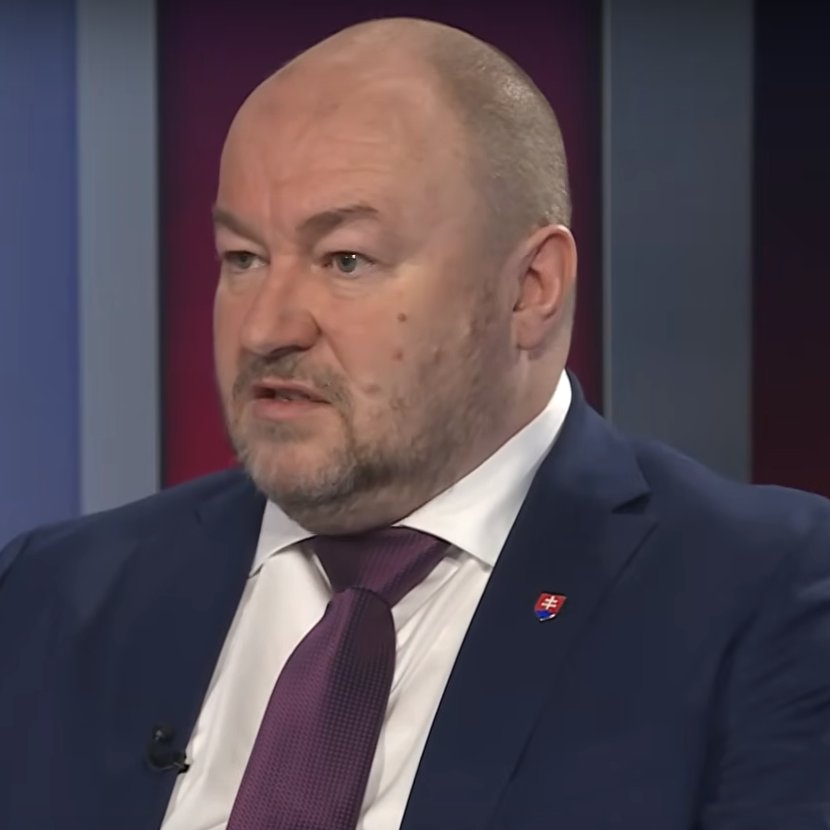
Slovak Prime Minister Robert Fico, commenting on the whole episode to Reuters, said he considered the pipeline blockade to be politically motivated. Reuters (via U.S. News) ↗ Context: Druzhba Czechia–Slovakia, as covered by HotInfo
Orbán's era cracks — Brussels breathes a sigh of relief, Kyiv should not harbor illusions
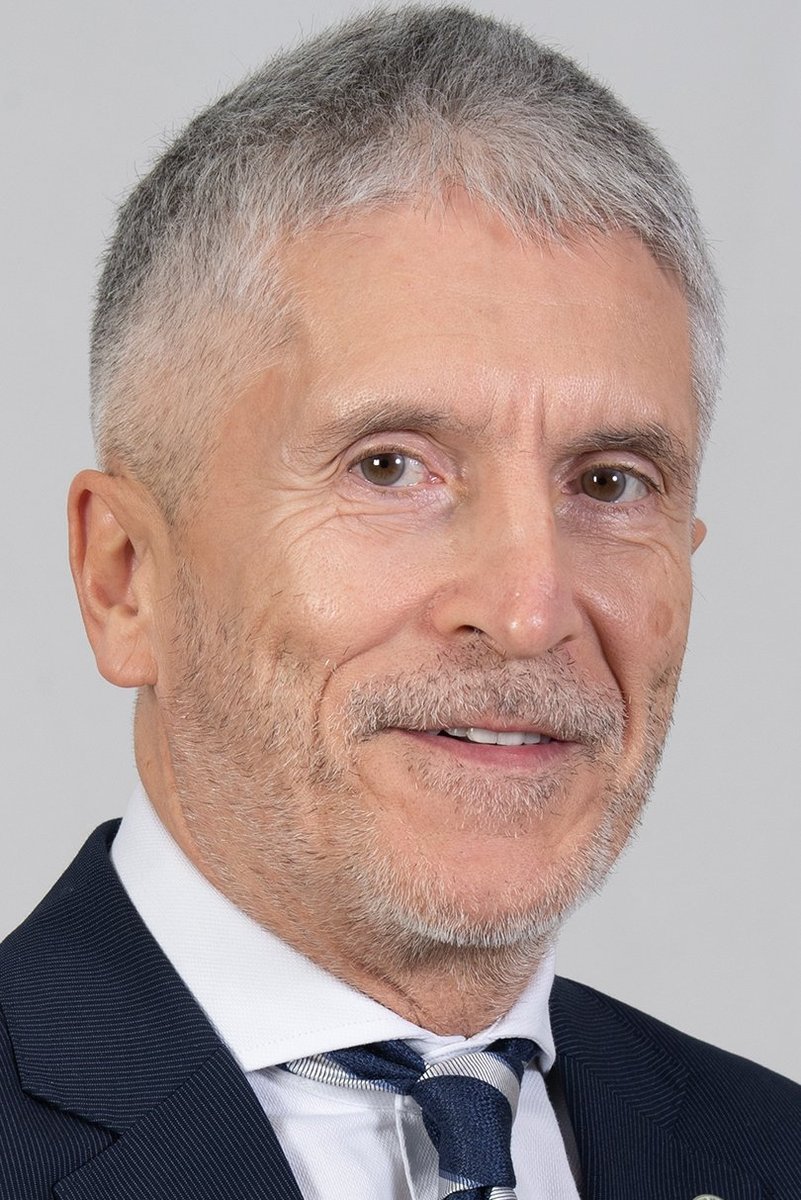
For the first time in 16 years, Orbán was absent from an EU leaders' summit. Bloomberg ↗ Brussels Signal ↗ According to official communication from the Budapest government, he did not attend due to "duties related to the transfer of government." Hungary Today ↗ Bloomberg added that his absence also comes amid reports that confidential EU documents were allegedly being passed to Russia via officials linked to his government — however, this was not officially cited as the reason for his non-attendance.Viktor Orbán remains the outgoing prime minister in his final months in office. Péter Magyar, winner of the April 12 election, will only take office once parliament is constituted. Kyiv Independent ↗
Von der Leyen, Macron, Merz, and Tusk publicly welcomed Magyar's victory. "Hungary has chosen Europe," von der Leyen wrote. CNBC ↗ Kyiv picked up on the tone and projected its hopes onto it: at the Cyprus summit, Zelensky spoke of "months" until accession negotiations open. However, a Carnegie Endowment analysis from April 15 warns against overestimating this: "Tisza [Magyar's party] did not campaign on a pro-Ukrainian agenda and will have to work with a skeptical public. Magyar rules out any form of accelerated membership for Ukraine, opposes Hungarian military aid to Kyiv, and plans to tie Ukraine's EU accession to a referendum in Hungary." Carnegie Endowment ↗ The Kyiv Independent summed up the same idea with the headline "Relief in Brussels, reality for Ukraine."
"Donnyland" — a flattery from internal discussions
The New York Times reported on April 21–22 that Ukrainian negotiators, in internal discussions, considered renaming part of Donbas "Donnyland" — a flattery meant to turn Donald Trump against Russian territorial demands. According to TIME, which the NYT cites, the proposal was formulated "partly as a joke, partly as a diplomatic gesture"; one of the negotiators reportedly had a flag and anthem for "Donnyland" generated via ChatGPT. Both TIME and the Kyiv Independent emphasize that the proposal remained in discussions, not in official documents. TIME ↗ Irish Times ↗Zelensky remarked to journalists: "The main thing is that Donetsk and Luhansk remain Ukraine — and that it's not 'Putinland.' That's the most important thing." Kyiv Independent ↗ So Kyiv neither officially confirms nor clearly denies "Donnyland."
Tension with Washington is meanwhile growing. American negotiators Steve Witkoff and Jared Kushner were supposed to visit Kyiv after Easter, April 12 — but by the end of the week Zelensky told the Kyiv Independent that "it's hard to say whether the visit will even take place." Kyiv Independent ↗ At the same time, Ukrainian Foreign Minister Andrii Sybiha reports that Ukraine, in his view, holds "the strongest position on the front in the past year" — this is Kyiv's own assessment, which independent analysts (ISW, DeepState) have not yet confirmed in this wording. The Defense Post ↗
Under the radar — four things that got lost in the Druzhba agenda
Arrest near Neuendettelsau. On April 12, German police detained a 43-year-old Ukrainian citizen and a 45-year-old Latvian citizen during a traffic stop on a highway in Bavaria. Their vehicle contained a drone, GPS trackers, radios, multiple phones, SIM cards, and forged documents. Police are investigating possible intelligence activity; an official prosecutorial indictment, as well as any link to a specific foreign service, has not yet been confirmed. Kyiv Post ↗ Militarnyi ↗ The story received only marginal coverage in Slovak and Czech media.Drones and missiles near Chernobyl. On April 22, Kyiv announced that Russian drones and missiles had repeatedly flown near the decommissioned nuclear power plant. According to a Ukrainian prosecutor, this constitutes repeated violations of nuclear facility security and a risk of a major accident. Reuters ↗ The Western press dropped the topic from front pages a day later — regardless of the fact that another accident scenario at Chernobyl would also have consequences for Central Europe.
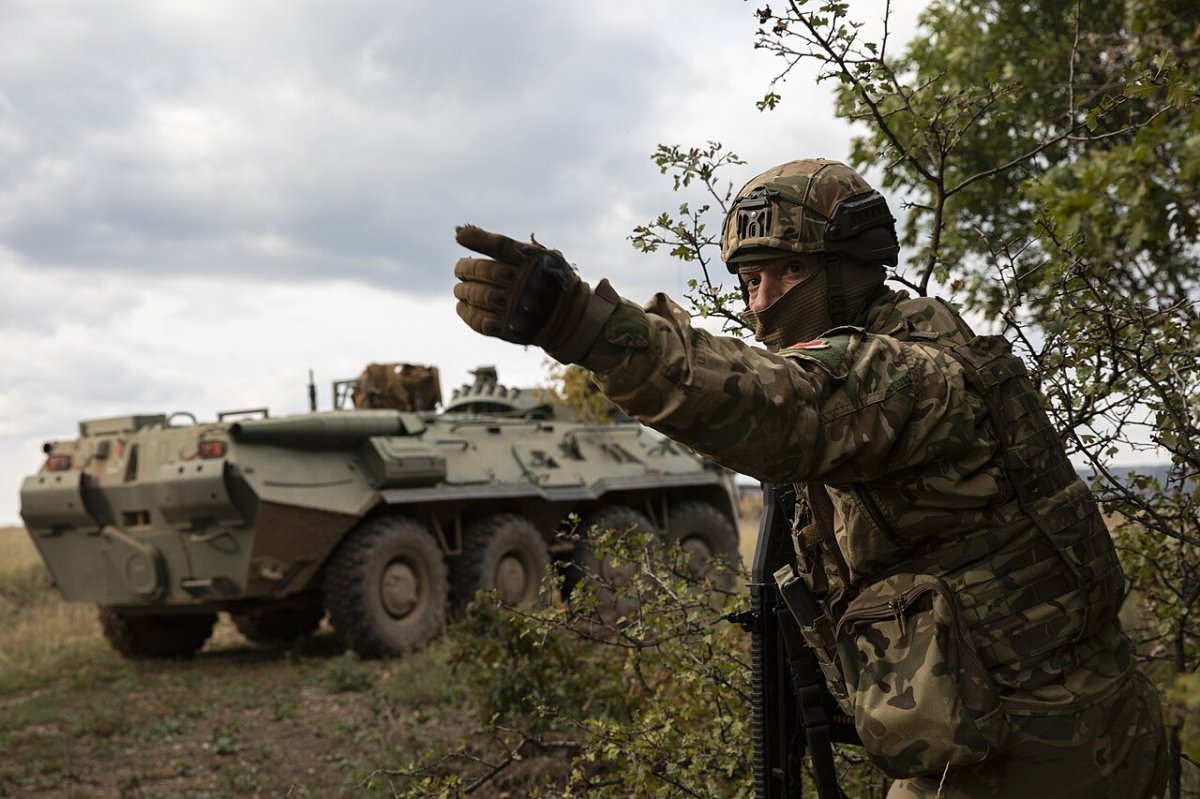
Russian interceptor "Yolka" is no longer just in OSINT. The Russian army has begun testing a cheap kinetic drone called "Yolka," designed to destroy enemy drones through pure impact, without explosives. It was also covered by specialized defense outlets The Defense News and Defence Blog; footage shows an integrated configuration with a launcher and radar from the company Yumirs. A Russian air-defense unit commander claims a hit rate of up to 90%, which is not independently verified. The drone weighs 1.3 kg, has a range of up to 3 km, and a speed of up to 230 km/h. The Defense News ↗ Defence Blog ↗ Meanwhile, according to Forum24, Ukraine is replacing soldiers with combat robotic systems in exposed sections of the front. Forum24 ↗
Bundeswehr digs trenches in Poland. Berlin announced in December 2025 that it would send an initial contingent of 50 Bundeswehr military engineers to Poland's *Eastern Shield* project. The unit is due to arrive in April 2026 and remain until 2027; it will build anti-tank trenches, barbed wire, and concrete bunkers along Poland's eastern border with Belarus and the Kaliningrad region. This marks the first Bundeswehr deployment for the construction of permanent fortifications on Polish soil since German reunification. Notes from Poland ↗ Militarnyi ↗ At the same time, Lithuania is investing 100 million euros in a new training area near Kapčiamiestis, at the heart of the Suwałki Corridor. Anadolu Agency ↗ On April 24, HotInfo mapped the Suwałki Corridor in more detail.
What hotinfo is watching
Witkoff, Kushner, and Budanov. The American delegation may reach Kyiv in the coming weeks — or may not. Zelensky openly says the format is still unclear. Meanwhile, the head of Ukrainian military intelligence, Kyrylo Budanov, assures domestic media that Ukraine has a "tough position on the territories." Between Budanov's statements and the "Donnyland" proposal lies an internal debate over the limits of concessions.Turkey as host of a Putin–Zelensky summit. On April 22, Kyiv asked Ankara to mediate a possible meeting. Without Erdoğan's "yes," Trump's plan has nowhere to land.
Fico's trip to Moscow. Estonia refused him airspace access on April 19, so Slovakia's prime minister has to fly by a roundabout route. Whether he ultimately reaches Putin — and what he comes back with — will be a signal of how far Slovak foreign policy has shifted with regard to Brussels.
Assessment of the front. The next independent analyses (ISW, DeepState, European military centers) will show how much of Sybiha's optimism is reality and how much is diplomatic language ahead of the Witkoff–Kushner visit.