





According to the Jewish Telegraphic Agency (JTA), the Israeli army rejects the film’s claims. It reportedly says they take out of context the routine military assessment of whether the benefit of striking a target outweighs the collateral damage caused by an attack. The film does not disclose the witnesses’ names. Among Slovak media, the SITA news agency has so far reported on it. JTA ↗ SITA ↗
Key actors — tap for context
NAZA
A Hebrew military acronym used euphemistically by the Israeli army for civilians whose deaths it expects in an attack.
Why here: It is the film’s title and the word around which the witnesses’ accounts revolve.

Yuval Abraham
An Israeli journalist and director, and one of the four authors of the documentary No Other Land, which won an Oscar in 2025.
Why here: He co-directed NAZA and conducts all the interviews with the witnesses in it.
More info →
Rachel Szor
An Israeli director and cinematographer, also a co-author of the Oscar-winning documentary No Other Land.
Why here: She co-directed and filmed NAZA with Abraham.
More info →
The Guardian
A British daily that, together with the Israeli media +972 and Local Call, has published investigations since 2023 into how the Israeli army selects targets in Gaza.
Why here: It produced the film, so it is not an independent source confirming its claims.
More info →
Israel Defense Forces
The official name of the Israeli army.
Why here: According to JTA, they reject the film’s claims as taken out of context.
More info →Lavender
An Israeli army database system that, according to testimonies published in April 2024, identified up to 37,000 potential targets with links to Hamas at one stage of the war.
Why here: The film builds on this and other revelations.
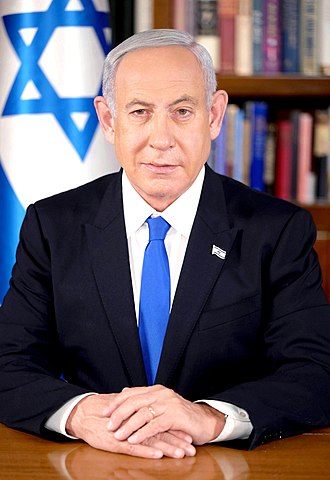
Benjamin Netanyahu
Israel’s prime minister.
Why here: According to The Guardian, several witnesses served in a secret unit reporting directly to his office.
More info →Jonathan Glazer
The British director of the Oscar-winning film The Zone of Interest.
Why here: He produced NAZA as an executive producer.
More info →
Peter Bradshaw
A film critic for the British daily The Guardian.
Why here: In his review, he too points out the film’s weaknesses.
More info →
Hamas
A Palestinian militant movement that led the attack on Israel on 7 October 2023.
Why here: According to the witnesses, the systems described in the film targeted its low-ranking members.
More info →
Venice Film Festival
An international film festival whose 83rd edition ends on Saturday, 12 September, with the award of the Golden Lion.
Why here: NAZA is the only documentary among the 21 films in the main competition.
More info →What the witnesses describe
Abraham and Szor collected the interviews over three years. Most of the witnesses are intelligence officers whose work took place remotely: they monitored people, selected targets and decided on strikes. JTA ↗The interviews were filmed at night on rooftops in Tel Aviv. The witnesses’ faces are in shadow, their voices digitally altered, and even their handwriting is made unrecognisable when they draw for the directors how the systems worked. One of them explains at the very beginning that he would go to prison in Israel for these words. Welt ↗ Tagesspiegel ↗
According to the testimonies, the army used artificial-intelligence systems designed to find large numbers of potential low-ranking Hamas members. It hacked into their phones to determine where they were and secretly listened to their conversations with their wives and children just moments before they all died. The Guardian ↗
The Guardian film critic Peter Bradshaw describes how, according to the film, it works. The programme analyses how known Hamas members make phone calls and, among tens of thousands of monitored phones, searches for those behaving similarly. The army then attacks their owners, usually at night and in apartments whose locations it has already mapped precisely. One witness speaks of a permitted error rate of up to 15 percent—the proportion of people who end up on the list by mistake. The Guardian ↗ Welt ↗
According to officers quoted by Reuters, all that was needed to launch an airstrike was for a child’s phone to pick up the phrase "daddy's home". The Jerusalem Post ↗
How many civilian deaths they anticipated
In the film, the word NAZA denotes a number: the estimated number of civilians an attack is expected to kill. One witness speaks of twenty per attack, but Bradshaw notes that this number is at least flexible. The Guardian ↗According to the German daily Welt, the witnesses describe different quotas depending on how important the target was. When attacking a Hamas commander, the army sometimes accepted as many as 500 deaths among people who had nothing to do with him. Abraham summed it up for Reuters in these words: "Sometimes it can be 500 NAZA ... destroying entire villages or entire neighborhoods." Welt ↗ The Jerusalem Post ↗
When the Israeli media +972 and Local Call published testimonies about the Lavender system in April 2024—material The Guardian had also obtained in advance—the sources said that in the first weeks of the war they were permitted to kill 15 to 20 civilians in airstrikes on low-ranking militants. Experts in international humanitarian law told The Guardian at the time that they were alarmed that the army had pre-authorised up to 20 civilian deaths for low-ranking militants, and noted that armies must assess proportionality for each individual attack. The Guardian ↗
The witnesses also speak in the film about destroying neighbourhoods where, according to army estimates, up to a quarter of the residents might still have been in their homes, about the systematic burning of civilian homes and about killing civilians at a food distribution point. According to Welt, a former sniper describes shooting at people standing in line for food. The Guardian ↗ Welt ↗
Officers quoted by Reuters also describe the killing of civilians in prohibited zones, which Israel declared, for example, around aid distribution centres. According to one of them, residents were not told where those zones were. "They have to learn with blood," he said. The UN Office of the High Commissioner for Human Rights stated in June 2025 that the Israeli army had killed at least 410 Palestinians trying to obtain aid at the new distribution centres. Israel acknowledged that civilians had been harmed at distribution centres and said it had adjusted its rules of engagement. The Jerusalem Post ↗ UN in Palestine ↗
Who the witnesses are and how they speak
According to The Guardian, several witnesses served in a secret intelligence unit reporting directly to the office of Prime Minister Benjamin Netanyahu. One said its mission was to "thwart peace". Bradshaw describes it in his review as a unit unofficially loyal to Netanyahu personally, which allegedly used dirty tricks to undermine international human-rights bodies. The Guardian ↗ The Guardian ↗At a press conference in Venice, Abraham said the officers had simply been asked to describe what they had done and draw how the systems worked. "Some of them did not express remorse and some did. Some spoke out of indifference, some out of pride." The Guardian ↗
The testimonies include lines such as "I’m just a small cog" and "I can only say that we are carrying out a mission." According to Welt, the witnesses stress that their units contained no people who hated Arabs, while acknowledging that they felt something like amusement and euphoria during drone strikes. Speaking about mass surveillance, one says: "You feel a bit like God." Tagesspiegel ↗ Welt ↗
One soldier recalls visiting a concentration camp in Poland. He still considers the Nazis evil, he says, "but what does that make me?" The directors cut into the account footage of a minute of silence in Tel Aviv on Holocaust Remembrance Day. According to Abraham, the comparison did not come from the filmmakers: "It's a link that comes from the soldiers." Welt ↗ El País ↗ The Jerusalem Post ↗
What the film is based on
NAZA follows revelations published between 2023 and 2025 by the Israeli-Palestinian magazine +972, the Hebrew-language website Local Call and The Guardian. Paul Lewis, The Guardian’s investigations editor and one of the executive producers, describes the film as the culmination of "years of painstaking work to uncover and verify the systems used by Israeli military intelligence in Gaza". The Guardian ↗The Guardian produced the film with James Wilson, and its executive producer is Jonathan Glazer. They are the team behind the Oscar-winning film The Zone of Interest about complicity in the Nazi era. The Guardian ↗ JTA ↗
In the programme published roughly a month before the festival began, the Venice Film Festival left a blank slot for Thursday, 10 September, with a note saying the film would be announced. Organisers responded to questions only vaguely, citing security reasons, and revealed the film’s title only at the end of August. Welt ↗
In a joint statement, the directors write that the film does not focus on "sporadic war crimes committed by rogue soldiers", but "on the orders themselves, the policies, the accepted practices, the language and logic that make those practices possible, and the people who operate within them". They openly state that it depicts military systems with which, according to a UN commission and leading human-rights organisations, genocide was committed. The Guardian ↗
Israel’s response
According to JTA, the Israeli army, officially the Israel Defense Forces, criticises the film for taking out of context the routine military assessment of whether the benefit of an attack outweighs the expected collateral damage. Reuters reported on 10 September that the army had not immediately responded to its request for comment. Israel has long maintained that it does much to avoid civilian casualties and that Hamas exploits civilians as human shields in densely populated areas, which Hamas denies. JTA ↗ The Jerusalem Post ↗The army gave a more detailed response concerning these systems in April 2024, after testimonies about Lavender were published. It described the system as a database for linking intelligence sources, not a list of confirmed militants who could be attacked. "The IDF does not use an artificial intelligence system that identifies terrorist operatives or tries to predict whether a person is a terrorist," it said at the time. "Information systems are merely tools for analysts in the target identification process." The Guardian ↗
According to its statement at the time, its procedures require a separate assessment of the expected military advantage and collateral damage for every attack, and the army does not strike if the collateral damage would be excessive in relation to the military advantage. "The IDF outright rejects the claim regarding any policy to kill tens of thousands of people in their homes," it added. The Guardian ↗
The war was triggered by the Hamas-led attack of 7 October 2023, in which more than 1,200 people were killed in Israel and militants abducted 251 people to Gaza, most of them civilians. According to health authorities in Gaza, more than 73,000 Palestinians have been killed in Israeli attacks since then. The Guardian ↗ Index.hr ↗
How the film was received
According to Variety, the audience in Venice applauded for 24 and a half minutes. It was the longest standing ovation in the festival’s history and apparently the longest at any major film festival. During it, Glazer hugged the directors and some viewers raised Palestinian flags. Variety ↗ The Guardian ↗Many critics received the film enthusiastically. France’s Libération called it a fundamental documentary in its headline, Le Monde wrote that it lands like an uppercut, and Spain’s El Mundo gave it five stars. Libération ↗ Le Monde ↗ El Mundo ↗
Austria’s Der Standard wrote that the audience in Venice may have witnessed a historic moment, while the American The Hollywood Reporter said the film deserved to enter history just like Claude Lanzmann’s Shoah. Der Standard ↗ The Hollywood Reporter ↗
More reserved was Germany’s Welt, which called it in its headline Venice’s new scandal film. According to the paper, the film will be attacked as partisan because, although it mentions the 7 October attack at the beginning, it does not address Israel’s self-defence arguments at all. Welt called it an explicitly activist film aimed at ending the method of warfare it depicts, and said it answers the question of genocide indirectly and suggestively. Welt ↗
Austria’s Die Presse pointed out that an investigation based on anonymous informants leaves many things in the dark—literally as well. Die Presse ↗
The Guardian’s own reviewer also has reservations. According to Bradshaw, anonymity weakens the weight of the testimonies, although he acknowledges that speaking publicly would be extremely dangerous for the witnesses. He considers the comparison with Nazism made by one of them ahistorical. The Guardian ↗
The filmmakers have experience with the German-speaking world. When No Other Land won the documentary award at the Berlinale in 2024, Abraham called the Israeli occupation of the West Bank apartheid in his acceptance speech, and the festival found itself in a political crisis. According to Die Presse, several German politicians called the enthusiastic applause the filmmakers received antisemitic. Welt ↗ Die Presse ↗
In its headline, the Jewish Telegraphic Agency JTA describes it as a documentary alleging that Israel committed wanton killing in Gaza. In the Czech Republic, iROZHLAS analysed the film, writing that "a piece of shrapnel has landed in Venice’s main competition", and Aktuálně.cz also carried the report. JTA ↗ iROZHLAS ↗ Aktuálně.cz ↗
Read also: What Europe is writing about: Pavlohrad under attack, Vance the favourite for 2028, Israel shook Lebanon
What happens next
Welt writes that many consider the film a favourite for the Golden Lion, and Der Standard says it is almost certain to win some kind of Lion, gold or silver. The jury will present the awards on Saturday, 12 September. A year ago in Venice, the second-highest prize, the Silver Lion, went to The Voice of Hind Rajab, a film by a Tunisian director about a Palestinian girl who was killed when Israeli soldiers opened fire in Gaza. The Israeli army ordered a criminal investigation into her death only this August. Welt ↗ Der Standard ↗ Al Jazeera ↗The film arrives less than seven weeks before elections to the Israeli parliament, scheduled for 27 October. Abraham does not expect the testimonies to influence the election. In his view, the wall of denial in Israel is very thick and will take years to break through. Welt ↗ Il Sole 24 Ore ↗
The film will next be shown at the San Sebastián Festival, and the distributor will send it to Italian cinemas from 28 to 30 September. La Vanguardia ↗ Il Sole 24 Ore ↗
Limits of this perspective
HotInfo has not seen the film. This account is based on an article by The Guardian, which produced the film, reports by Reuters and JTA, and reviews by critics who saw it in Venice.The witnesses are anonymous, and the public cannot verify either their identities or their roles. The Guardian says it has been exposing and verifying the systems for years, but it is also the film’s producer and publisher of the original investigations, so its verification is not independent confirmation. Figures such as a 15 percent error rate or 500 casualties in a single attack are presented in the reviews as statements by individual witnesses, not as data from documents.
The mere calculation of expected civilian casualties is not proof of a crime. International humanitarian law prohibits attacks in which expected civilian losses would be excessive in relation to the military advantage, and proportionality must be assessed separately for each attack. The Israeli army says that is precisely what it does. The dispute concerns how high a number of casualties it was prepared to accept and whether civilians’ deaths were a side effect or part of a system. The Guardian ↗
The film advances a clear thesis. The filmmakers speak of genocide and, according to Welt, do not address Israel’s self-defence argument. The Guardian’s reviewer also rejected the comparison with Nazism, although he considers the film a chilling testimony to what is happening in Gaza. Welt ↗ The Guardian ↗
Illustrative photo: the film’s directors Rachel Szor and Yuval Abraham at the Venice Film Festival on 10 September. Photo LucaFazPhoto, Wikimedia Commons, CC BY-SA 4.0.
What hotinfo is monitoring
- The Venice jury awarded NAZA the Golden Lion or another main competition prize
- The Israeli military or government issued a detailed statement on the film
- Israeli authorities took legal action against the filmmakers or their sources
- The film reached cinemas or a festival in Slovakia or the Czech Republic
- The film's subject entered Israel's election campaign ahead of the 27 October vote