






Key actors — tap for context

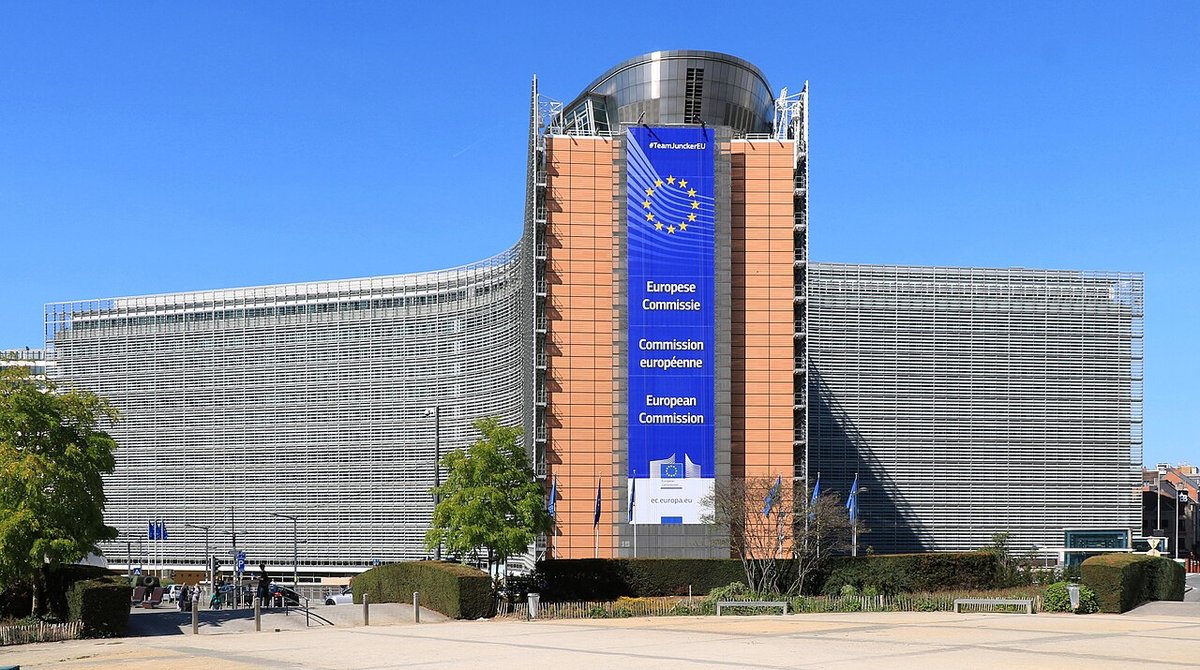
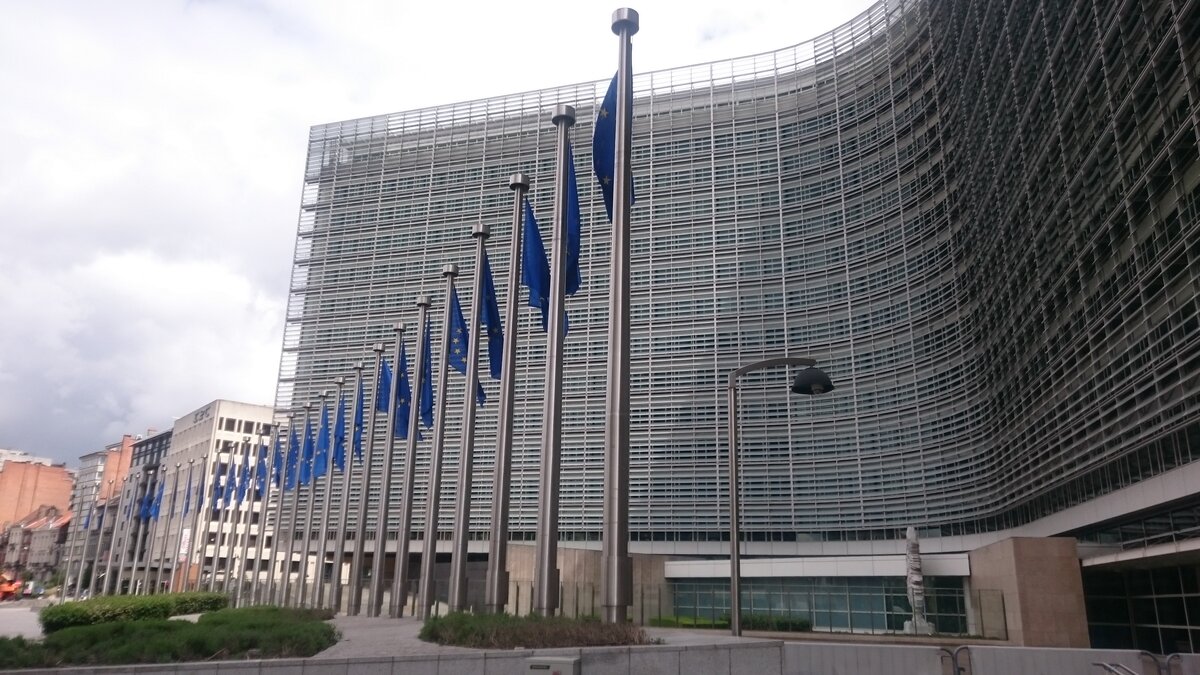
Európska komisia
The executive body of the European Union, which oversees compliance with EU law and can launch proceedings against a state that fails to fulfil its obligations.
Why here: Its communication of 15 July is the strongest evidence that Rome is refusing the transfers, and a further assessment is to be submitted by 15 October.
More info →Dublin III
An EU regulation from 2013 under which an asylum application is usually assessed by the country through which a person entered the Union. Since 12 June 2026, it has been replaced by the Asylum and Migration Management Regulation.
Why here: It was precisely its suspension that Italy invoked for almost four years, although it never formally repealed its circulars.

Johan Forssell
The Swedish migration minister, who is pushing for a tightening of the country’s asylum policy.
Why here: His office was the first to openly confirm that transfers to Italy are continuing and that they work better under the new pact.
More info →
Elly Schleinová
Leader of the Democratic Party, Italy’s strongest centre-left opposition party.
Why here: She uses the return of Dublin cases as an argument against the government, but does not question the pact itself.
More info →
La Repubblica
One of Italy’s most widely read opinion-forming daily newspapers, traditionally centre-left.
Why here: It reported an estimate that after the agreement with Germany and France is exhausted, the number could exceed ten thousand people.
More info →
La Stampa
A Turin daily from the GEDI group, liberal-centrist in orientation.
Why here: It published a commentary arguing that the new Brussels pact on migrants simply does not work.
More info →Il Manifesto
A left-wing Rome daily, historically linked to the communist tradition.
Why here: Its description of a sovereignist own goal sums up how the Italian left reads the government’s failure.
More info →The rule that has not changed
The pact replaced the Dublin III Regulation with the new Asylum and Migration Management Regulation, but left the core intact. Responsibility for assessing an asylum application usually lies with the country through which a person entered the Union. So if someone landed in Italy and applied for asylum only in Finland, Helsinki can ask Rome to take them back. Italians call such people “Dublinants”. Pagella Politica ↗Why it started right now
Rome itself caused the pause. On 5 December 2022, the Italian Dublin Unit sent a circular to the other states asking them to temporarily suspend transfers to Italy — the reason was said to be sudden technical problems with the capacity of reception facilities. Two days later, a second circular followed, saying that reception conditions needed to be reassessed. Italy has still not formally repealed either of them. Európska komisia, COM(2026) 387 ↗What has changed is the willingness of others to respect those circulars. Vienna was the first to stop. According to the Austrian interior ministry, it has already transferred four asylum seekers to Italy, with the authorities simply buying them a train or bus ticket. ANSA ↗
Sweden confirmed it openly. “Sweden has carried out transfers of migrants to Italy and we intend to continue doing so, in accordance with the provisions of the Pact on Migration and Asylum,” the spokesperson for Migration Minister Johan Forssell told ANSA. She added that this is not new for Stockholm, but since the pact has been in force, “transfers under the Dublin Regulation work better”. ANSA ↗
The Netherlands was the last to join on Thursday evening, saying it would return to Italy migrants who arrived after 12 June. Corriere della Sera ↗
Who has not joined
- Ireland and the Netherlands are also expanding transfers. La Repubblica writes that two more countries are joining the six that have begun returning applicants to Italy. The government continues to defend the pact, while historian Andrea Riccardi tells it that the Union should instead work on integration and stop “dehumanising the weakest” La Repubblica ↗Riccardi ↗.
Two large countries have stayed aside, each giving a different reason. France announced that it would not join the transfers for now while the phase of cooperation and rapprochement with Italy continues, with which it shares an interest in reducing departures from Tunisia and Libya. ANSA ↗
Spain is choosing a more principled argument. According to interior ministry sources, Madrid believes the matter should be handled through European solidarity mechanisms, “and not by resorting to expulsions or isolated bilateral restrictions”. Spain itself is among the countries the Commission has identified as being under migratory pressure. ANSA ↗
Twelve requests, twelve refusals
The hardest numbers are not from newspapers, but from the European Commission’s communication of 15 July. In the first weeks of applying the new regulation, from 12 June to 7 July, eight member states reported submitted transfer requests. There were twelve of them, and Italy refused all twelve. Only one transfer took place, based on a request confirmed before 12 June. Európska komisia, COM(2026) 387 ↗The Commission added a sentence that is at the heart of the dispute. Under the new regulation, the receiving state may not refuse a transfer — it may at most propose another date or another place. The Commission also stated that it saw no signs that the Italian authorities were actively addressing practical and logistical steps with the other states, and called on Rome to remove the obstacles as a priority. A further assessment is due by 15 October. Európska komisia, COM(2026) 387 ↗
In the background hangs a sanction that gives the whole matter its meaning. The regulation says that if the Commission identifies systemic shortcomings in the rules on responsibility, contributing states do not have to fulfil their obligations towards such a beneficiary. Italy is on the beneficiary side. By blocking transfers, it therefore risks losing exactly the solidarity it secured for itself in the pact. Európska komisia, COM(2026) 387 ↗
Why this hurts Rome so much
- The number Rome had not previously given: more than one hundred thousand refused in three years. La Stampa reported on 22 August that over the past three years Italy has refused more than one hundred thousand requests to take people back under the Dublin rules, and the new pact is now sending it the bill for that La Stampa ↗.
- Italy is reversing the argument and demanding compensation. According to Germany’s Tagesschau, Rome argues that if it is to accept returned applicants, it should receive financial compensation for them from the European asylum system Tagesschau ↗.
- Interior Minister Piantedosi is playing it down. Asked about returned applicants, he replied that he did not see a problem — which directly contradicts how La Stampa and the Commission itself describe the matter La Repubblica ↗.
- Journalist Lucia Annunziatová raises the dispute to a higher level. In La Stampa, she argues that Europe is falling apart over Schengen and that the Italian government also bears co-responsibility for this La Stampa ↗.
In 2025, Italy was the European country to which other states sent the highest number of requests to take back asylum seekers. According to La Repubblica, the government solved part of the problem bilaterally when an agreement with Germany and France zeroed out older cases from those two countries. But Rome has no agreement with the other member states, so the number of people who may return could exceed ten thousand. La Repubblica ↗
At home, it has become political ammunition. Opposition Democratic Party leader Elly Schleinová speaks of a government failure, the left-wing daily Il Manifesto called it a sovereignist own goal, and La Stampa published a commentary arguing that the new Brussels pact on migrants simply does not work. The criticism is therefore not coming from opponents of the pact, but from those who accuse the government of having negotiated it badly. La Repubblica ↗ Il Manifesto ↗
Solidarity is smaller than it looks. And Slovakia is not part of it
The second half of the pact is meant to be solidarity. For 2026, the reference value is 21,000 relocations or equivalent support and 420 million euros. The reality is considerably more modest — according to Euronews, fewer than one thousand actual relocations are expected, and real financial pledges from countries that are not under pressure have reached 76.3 million euros. Euronews ↗For the Slovak reader, what matters more is where we stand in that table. Slovakia and Hungary are the only two member states that have pledged nothing — neither relocations nor money. The fund was adopted despite objections from both countries, while another four abstained from the vote. Euronews describes the zero contribution from both countries as a breach of the principle of mandatory solidarity that has so far not been followed by any sanction. In Hungary’s case, it explicitly adds that if it does not contribute by the end of 2026, it may face infringement proceedings from the Commission. Euronews ↗
Slovakia is not a typical first-entry country, nor a state the Commission has identified as being under migratory pressure, so the return of Dublin cases does not affect it directly. But it is on the contributor side, and the Italian case is a live illustration of what happens when a member state interprets its obligations under the pact in its own way. The difference is that Italy refuses to accept people, while Slovakia refuses to contribute. The mechanism meant to hold both things together is thus being tested from two sides at once.
The limits of this view
Most reporting on this topic is Italian, and therefore written from the position of a country that pays the price for the rule. Italian media naturally emphasise the numbers of people who may return, and less so the fact that Rome blocked transfers for four years on the basis of circulars it never repealed. By contrast, Nordic and German authorities frame the matter as the ordinary application of rules and do not comment on the capacities into which they are sending people. The Commission’s data cover a short period of less than a month, and the document itself notes that the deadlines under the new rules are only just beginning to run.What hotinfo is watching
- Italy formally revoked the circulars of its Dublin unit from December 5 and 7, 2022
- The European Commission published the assessment under Article 4 of implementing decision 2025/2323, due by October 15, 2026
- The Commission opened infringement proceedings against Slovakia or Hungary over their zero contribution to the 2026 solidarity fund
- Slovakia pledged a contribution to the solidarity fund (relocations or money)
- France or Spain joined the transfers of Dublin cases to Italy
- Italy accepted the first transfer filed under the new rules after June 12, 2026