




Key actors — tap for context

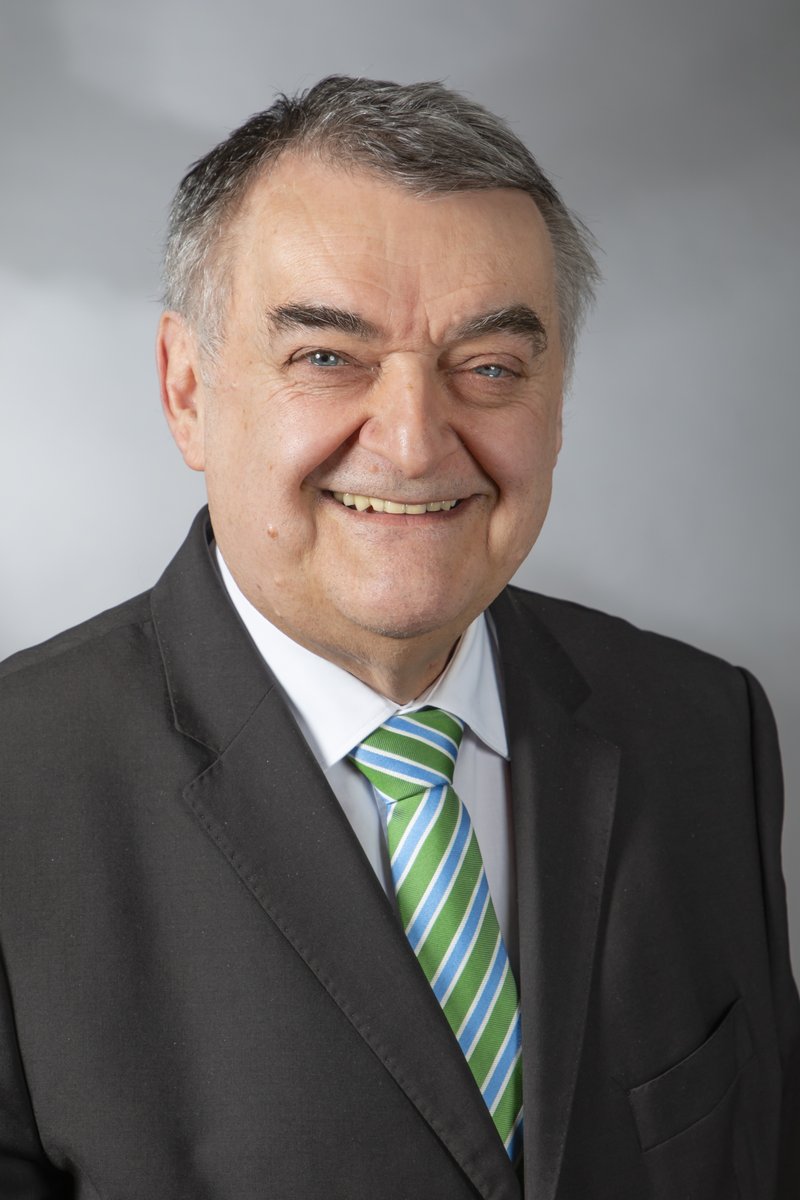
Alexander Dobrindt
German Interior Minister from the CSU, who also has critical infrastructure protection in his portfolio.
Why here: Opened the center in Cochstedt and speaks of technological arms races.
More info →Stefan Thumann
Thirty-nine-year-old founder of Bavarian arms manufacturer Donaustahl, which supplies combat drones to Ukraine.
Why here: First spoke about an alleged Russian plan to kill him — since Christmas 2025 he has been living in hiding with constant protection.

Markus Reisner
Austrian colonel, historian and military analyst who leads an institute for officer training at the Theresian Military Academy.
Why here: Described how disposable agents are recruited and what the true goal of hybrid attacks on Europe is.
More info →Jürgen Kayser
Head of the state office for constitutional protection in North Rhine-Westphalia, i.e., Germany's most populous federal state.
Why here: Compared Russian operations against Germany to the height of the Cold War and named their motive.

Bastian Ernst
Member of the German Federal Parliament from the CDU, member of the defense committee.
Why here: Claims that according to his information, the assassination attempt on Thumann was supposed to be carried out with Novichok.
More info →Armin Papperger
Chief executive of arms manufacturer Rheinmetall.
Why here: According to German sources, he was also a target of the planned assassination.
More info →
Rheinmetall
Germany's largest arms manufacturer, which produces ammunition and armored vehicles.
Why here: Its chief is among the targets of Russian operations against German arms industry.
More info →Donaustahl
Bavarian arms manufacturer that supplies combat drones to Ukraine.
Why here: This delivery is what brought its founder into the crosshairs of Russian military intelligence.

Nova Post
Ukrainian private postal and courier service, the largest in the country.
Why here: Its delivery routes were to be mapped by agents for later packages with incendiary devices.
More info →
Semtex
Plastic explosive developed in Czechoslovakia in the 1950s.
Why here: It was this that filled the drone found among aircraft at Leipzig/Halle airport.
More info →
Bundeswehr
German armed forces.
Why here: Their facilities are among the targets that disposable agents photograph with drones.
More info →Nvidia
American chip and graphics processor manufacturer.
Why here: Its module was reportedly found by Ukrainian intelligence in the wreckage of a new Russian guided missile.
More info →Národný bezpečnostný úrad
Slovak office for cybersecurity and protection of classified information.
Why here: Found a hidden 3G/4G module and twelve Russian phone numbers in the procured radars.
The ruling that showed how thin these cases are
- Life in hiding got a name: announced murder plan. Greek press reports that the head of a German firm supplying drones to Ukraine announced a Russian plan for his assassination — this is the concrete form of what we described above as identity concealment. Protothema ↗
- The United States accused Iranian hackers of a decade of cyber espionage. This shows that the model of cheap proxy operations is not a Russian peculiarity. Index.hr ↗
Three Ukrainians aged 22, 25 and 30 sent two packages with activated GPS trackers from Cologne to Ukraine at the end of March 2025. According to the federal prosecutor, they were commissioned by the Russian secret service through intermediaries in Mariupol, and the aim was to map the delivery routes and procedures of the Ukrainian postal service Nova Post. Through the same route, packages with incendiary devices were later to be sent, which were to ignite either in Germany or during transport. They were arrested in May 2025. n-tv ↗ Tagesschau ↗
The prosecutor demanded sentences ranging from two years and nine months to four years and three months. The court gave the thirty-year-old defendant fifteen months — and since pretrial detention was credited to him, he has already served his sentence. It acquitted the other two: according to the judge, from the evaluated chats it emerged that they were unaware of the Russian background, so they did not act intentionally. The court also proceeded from the assumption that none of the three had planned the specific sabotage act. Tagesschau ↗ ZDF heute ↗ Kyiv Independent ↗
Both Slovak and Czech media reported both stories, each separately. Nowhere, however, did they connect them to the question that emerges from them: why did a case in which the federal prosecutor saw preparation for an attack on German freight transport end with a sentence on the day of its announcement already served.
Why They Are Amateurs — and Why That's Intentional
- Weapons depot near Berlin linked to planned assassinations. Latvian public broadcaster LSM reports that investigators link the find in the forest near Berlin to assassinations that Russian secret services were planning. Italian La Repubblica writes the same more briefly: "suspicion falls on Moscow intelligence" LSM ↗La Repubblica ↗.
- FAZ speaks of a "creeping attack," Russian embassy mocks. The German newspaper included the find in a series of hybrid incidents, the Moscow embassy told Serbia's Politika not to "look for a black cat in a dark room" FAZ ↗Politika ↗.
- Russian House in Berlin designated as security risk. FAZ writes that the cultural center in the middle of the German capital is a security risk, and that it is to be run by Xenia Fyodorov — a woman who was previously "Putin's voice in France" FAZ ↗FAZ o Fjodorovovej ↗.
- Russia issued wanted notice for German journalist. FAZ correspondent Michael Martens ended up on a Russian wanted list for a question he asked Zelensky. FAZ calls it an attack on press freedom in the West Spiegel ↗Welt ↗FAZ ↗.
- This is the final update wave of this article. The text carries five waves and becomes unwieldy — we will cover further developments in German hybrid defense in a separate article with a new headline.
- Welt on the same day described the history of Russian "disposable agents" and adds to the verdict: "it shows how perfidious the structures behind them are." Welt ↗Welt ↗
- The pattern also has a second, quieter layer: the head of a German startup that supplies drones to Ukraine lives in hiding. "My private life has ceased to exist," he says in the face of Russian threats. BFM TV ↗Le Figaro ↗
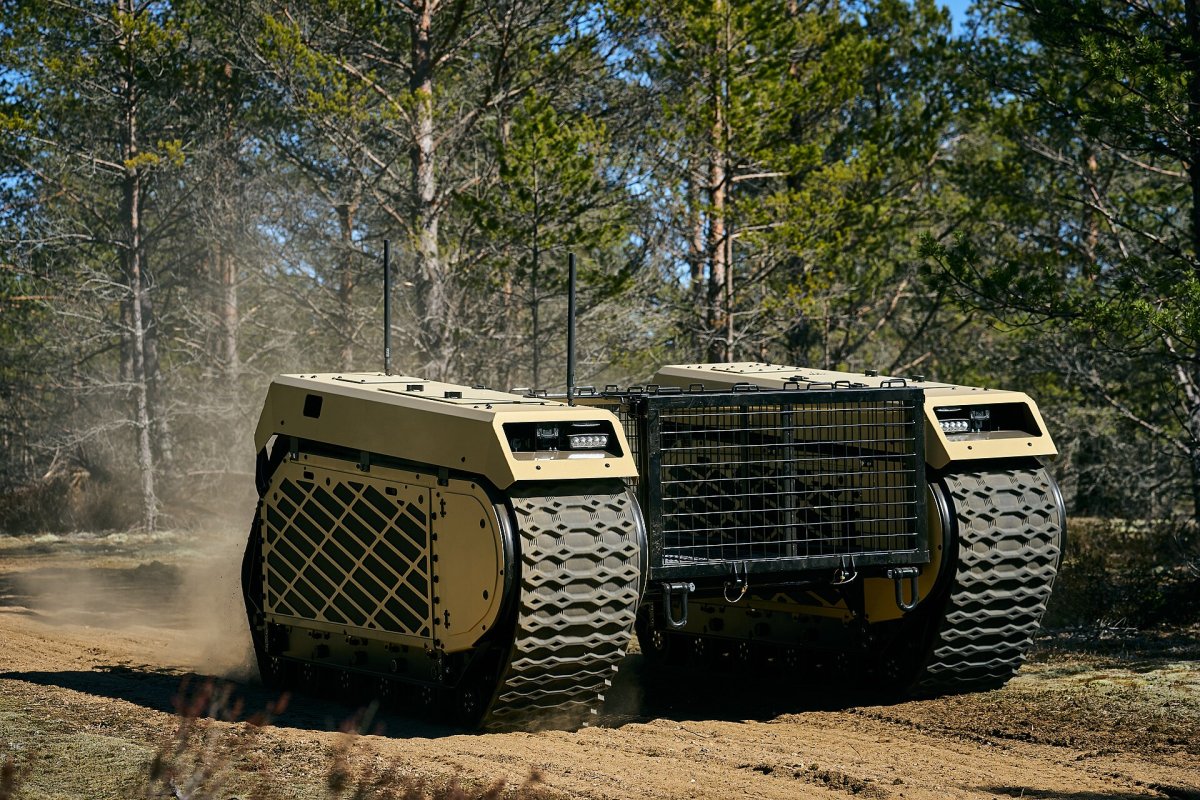
- In Estonia they are investigating a Russian connection in a fire at Milrem, a company that supplies robotic systems to Ukraine — suspicion points to arson. Censor.NET ↗
- And the same day brought two cyberattacks on state administration: Berlin senate offices were left without email and internet, in Latvia data was stolen from 1.2 million people and President Rinkēvičs called for the resignation of the transport authority leadership. Die Zeit ↗LSM ↗Spiegel ↗
German security forces speak of "disposable agents." They are people hired for a short time and for one limited task, without knowledge of the entire operation, who are discarded once the task is completed. Austrian Colonel Markus Reisner describes recruitment simply: they invite a social media user into a closed group in an encrypted messenger and there offer them money for small, apparently harmless tasks. n-tv ↗
Jürgen Kayser, head of the regional office for constitutional protection in North Rhine-Westphalia, characterizes them as amateurs or petty criminals "who often receive simple tasks that a trained spy used to carry out." They scout weapons factories, photograph Bundeswehr facilities with drones, film railroad logistical routes. He compares Russian attacks on Germany to the "height of the Cold War." n-tv ↗
Therein lies the crux of the problem that the Stuttgart verdict exposed. When investigators catch such a person, they have nothing to reveal — and establishing a direct link to Russia is hard to prove. n-tv therefore finds it remarkable that it succeeded in this case at all. The pattern, which falls apart in court into two acquittals, may not be an operational failure — rather it flows from how it is structured. Reisner adds the objective: hybrid attacks on the "strategic depth" of Europe are meant to disrupt supplies Ukraine needs to wage war and force European states to restrict those supplies. n-tv ↗
What It Costs When It Works
Reisner attributes to disposable agents three earlier sabotage operations against the German Navy: gravel was poured into a corvette's engine block, old oil was supposed to contaminate a frigate's drinking water, and unknown persons cut cable bundles on a minesweeper. In each of the three cases, the ship would have been out of commission for months if successful. They were uncovered partly by chance. n-tv ↗Two weeks ago, a modified drone with military Semtex explosive was found at Leipzig/Halle airport among Ukrainian cargo aircraft. Camera footage, according to n-tv, shows that someone guided it to the wing of a Ukrainian transport plane. According to the same reconstruction, the charge had enough force to bring down the plane, but the drone bounced off the wing and lost the payload. The Federal Prosecutor's Office speaks of a "serious attack on transport and logistics infrastructure in Germany," Dobrindt acknowledges a connection to other attack plans. Who launched the drone has not been made public. ORF ↗ Tagesspiegel ↗
And then there is a case that Slovak and Czech media haven't mentioned once in the last month. Stefan Thumann, a thirty-nine-year-old founder of the weapons company Donaustahl, which supplies combat drones to Ukraine, spoke for the first time on Tuesday about an alleged Russian plan to kill him. Shortly before Christmas 2025, according to his own account, German security forces warned him. Since then he has been living in hiding, has round-the-clock protection, and has written his will. "I am fighting for my life with Russian military intelligence," he says. In March, the federal prosecutor had two disposable agents arrested who were scouting him. n-tv ↗
Federal Parliament member Bastian Ernst in the same interview claims that preparations were advanced and that according to information he has at his disposal, it was meant to be done with Novichok. This is a claim by a politician citing information he did not disclose — not an indictment or a court ruling. No one has been charged in connection with the murder plot yet. According to German sources, Rheinmetall CEO Armin Papperger was also meant to be a target of the planned assassination. Kayser names the motive directly: it is to deter companies and responsible people from supporting Ukraine with weapons technology. n-tv ↗
Answer: ten million, forty places and one critique
- A case that shows what the anti-drone center is actually about: in a forest near Berlin they found an arms depot attributed to Russian services. Investigators discovered the weapons there already last year, but only now has the attorney general opened proceedings on suspicion of espionage and preparation of assassinations. Interior Minister Dobrindt says the weapons were intended for "planning attacks," and according to him, the involvement of foreign powers cannot be ruled out. Tagesschau ↗Die Zeit ↗FAZ ↗taz ↗
- A detail that German reports are missing was brought by Bucharest and Vilnius: the suspect was detained in Romania. Digi24 has it right in the headline, Lithuanian 15min adds that it is a "low-ranking agent". The find in the forest near Berlin is thus not a German episode, but a cross-border operation involving at least two countries. Digi24 ↗15min ↗
- A year between the find and the indictment is its own story. The weapons lay in the ground since last year and reclassification from "finding of pistols" to a depot for preparing assassinations took months — precisely that delay between the incident and the legal conclusion that was shown by the verdict from the beginning of this article. Welt ↗
- Berlin responds to this with legislation too: intelligence services are to gain access to cameras in cars. FAZ comments on the new intelligence services law under the headline "Eyes Everywhere" — the expansion of powers goes substantially further than the drone defense that is being talked about openly. FAZ ↗
- Germany's response has crossed its own border: Bundeswehr engineers are helping Poland fortify a section near Kaliningrad. Tagesspiegel describes it as a deterrence mission and cites the logic behind it: "Let them see us — then they'll know who they're dealing with." It is the same approach as at the center in Cochstedt, just several hundred kilometers further east. n-tv ↗Tagesspiegel ↗
- Welt meanwhile reminds where protection is missing: the German parliament. An analysis under the headline "conditionally defense-capable" argues that the Bundestag lacks a strategy for defending against drones. The center for ten million thus came into being before the building in which it was voted on was even secured. Welt ↗
- And a counterpoint from the United States: the military is disbanding a drone battalion that it had established precisely to gather experience from the war in Ukraine. CBS News adds that it is doing so despite lagging in the drone race. While Europe is building drone capabilities, the American military is dismantling its own. CBS News ↗
- Romanian press adopted the center as "the shadow war of the 21st century" and emphasized that the anti-drone shield for ten million euros stands on a former Soviet military airfield. Libertatea ↗
- The same day came criticism that Leipzig airport is poorly protected. It is the airport whose incident prompted the center in the first place. ZDF heute ↗
- German Aerodata presented a new reconnaissance drone — industry's response is running parallel to the state's. Tagesspiegel ↗
- "Game-changer, or a duplicate structure?" That's exactly the question posed about the new center in Cochstedt by Germany's public broadcaster ZDF — so the criticism from Tagesspiegel was not an isolated case. Spiegel is meanwhile spelling out what exactly Dobrindt plans against Russian explosive drones. ZDF heute ↗Spiegel ↗Welt ↗
- The opening of the center was also noted in Kyiv and Zagreb — precisely where Russian drone threat is everyday experience, not a research topic. Censor.NET ↗Index.hr ↗
- In North Rhine-Westphalia they are searching for an unknown person who, according to police, might have been observing a NATO bunker. n-tv ↗
The new center is located at the German Aerospace Center (DLR) facility in Cochstedt in Saxony-Anhalt and also operates from Brunswick. It is to develop and test technologies for the safe use of drones as well as for their detection and defense against them. It is not an operational unit for the protection of airports, but a research pillar of the federal government's three-pillar strategy — the other two being a mobile anti-drone unit of the federal police and a joint anti-drone center of the federation and the federal states. ORF ↗ Spiegel ↗
At the opening, Dobrindt called Germany an everyday target of hybrid attacks and said a sentence that was also picked up by Slovak agencies: "Whoever targets Germany strikes all of Europe." He spoke about the technological race between drone defense and the technology meant to overcome it. Welt ↗
German criticism came the same day and is substantive. Tagesspiegel headlines that the minister's drone show protects no airport as long as announcements are not followed by action. Taz reminds that the jurisdictional chaos over who is actually allowed to shoot down a drone continues. And at the opening itself, it was said that "the technologies are here — what matters is that we have personnel to deploy them." Tagesspiegel ↗ taz ↗ Welt ↗
That the gap between threat and response is not just German was shown the same day by Belgian VRT. According to it, Ukrainian military intelligence HUR found an Nvidia Jetson Orin NX module in the wreckage of a new Russian guided missile S-71M, i.e., a small computer capable of processing video from a camera. It is one of thirty-five foreign electronic components that HUR has identified in Russian weapons. It is a claim by the intelligence of a warring party and is not independently verified. If it is true, however, it shows that the problem does not end with drones over airports — it runs through the entire supply chain of technologies that no research center can seal off. VRT NWS ↗
What Applies to Slovakia
- Finland moved from investigation to diplomatic action: it summoned the Russian ambassador. According to Yle, the Foreign Ministry invited him to explain the suspicion of airspace violation — the same incident mentioned in the morning wave of this article. Yle ↗Aftonbladet ↗
- Under the fence on the Latvia-Belarus border, another tunnel was found. Austria's Die Presse reminds that this is not the first case; pressure on the border has, alongside drones and cyberattacks, also a quite physical form. Die Presse ↗
- Finland is investigating the violation of its airspace by a Russian aircraft and according to Belgian De Morgen, NATO is transitioning in "frontline states" from airspace protection to air defense. This is a shift in vocabulary that has practical content: a police role is changing to a combat one. (ORF ↗, De Morgen ↗)
- Latvia reports a cyberattack with stolen data of 1.2 million people and 200,000 companies — in a country that has fewer than two million inhabitants. Klix.ba ↗NRK ↗
- Iceland's president claims that a foreign state is behind the extensive cyberattack on the country. Iceland has no army, but it does have radar stations, which it now wants to renovate. RÚV ↗RÚV ↗
- Poland is also dealing with a health data leak; the deputy minister reassures that "the data is not circulating on the network". TVN24 ↗
- Russia threatened London over British drones over its territory. Lavrov claims that Britain could be considered a party to the conflict. La Vanguardia ↗Kyiv Post ↗
Slovakia has the same three vulnerabilities as Germany, only on a smaller scale: arms industry, transit road and rail logistics toward the east, and public procurement, through which one can get inside without a single agent. We described that third path a few days ago — the National Security Office found a hidden 3G/4G module and twelve Russian phone numbers in the radars. We discussed the details in the Slovak politics overview
But the German case also shows what has not yet been addressed here: hybrid operations below the threshold of armed attack are difficult to prosecute not because of a lack of will, but because criminal law is built on intent and proven involvement. When the model of attack relies on people who don't know whom they serve, the court will do with them exactly what Stuttgart did. Germany is responding to this also with the preparation of a secret service reform after seventy years. SME ↗
Limits of This View
The interview with Stefan Thumann was broadcast by RTL and Stern a day before presenting their own documentary about disposable agents. This does not make his statement untrue, but the frame is theirs and dramatic details are naturally in the foreground in such a format. Moreover, the claim about Novichok comes from a single member of parliament referring to an undisclosed source, the buyer was not publicly named in the Leipzig drone case, and for the chip in the Russian missile, the source is the intelligence service of one of the fighting sides.Finally, the objection that "ten million is not enough" also has an opposing side. Cochstedt is research infrastructure, not an operational shield. Its budget is not a defense budget and comparing it to the volume of the threat is misleading. So the question is not whether ten million is too little, but whether the remaining two pillars of the strategy will come into being and when.
What hotinfo Is Watching
- Whether federal prosecutors charge anyone over the drone attack at Leipzig/Halle airport and whether they name who ordered it.
- Whether prosecutors appeal the two acquittals on points of law (a German Revision) to the Federal Court of Justice.
- When the remaining two pillars — the federal police's mobile unit and the joint federal-state counter-drone centre — actually start working, and whether the question of who may shoot a drone down is settled.
- Whether the announced reform of Germany's intelligence services grants powers specifically for hybrid cases.
- Whether foreign components turn up in further Russian weapons and whether the EU's autumn sanctions package responds.