





On the surface, this is a technical detail. In reality, it is the end of the configuration that has underpinned Ukrainian warfare for the past four years: that satellite connectivity at the front is a service of one American company — and thus also the decision of one man. Romanian Digi24 meanwhile shifted the question further: if Rassvet catches up with Starlink, could it also become a strategic target.
Veto Held by One Man
- SpaceX meanwhile broke its own record — two Falcon 9 rockets launched 38 minutes apart. This exact cadence is why Musk's Starlink veto is so hard to circumvent Klix.ba ↗
- Romanian Digi24 analyzes how Rassvet could become a strategic target for Ukraine. Russia's version of Starlink is thus, according to him, taking shape as a future target, not just as a service Digi24 ↗.
- Swiss SRF recalls that China also entered this same race: "In war, power over space also counts." SRF ↗
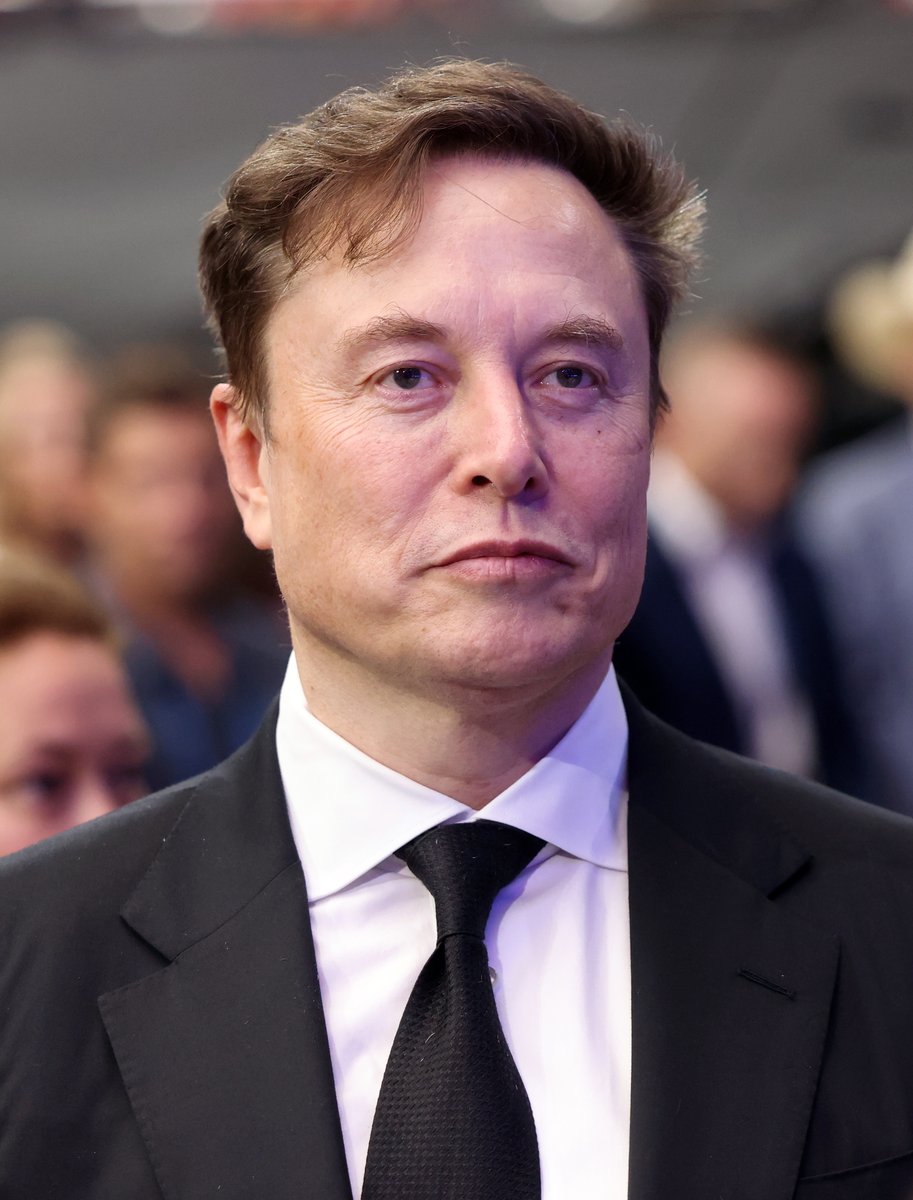
That was precisely what happened the same week. According to Kyiv Post, Elon Musk refuses to lift geographic restrictions on Starlink so that Ukraine can strike targets on Russian territory with satellite connectivity. Volodymyr Zelensky allegedly asked Donald Trump to pressure Musk; Trump apparently gave no clear answer. Former Ukrainian Defence Minister Mychajlo Fedorov tried through informal channels — without success (Kyiv Post ↗).
Musk does not hide his reasons: he speaks of escalation risks and of the time for a peace deal (Ukrayinska Pravda ↗, Gazeta Wyborcza ↗). Fedorov described it in a conversation with his former advisor Serhiy Sternenko soberly: "We are in contact with Musk, we last spoke a few days ago. And it is, let's say, currently a challenging task — to achieve through this communication the result we need." (Kyiv Independent ↗)
Polish Gazeta Wyborcza named that power dynamic in its headline: "Starlinks Instead of Patriot Missiles."
War Over Signal is Already Being Fought Kinetically
- Satellite imagery revealed what Russia is building at the NATO border. Reaction from the alliance: "We are ready to defend every inch." N1 Croatia ↗
- Swedish Dagens Nyheter quantified those construction sites — counting 59 new launch pads at NATO and Ukrainian borders. Dagens Nyheter ↗
- Lithuanian media reports these are secret drone bases from which Russia could reach NATO countries. LRT ↗
- That this is not theoretical, Latvia demonstrated: the downed drone came from Belarus. The defence minister denies negligence in previous counter-drone technology purchases LSM ↗
- Ukraine intensified attacks and sent over 800 drones to Russia — according to Dutch De Telegraaf, this is the largest attack since the start of the year N1 Croatia ↗De Telegraaf ↗
- Moscow claims it shot down 205 of them. Il Sole 24 Ore ↗
- Ukrainian strike on Crimea hit the Bastion rocket system. Index.hr ↗
- Ukraine now uses British drones for deep strikes in Russia. Dnevnik ↗
- Former Ukrainian Defence Minister Fedorov says in a few months Ukraine could attack with its own ballistic missiles. Telex ↗
- Concurrently, Kyiv wants to buy missiles from Turkey. Lietuvos Rytas ↗
- Corriere della Sera profiles "the Hungarian" Brovdi — a Ukrainian entrepreneur who volunteered and became the symbol of drone warfare. Corriere della Sera ↗
- Telegraph, according to Estonian Postimees, discovered Russia building launching pads for modified drones. Postimees ↗
- Ukrainian Pravda reports ten new Russian bases at the borders, designed for launching jet drones. Ukrayinska Pravda ↗
- Digi24 describes new Ukrainian missile-drones "Palianycia" and "Peklo" that attacked Novorossiysk. Digi24 ↗
- Adevărul writes about Kyiv's weapon against Russian drones with double range and jamming-resistant technology — Russia is responding with its own move according to him. Adevărul ↗
- NZZ calculates that in four weeks, over twenty logistics centers burned in Russia: massive damages, but no economic crisis yet. Neue Zürcher Zeitung ↗
- Muscovites face fuel restrictions caused by Ukrainian drones. RFI ↗
- Ukraine attacked Moscow with hundreds of drones, air alert in Kyiv. Die Presse ↗
While software restrictions are decided by one company, the same signal is being fought over with weapons on the front.
Ukrainian sources, citing Russian claims, report that defence forces destroyed the newest Russian radio-electronic warfare complex Volna Kupol Garant near Gelendzhik in Krasnodar Krai, which was supposed to jam Starlink signal. The same sources cite a price of 1.5 million dollars; we have no independent confirmation of the strike or the sum (Kyiv Post ↗, Censor.NET ↗). Swiss SRF, meanwhile, described a day earlier that Russia is deliberately jamming precisely drones connected to Starlink — an advantage for Ukraine behind the front line that Moscow is trying to eliminate (SRF ↗).
And the war over terminals is also being waged in the rear. Ukrainian SBU, according to its own report, blocked two more schemes for illegal registration of Starlink satellite terminals for Russian armed groups; it convicted three people in Dnipro and Zhytomyr (Interfax Ukraine ↗, Censor.NET ↗). A terminal that can be activated for money under someone else's name is a weapon without firearms.
Europe Gave Its Alternative a Date
- Practical proof of how deeply Starlink is embedded in civil infrastructure: Lufthansa launches unlimited and free internet on board from Wednesday — via Starlink. Europe's alternative currently has nothing to offer airlines today HVG ↗
- Finnish Yle revealed that a commercial mapping service retouched out Russian missiles in the Gulf of Finland. It shows how much depends on what a commercial satellite data provider displays (Yle ↗).
The third thing that moved in that same window is the least dramatic and probably the most important.
The European Union recalled the deadline for its satellite network IRIS²: first satellites are to launch in 2029. This is not a new date — the schedule is part of the contract signed in December 2024 (20 Minutos ↗). The project is led by the SpaceRISE consortium, which includes Spanish Hispasat, French Eutelsat, and Luxembourg-based SES — and according to Madrid's ABC, Hispasat took command of it. More precisely, the consortium divided roles — Hispasat leads the government ground segment, not the entire project (ABC ↗). Brussels is speeding it up, according to El Español, explicitly to have secure military communications (El Español ↗).
2029 is an unusable date for today's war. What matters is that the schedule has not changed since the contract was signed in December 2024 — with European space programs, this is not self-evident.
Why This is a Story for Slovakia Too
- Four NATO forces issued a dramatic warning over Moscow's actions. Radio Sarajevo ↗
- Moldova faces the same problem without its own resources: "We don't have Romanian pilots" — and thus have no way to shoot down Russian drones in its airspace. Digi24 ↗
Slovak and Czech media wrote about Starlink over the past week — about Musk's refusal, about the Russian jammer, about SpaceX pulling Starlink into profit. What is missing from that coverage: the name Rassvet, the figure 924 satellites, the year 2035 or the 2029 date for IRIS². That is the difference between "Russia is working on it" and "Russia has a deadline for it."
For Slovak debate, this has one specific consequence. When discussing purchases from the European SAFE instrument, satellite connectivity usually does not appear in that debate at all — even though it is precisely the layer that today determines drone effectiveness more than the number of units. And at the same time, in that same week it became clear how quickly satellite internet is becoming common infrastructure: Lufthansa announced it will equip its entire fleet with Starlink — approximately 850 aircraft by 2029 — and the first aircraft already took off according to Spiegel (n-tv ↗, Spiegel ↗).
Swiss SRF added a third dimension to this that falls through the cracks in Europe: Starlink is pushing African internet providers and governments there are dealing with what this means for their own network control (SRF ↗). That question is the same in Nairobi as in Kyiv, just with different urgency.
Limits of This View
The figure of 924 satellites and year 2035 come from one source — from an interview by Major General Skibsky for RBC-Ukraine, that is, from Ukrainian military intelligence, which has reason to present Russian capacities as a threat. They have not yet been independently confirmed. Similarly, "Rassvet is launching faster than planned" says nothing about how the network actually functions — how many of those satellites are operational, what coverage they have, and whether they can handle front-line operations.The destruction of the Volna Kupol Garant complex is described by Ukrainian sources citing Russian sources; we have no independent confirmation of either the strike or the 1.5 million dollar price or complete destruction.
The 2029 date for IRIS² is a plan from 2024, not a fact. European space programs have a long history of delays, and in the same monitored period the European Space Agency warned that Europe might lack sufficient launch vehicles to put its own satellites in orbit by 2030 (Le Figaro ↗). That is a relevant caveat for the IRIS² project, not a detail.