

Key actors — tap for context

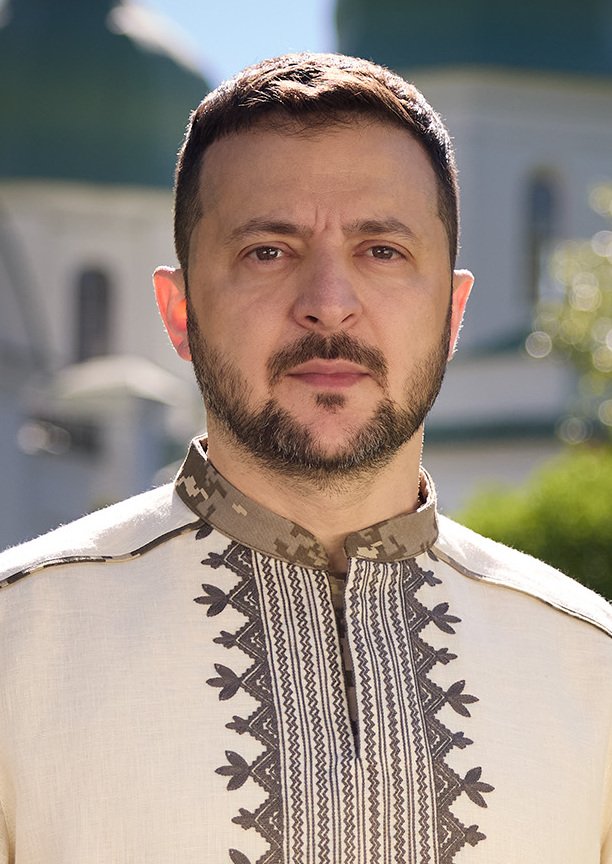
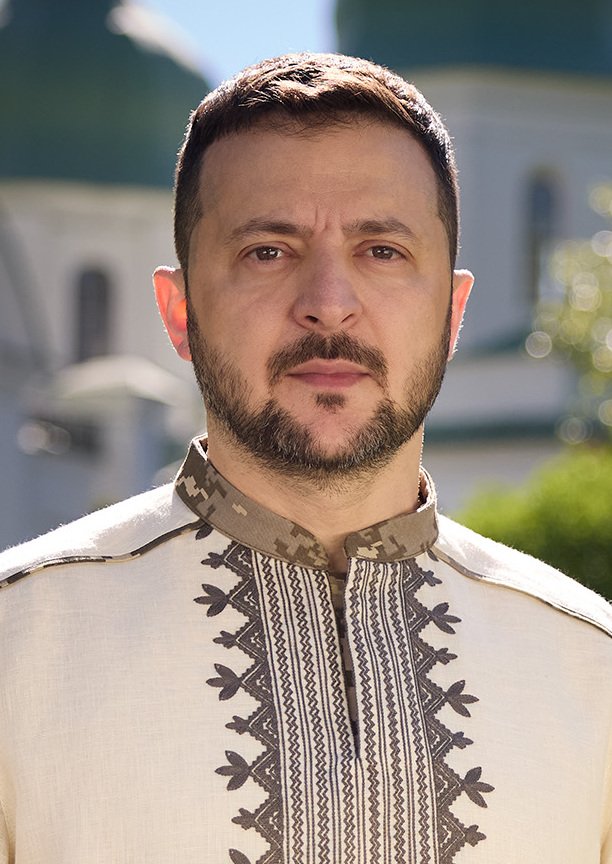
Volodymyr Zelenskyj
President of Ukraine since 2019.
Why here: Approved the 40-day operation and personally entrusted it to the secret service.
More info →
Jevhenij Chmara
Major General and, since January 2026, acting head of Ukraine's SBU secret service, previously commander of the Alfa unit.
Why here: Zelenskyj entrusted the operation to him and he briefed the president on the strike plan.
More info →
Vasyl Maljuk
Lieutenant General and former head of the SBU (2023–2026), architect of Operation Pavučina.
Why here: He stepped down from the post but remained in service for asymmetric operations against Russia.
More info →
SBU
Ukraine's secret service, directly subordinate to the president.
Why here: Was put in charge of the 40-day operation — it is behind the deep strikes as well as the attacks on the Crimean Bridge.
More info →
International Energy Agency
Intergovernmental organization based in Paris that monitors world energy markets.
Why here: Called the extent of the damage to Russian refineries unprecedented.
More info →
Crimean Bridge
Road-and-rail bridge across the Kerch Strait connecting Russia to occupied Crimea.
Why here: A repeated target of strikes; Russian authorities closed it again overnight.
More info →🔴 Latest Developments (June 27–30)
- Dubna hit for the second time. Defense Forces again struck the Dubna space communications center in the Moscow region — Zelenskyj announced it as a continuation of long-range strikes. Censor.NET ↗Ukrajinska Pravda ↗
- Police guarding Russian gas stations. In the Irkutsk region, police and the National Guard are guarding filling stations around the clock and preventing drivers from filling jerry cans — the fuel crisis is spilling over into an open policing measure. Libertatea ↗Digi24 ↗
- Even Putin now admits there's a problem. Hungary's Portfolio writes that even the Kremlin now acknowledges the scale of the strikes on refineries — according to it, Russia's fuel network has been "crushed." Portfolio ↗
- Crisis worries Russian elites. Gazeta Wyborcza: part of the Russian elite is considering "taking the money out and leaving the country." Gazeta Wyborcza ↗
- General Staff confirms the strikes. Ukraine's Defense Forces officially confirmed a strike on two Russian refineries as well as on the Crimean Bridge — turning the president's morning report from a claim into a military-confirmed fact. Ukrajinska Pravda ↗
- New target: fuel depot in the Belgorod region. Ukrainian drones, according to Kyiv, destroyed a fuel depot in the border town of Shebekino. Censor.NET ↗
- Fuel crisis reaches Siberia. The Irkutsk region has switched to a "manual mode" of gasoline rationing, under which authorities set allocations individually — the measure was described by governor Igor Kobzev. Euromaidan Press ↗
- Washington Post: tension in Russia is deepening. Strikes on refineries are driving Russians to panic-buy fuel and pushing the stock market down, though experts expect Putin will not change course. The Washington Post ↗
- Zelenskyj: long-range strikes hit two more Russian refineries. After a nighttime wave of attacks, he reported hits on plants in the Krasnodar and Yaroslavl regions. Ukrajinska Pravda ↗
- Slavyansk refinery on fire, a Crimean power plant also hit. Romania's Adevărul places these strikes within the "40-day plan coordinated by the SBU." Adevărul ↗
- Moscow faces fuel shortage as refineries burn across Russia. Index.hr ↗
- Gasoline queue in Russia ends in a brawl. Lines for fuel are becoming a symbol of how the fuel war is hitting the Russian home front. Censor.NET ↗
- "Flamingo" missiles reportedly hit an arms plant in Volgograd. Ukrainian sources report a deep strike on the Titan-Barrikady plant as part of the campaign against the Russian rear. Censor.NET ↗Ukrajinská pravda ↗
- S-400 system deployed near foundation of Putin's daughter in Moscow. According to satellite images cited by media, the missile battery stands just 9 km from the Kremlin. Censor.NET ↗
- Russians attacked Zaporizhzhia overnight. The city reports one death and 29 injured, according to Interfax, with fires at an enterprise and at a filling station. Interfax-Ukrajina ↗
An Operation Without Details
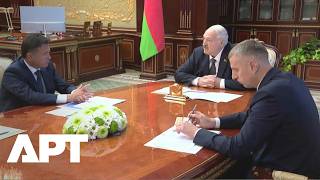
Zelenskyj announced the operation on social media after a meeting with acting SBU chief Jevhenij Chmara, who, according to the president, briefed him on the long- and medium-range strike plan and on the service's results so far. The president then approved a "40-day influence operation against the aggressor state, meant to force it to end the war." He gave no further details — neither what the operation involves, what targets it is meant to hit, nor how it is meant to differ from previous strikes. Interfax-Ukraine ↗The fact that it is the SBU that has been put in charge of the operation is itself a signal. Chmara has led the service since January, when Vasyl Maljuk stepped down from the post, though he too remained in service for asymmetric operations. The SBU is behind the war's boldest covert operations, including last year's Pavučina, in which drones hidden inside trucks struck dozens of Russian bombers deep in the rear, as well as repeated strikes on the Crimean Bridge. Deploying the secret service rather than the army suggests this will be more of an intelligence and asymmetric campaign than a classic frontline offensive. Kyiv Independent ↗
The Fuel War as a Driving Force
The operation builds on a campaign that is causing Russia increasingly tangible damage. Since March, Ukrainian drones have struck more than two dozen Russian refineries, including eight of the ten largest, and are estimated to have taken more than a fifth of Russia's refining capacity out of operation. "Such a level of disruption is unprecedented in the history of the Russian-Ukrainian conflict," the International Energy Agency stated. RFE/RL ↗The consequences are being felt across all of Russia. As of June 24, at least 55 of Russia's 83 regions reported restrictions on the sale of gasoline and diesel. The Moscow refinery in Kapotnya, which covers more than a third of the capital's fuel market and is the largest fuel supplier for the Moscow region, was hit on June 18 about 15 kilometers from the Kremlin. Following repeated strikes, industry sources say it is expected to remain out of operation until the end of the year. "The resilience of Russia's oil industry is being stretched dangerously thin," wrote Carnegie analyst Sergei Vakulenko. Kyiv Post ↗
Crimea and the 40-Day Clock
Pressure has not let up on occupied Crimea either. According to local monitoring channels, residents reported explosions overnight on Friday near Kerch, Krasnoperekopsk, and the Saky military airfield, and Russian authorities closed the Crimean Bridge again. The peninsula, meanwhile, has been emptying out for months — the Moscow-installed head of Crimea announced last week a complete halt to gasoline sales following a series of strikes on roads and bridges to the peninsula. Forum24 ↗Russia, for its part, gives its own figures. Its defense ministry claims it shot down 660 Ukrainian drones overnight over 12 Russian regions, occupied Crimea, and the Black and Azov Seas — which would be one of the highest counts since the start of the war, with 47 of them said to be over Moscow. These figures cannot be independently verified. Zelenskyj did not explain why he chose a 40-day horizon specifically — the deadline thus comes across more as a publicly declared ultimatum whose content remains secret. SITA (cit. ruské MO) ↗
What's New About This
The phrase "influence operation" is broader than just missiles and drones. It could also include psychological and economic pressure, and it may equally be a gesture aimed at the domestic audience as well as at those Western partners pushing Kyiv toward negotiations. Without details, the 40-day operation is for now more of a framework than a plan that can be measured. For the Slovak reader, it is also worth noting that these Ukrainian "operations" are contested at home — Robert Fico's government questions them and resists further military aid to Kyiv. What Ukraine presents as pressure to end the war, Moscow frames as escalation. Kyiv Independent ↗What hotinfo Is Watching
- Whether the 40-day window (roughly until August 4) brings a visible escalation of strikes, or instead a shift toward negotiations.
- How the number of Russian regions with fuel rationing develops, and whether the Moscow refinery in Kapotnya comes back online sooner than industry sources indicate.
- The Crimean Bridge and supplies to the peninsula — whether the halt in gasoline sales spreads or eases.
- Whether Russia responds by intensifying strikes on Ukraine's energy grid ahead of winter.