
However, the key figure about wells reached German and Austrian media in an inaccurate form. According to a report by the dpa news agency, almost two-thirds of monitored wells had less water last year than the long-term average. ORF ↗ Yet according to IGRAC, only a third of the stations were below normal. IGRAC ↗
Key actors — tap for context

World Meteorological Organization
A UN specialized agency for weather, climate and water headquartered in Geneva.
Why here: On Thursday it published a report on the state of the world's water resources for 2025.
More info →
Celeste Saulo
An Argentine meteorologist, Secretary-General of the WMO since 2024.
Why here: She spoke of two-thirds of wells being outside the historical norm.
More info →IGRAC
The International Groundwater Resources Assessment Centre in Delft, the Netherlands, operating under the auspices of UNESCO and WMO.
Why here: It prepared the groundwater chapter for the WMO report and published the exact percentages.

dpa
Deutsche Presse-Agentur, Germany's largest news agency, headquartered in Hamburg.
Why here: Its report states that two-thirds of wells had less water than average.
More info →
ORF
Austria's public broadcaster, headquartered in Vienna.
Why here: It carried the dpa agency's version with two-thirds of wells.
More info →
Tagesspiegel
A Berlin daily newspaper, published since 1945.
Why here: It published a report from the dpa agency wire.
More info →
Pravda
A Slovak daily newspaper published in Bratislava.
Why here: It quoted the WMO chief's statement about wells accurately.
More info →Novinky.cz
A Czech news portal from the Seznam.cz group.
Why here: It did not state which period the WMO was comparing to in its river data.
More info →
Slovak Hydrometeorological Institute
A state institution that measures weather, river flows and groundwater levels in Slovakia.
Why here: It recorded the drought of summer 2026, which the WMO report does not yet cover.
More info →
Danube
Europe's second-longest river, also flowing through Bratislava.
Why here: In July 2026 it recorded its lowest July flow in Bratislava since records began.
More info →
Bodrog
A river in southeastern Slovakia and northeastern Hungary, formed by the confluence of the Ondava and Latorica.
Why here: Groundwater in its basin fell in places below the long-term minimum in summer.
More info →Two-thirds of wells does not mean two-thirds with a water shortage
The sentence about two-thirds comes from WMO Secretary-General Celeste Saulo. According to the press release, she said that almost two-thirds of monitored wells worldwide showed conditions outside the historical norm in 2025, and that the balance had shifted further toward deficit compared to 2024, not toward recovery. WMO ↗However, "outside the norm" includes both directions. IGRAC, which analyzed data from 43,529 stations in 51 countries, provides a breakdown: 65 percent of stations were outside the normal range, of which 34 percent were below normal to severely below normal, compared with 25 percent a year earlier. 31 percent of stations were above normal, compared with 37 percent in 2024. IGRAC ↗
The shift toward deficit is thus significant, but a third of the monitored stations had below-normal levels. Yet the dpa report, which was carried by Austria's ORF and Berlin's Tagesspiegel on Thursday morning, states that almost two-thirds of wells had less water than the long-term average. ORF ↗ Tagesspiegel ↗
The Slovak daily Pravda quoted the statement accurately: "values outside the historical norm." Pravda ↗
Europe on the WMO map: east in deficit, north above normal
The report recorded persistent and widespread below-normal to severely below-normal groundwater levels in Central and Eastern Europe, the central United States, parts of Mexico, Chile and Brazil, northern South Africa, northwestern India, and parts of southern Australia. According to the WMO, this points to a gradual depletion of reserves and a multi-year drying trend. WMO ↗Europe, however, is not uniform. The report notes above-average groundwater levels in parts of France and in much of Northern Europe. WMO ↗
Other indicators also paint a poor picture for the eastern part of the continent. River flows in Eastern European basins were below normal to severely below normal in 2025, total land water storage was also below average, and according to the WMO, Eastern Europe, the Mediterranean and the Middle East were hit by severe drought. Snow was below normal across all of Europe. WMO ↗
Rivers and glaciers
According to the WMO, 2025 was one of the driest years for river flows in the past 35 years, with below-average flows affecting 36 percent of the world's basin area. The figure is based on simulations from 13 global hydrological models, which incorporate observed weather. For the seventh consecutive year, only 34 to 38 percent of basins had normal conditions, compared with the 1991–2020 average of 46 percent. WMO ↗The Czech portal Novinky.cz wrote about the smallest number of rivers with normal flow "in the history of observations" and classified 2025 among the driest years "in the history of observations." It did not state the time range, while the report refers to the period since 1991 and to the last 35 years. Novinky.cz ↗
According to the report, glaciers lost 408 gigatons of mass in the 2025 hydrological year, corresponding to a 1.1-millimeter rise in ocean levels. All major glaciated regions recorded ice loss for the fourth consecutive year, totaling 1,400 gigatons of water for 2023 to 2025 combined. In regions with smaller glaciers, including Central Europe, the so-called peak water point may already have been reached, according to the WMO — the point at which a melting glacier yields the most water. WMO ↗
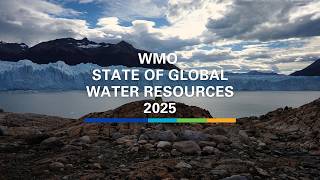
The report's main findings are summarized in a one-minute animation that the WMO published on the day of release. WMO ↗
Summer 2026 is not in the report, SHMÚ has already measured it
The report covers five years through the end of 2025. The low levels of the Rhine and Danube from this year's hot summer are therefore not included, the dpa agency noted. Tagesspiegel ↗The Slovak Hydrometeorological Institute assessed July 2026 as below average for groundwater. At the start of the month, more than 75 percent of monitoring sites showed mild drought to drought conditions, and by the end of July, groundwater levels or spring yields had dropped at 93 percent of all monitored sites. SHMÚ ↗
According to SHMÚ, the most unfavorable situation was in the Bodrog basin, where groundwater levels at several observation sites approached or fell below the long-term minimum, for example at the borehole in Koškovce. In the Bodva and Slaná basins, spring yields approached the long-term minimum. SHMÚ ↗
The Danube in Bratislava had an average flow in July 2026 of just 35.6 percent of the long-term July average. According to SHMÚ, this is the lowest July flow since measurements began in 1900. SHMÚ ↗
Also read: Dry Danube could have cost Europe 16 billion euros, Bulgarian newspapers write. The estimate from which they derived the figure does not mention the river.
What the numbers do not tell us
The WMO and SHMÚ figures cannot be directly compared. IGRAC compares with the years 2001 to 2020, SHMÚ compares groundwater with the years 1981 to 2010, and Danube flow in Bratislava with the years 1961 to 2000. IGRAC ↗ SHMÚ ↗The global picture rests on data provided by WMO member countries. Coverage has expanded, but Africa and Asia, according to the report, still remain among the regions with the fewest hydrological observations, even though they accounted for at least half of the recorded water-related extremes and more than 80 percent of deaths over the past five years. The WMO also warns that a strengthening El Niño will increase drought risk in some areas and flood risk in others. WMO ↗
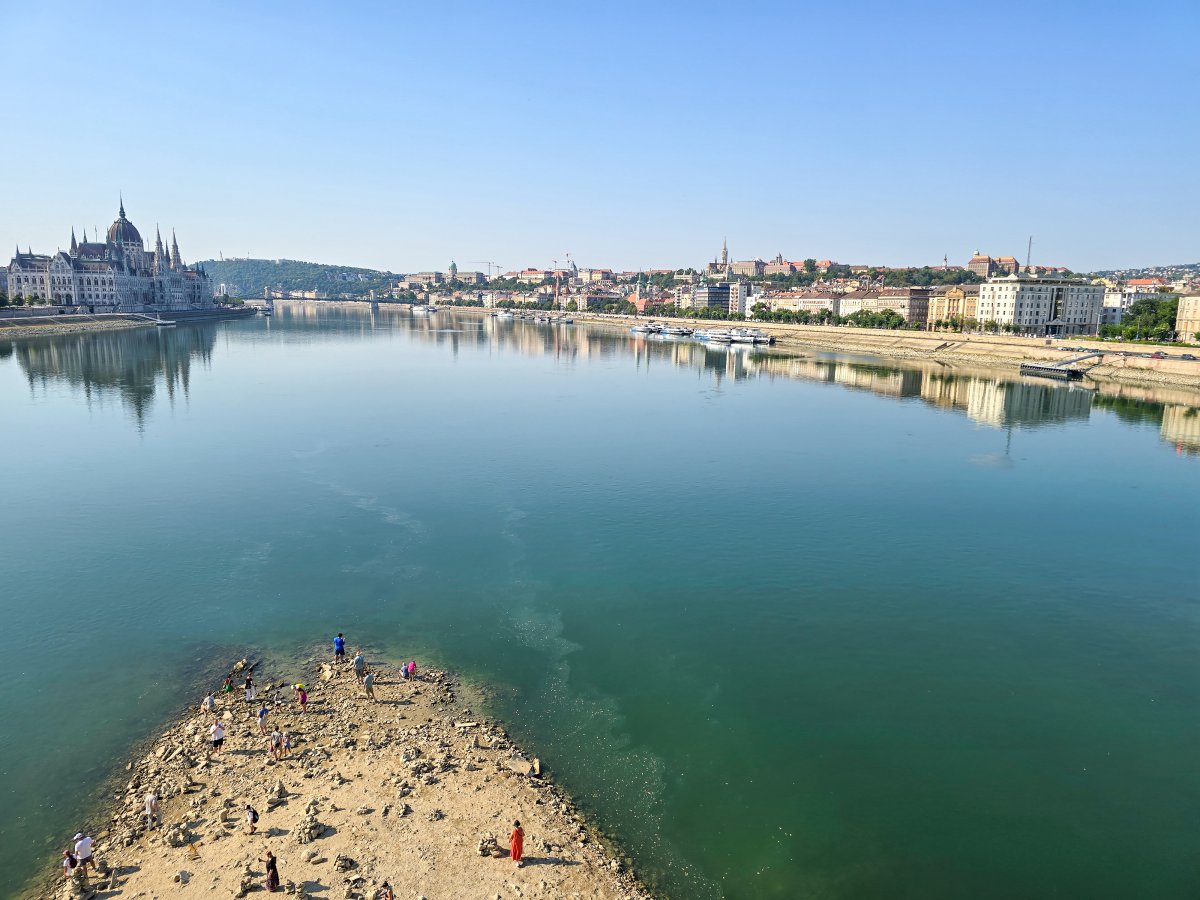
*Illustrative photo: low water level of the Danube in Budapest, view from Margaret Bridge, parliament building on the left, August 2, 2026. Author: Szilas / Wikimedia Commons, CC BY 4.0.*