
Key actors — tap for context

Robert Fico
Prime Minister of the Slovak Republic and chairman of the Smer-SD party.
Why here: Announced a cap on the retail margin and cheaper train tickets; rejected a special levy for the refinery, saying that we already have a sector tax.
More info →
Slovnaft
Refining and petrochemical company headquartered in Bratislava, part of the MOL Group and the only refinery in Slovakia.
Why here: The government rejected a special levy for it; the opposition demands that it be taxed.
More info →
Péter Magyar
Hungarian politician and lawyer, Prime Minister of Hungary since 2026.
Why here: His government abolished the protected fuel price and replaced it with a targeted subsidy for owners of diesel cars.
More info →
Karol Nawrocki
Polish historian and President of the Republic of Poland.
Why here: Sent the first version of the windfall tax on fuel companies to the Constitutional Tribunal over suspected retroactivity.
More info →
Donald Trump
President of the United States of America.
Why here: Supported a ban on US diesel exports, which would mean additional pressure on supplies for Europe.
More info →
Vasile Tofan
Moldovan investor and businessman, Prime Minister of Moldova since July 2026.
Why here: Called the combination of two wars and drought a “perfect storm”, and his government requested a state of emergency.
More info →
Dorin Junghietu
Moldovan energy expert and Minister of Energy.
Why here: Conceded that the price of diesel in Moldova may reach forty lei per litre and exceed it.
More info →Pavel Peterka
Chief economist of XTB for Czechia and Slovakia.
Why here: Sees the cause of expensive fuel in refinery margins and the higher price of crude oil, not at filling stations.
Radovan Potočár
Analyst and editor-in-chief of the specialist portal Energie-portal.sk.
Why here: Points out that the ten-cent limit does not mean that every litre will get cheaper by ten cents.

Ján Hargaš
Member of the National Council of the Slovak Republic for Progresívne Slovensko.
Why here: Demands that Slovnaft be taxed and the proceeds used for fuel vouchers for vulnerable households.
More info →
Veronika Remišová
Slovak politician, Member of the National Council of the Slovak Republic.
Why here: Summed up the criticism with the sentence that the government orders petrol station operators what margin to have but refuses to tax Slovnaft's profits.
More info →Rastislav Krátky
Slovak politician, Member of the National Council of the Slovak Republic for KDH.
Why here: Pointed out that Slovnaft left the government meeting without any obligation.
More info →Progresívne Slovensko
Slovak social-liberal parliamentary political movement.
Why here: Proposes taxing the refinery instead of a cap on retailers' margin.
More info →
Sloboda a Solidarita
Slovak liberal centre-right political party.
Why here: Pushes for a reduction of the excise duty, that is, the instrument Czechia reached for.
More info →Hnutie Slovensko
Slovak opposition political movement.
Why here: Criticises the government for regulating retailers but not the refinery's profits.
More info →
Sejm
Lower chamber of the Polish parliament.
Why here: Passed the law on taxing the windfall profits of fuel concerns for the second time.
More info →Eurostat
Statistical office of the European Union.
Why here: Its August figures showed that diesel in Czechia became more expensive by the most in the entire Union.
More info →
KDH
Christian Democratic Movement, a Slovak opposition party.
Why here: Its MP pointed out that Slovnaft left the government meeting without any obligation.
More info →The record is made at the refinery, not at the pump
The premium of European low-sulphur gas oil over North Sea Brent crude jumped on Wednesday morning to roughly 95 dollars a barrel. The rise in margins reflects a tense situation caused by the conflicts in the Middle East and Ukraine and fears of further supply restrictions, this time also from the United States. Respekt ↗That is where a new risk has come from. US President Donald Trump on Tuesday backed the idea of a ban on diesel exports, which is meant to make fuel cheaper on the domestic market, while the administration is so far examining whether such a step is feasible. Seznam Zprávy ↗ Europe is heavily dependent on imports of American diesel and jet fuel, because after being cut off from Russian supplies it has no replacement. CNBC ↗
XTB chief economist Pavel Peterka also points to the refinery as the decisive link in the chain. “These problems are caused primarily by refinery margins and the higher price of crude oil,” he told Radiožurnál. iROZHLAS ↗
What happens when a measure ends
Poland provides the freshest experience of this in the region. Its government ran the Ceny Paliwa Niżej package, which cut value added tax on fuel from 23 to 8 percent and introduced maximum prices; its second edition ran from 17 to 31 August.The return of the tax to 23 percent showed up almost immediately. According to the e-petrol portal, the average price of Pb95 petrol rose from 6.57 to 7.63 zlotys per litre and diesel from 7.51 to 8.39 zlotys. As of 16 September, Pb95 was selling at an average of 7.98 zlotys and diesel at 8.89 zlotys, the highest price in the history of the portal's measurements. Bankier.pl ↗
Czechia recorded a similar jump after its previous regulation ended there in July. Diesel there became 14.3 percent more expensive month on month in August, the most of any country in the Union, according to Eurostat data, while the average for the whole EU was 8.3 percent. Petrol in Czechia, meanwhile, rose by only 2.7 percent, less than the EU average (3.3%). iROZHLAS ↗ According to analysts, the difference is due to a combination of tax changes, the end of regulation and rising prices on the European wholesale market. Ekonomický deník ↗
One concrete thing follows from this for the Slovak driver. The train discount applies only during October, and the Czech price caps likewise only until 31 October, so in both cases the date on which the cushion disappears is known in advance.
Neighbours target refineries, Slovakia targets retailers
Slovakia will restrict the last link in the chain. On Wednesday, Prime Minister Robert Fico announced a maximum retail margin of ten cents per litre from October, a halving of second-class train ticket prices during October, and talks with the higher territorial units and regional cities on cutting bus and urban public transport fares by thirty percent. He leaves the final fuel price to the market. At Slovnaft's filling stations, diesel held just under two euros on Wednesday morning, while petrol sold for over 1.85 euros per litre. SME ↗Czechia is intervening in two places at once. From 1 to 31 October, the Ministry of Finance will set the maximum price of both petrol and diesel daily as the sum of a three-day moving average of four reference sources and a regulated margin of 2.50 koruna per litre, while the excise duty on diesel will fall from 9.95 to 8.011 koruna. Ministerstvo financí ČR ↗ In addition, the Czech government approved a proposal for extraordinary taxation of the refining sector at fifty percent of the increase in gross margin compared with 2025, for 2026 and 2027, with an estimated yield of about 5.5 billion koruna for this year. It is to apply to companies with total revenues of at least two billion koruna and refining revenues of at least fifty million, that is, in effect a single payer, and the law still has to pass through parliament. Ministerstvo financí ČR ↗
Poland is trying to tax refineries for the second time. President Karol Nawrocki sent the first version of the law on the windfall profits of fuel concerns to the Polish Constitutional Tribunal in July over suspected retroactivity; the Sejm therefore passed it again, and the bill is now heading to the Senate. The tax is to apply to the period from March 2026 to March 2027. Money.pl ↗
Hungary has chosen a third path. The government abolished the official “protected price” of fuel at the end of June Portfolio.hu ↗ and rejects its restoration on the grounds that it would cost tens of billions of forints a month. Instead, a targeted subsidy applies. Prime Minister Péter Magyar announced twenty thousand forints per person, paid out at five thousand a month from September to December, for owners of diesel cars with an output of up to 110 kilowatts, that is, roughly up to 150 horsepower. It affects almost a million people, the tax administration assesses eligibility automatically, and the state refunds the excise duty on diesel to farmers. Portfolio.hu ↗
The government rejects a levy on the refinery, the opposition demands it
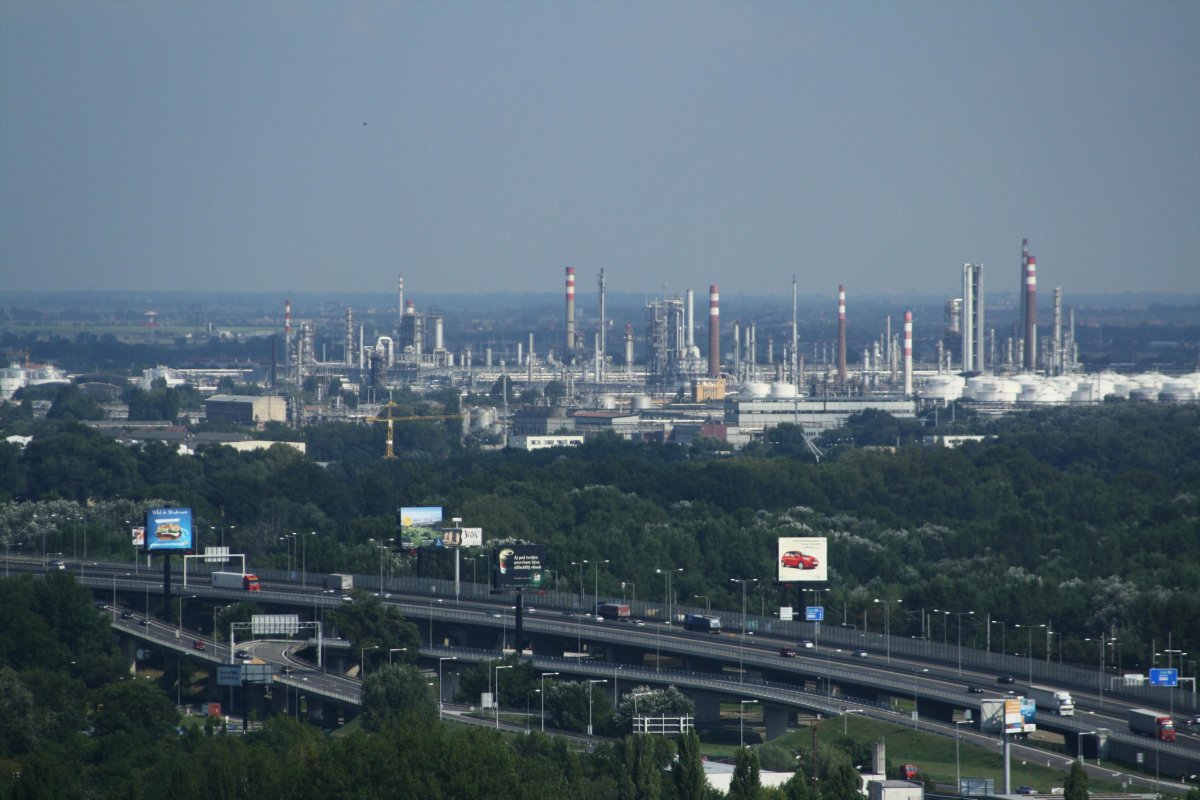
Slovnaft is both the refinery and the dominant fuel retailer in Slovakia, so the question of whether it should contribute to the measure has become the most contentious point of the whole package. Prime Minister Fico rejected the levy, saying that a similar instrument already exists. “We in Slovakia cannot introduce a special levy for refineries, because we already have one,” he said, referring to the sector tax. He also confirmed that Slovnaft representatives were present at the government meeting, and repeated the demand that Slovakia remain among the cheaper half of EU countries. TASR ↗The opposition sees it differently, although it does not agree on the instrument. Ján Hargaš, an MP for Progresívne Slovensko, demands that Slovnaft be taxed and the proceeds used for fuel vouchers for vulnerable households. Rastislav Krátky of KDH pointed out that a Slovnaft representative sat at the government meeting, but the refinery left it without any obligation to join in the solution. Veronika Remišová of Hnutie Slovensko summed it up with the sentence that “Fico orders the petrol station operators what margin they may have, but refuses to tax Slovnaft's windfall profits”. TA3 ↗ Sloboda a Solidarita is pushing yet another path, a reduction of the excise duty, that is, the instrument Czechia reached for. Trend ↗
What the margin cap will actually deliver remains open. Radovan Potočár, an analyst and editor-in-chief of the Energie-portal.sk portal, points out that the ten-cent limit is not a promise that every litre will get cheaper by ten cents, because the final price is still determined by the movement of input prices. Energie-portal.sk ↗
The differences between the models are not merely technical, because they differ in who bears the cost. In Slovakia, for fuel itself, according to a commentary by Iris Kopcsayová in the daily Pravda, it is borne mainly by the retailer, whom the state does not compensate for the limited margin, while for the cheaper fares the state will have to cover the carrier's loss of revenue. In Czechia, retailers and the state will share the costs; in Poland, the burden was borne mainly by the state through lower taxes. Pravda ↗
Beyond the V4, drought and supply worries are added to the price
Moldova has gone furthest. On Tuesday, parliament approved, by a vote of 54 to 20, a sixty-day state of emergency in the energy and water sectors, which takes effect on Saturday, 26 September, and will allow the authorities to respond quickly to disruptions in supplies of energy, fuel and water. Prime Minister Vasile Tofan described the combination of the war in the Middle East, the war in Ukraine and unprecedented drought as a “perfect storm” hitting a country of 2.4 million inhabitants. According to the AFP agency, the drought has lowered river levels across Europe, which worsens energy supplies further. TV Markíza ↗Moldovan Energy Minister Dorin Junghietu conceded that the price of diesel may reach the threshold of forty lei per litre, which is roughly two euros in conversion, and exceed it. NewsMaker ↗
What hotinfo is watching
- Ukázalo sa, či slovenský strop na maloobchodnú maržu vydržal celý október, alebo ho vláda upravila či zrušila
- Vláda rozhodla, či zľavu na vlaky predĺži aj na november, a či sa dohodla s krajmi na lacnejšej MHD
- Vláda zmenila postoj k osobitnému odvodu pre Slovnaft, alebo ho definitívne odmietla
- Český parlament rozhodol o návrhu mimoriadnej dane z rafinérskych marží
- Poľský Senát a prezident rozhodli o dani z mimoriadnych ziskov palivových koncernov
- Spojené štáty rozhodli o zákaze vývozu nafty