

Three Versions of One Warning
- Sánchez took sides in the Robles versus Marlaska dispute — and thereby weakened the other. According to El Español, his unconditional support for the interior minister is an untenable position for the defense minister. If Marlaska's version is correct, that the warning was not concrete enough, then Robles spoke inaccurately — and vice versa. The Prime Minister did not resolve the question with argument, but with weight. El Español ↗
- The PSOE is looking for a formula that would hold both: "Both things can be true at once." El Confidencial cites it as the party's official line. It is elegant and in principle possible — the warning could have existed and yet be too vague for action. However, it only explains the contradiction in their statements, not why no action was taken. El Confidencial ↗
- Economy Minister Carlos Cuerpo sided with Marlaska with a statement that turns the entire dispute upside down. He said that "if Ceuta could have been foreseen, measures would have been taken." That is exactly the crux of the dispute: according to Robles, it could have been foreseen. ABC ↗
- A fifth voice was added — and it is precisely the man who is managing the crisis. Ángel Víctor Torres, head of unified command in Ceuta, sided with Marlaska and against Robles: no message from the CNI came, he said. Until now, two ministers and the prime minister's office stood opposed; now also the one who has extraordinary powers directly on the ground. El Español ↗ El Mundo ↗ La Vanguardia ↗
- The Socialists are seeking an escape route from the dispute with the statement that "both things can be true at once". El País describes it as an attempt to reconcile Robles with Marlaska without anyone retracting their words. It would mean that the CNI warned, but not in the way and not to those that Robles suggested. El País ↗
- The opposition wants to move the dispute to where it can be verified: to the Commission for Official Secrets. Feijóo is demanding that the CNI explain directly to MPs which version of government's account is correct. It is so far the only proposed procedure that would resolve the dispute with evidence, not a press release. ABC ↗ El Español ↗
- Meanwhile, Robles' statement became evidence in a criminal complaint. The association Manos Limpias filed a complaint against the government delegate in Ceuta for "failing to prevent an invasion," and it bases it precisely on her testimony in Congress. The minister's statement thus ceased to be merely a political problem. ABC ↗
Robles was the first government member to come to parliament to explain the crisis. She began by apologizing to the residents of Ceuta, who felt "abandoned or inadequately accompanied," and after three hours admitted something no one in the government had said until then, namely that Madrid "arrived too late." What was significant, however, was what she said about July 29. On that day, according to her, CNI staff operating in Ceuta informed the government delegation in Ceuta about a call for the following day, "so that entry could be made by swimming" and to take advantage of a holiday in the neighboring country. That holiday is Throne Day, the anniversary of Mohamed VI's accession in 1999. El Mundo ↗
At the same time, at a press conference following a government meeting, Marlaska repeated that "there was no report indicating that on July 30 would happen what ultimately did happen," neither from Spanish services nor from intelligence services of allied countries. He added a question that he has repeated since: if something like that existed, would it really not reach the highest levels so that exceptional measures could be taken? Meanwhile, Robles in the same debate also publicly stated how many CNI staff are in Ceuta, speaking of twenty-five. eldiario.es ↗
The harshest denial came in the evening, directly from the prime minister's office. "There are no reports or oral warnings from the CNI to the government delegation or to any member of the government that anything could happen, even remotely similar to what happened," Moncloa said, and explained its own minister's statement by saying she "apparently did not express herself well." The government delegation in Ceuta issued its own statement, according to which it received only daily numbers on the increase in sea arrivals, not a warning, and noted that it has no authority over the intelligence service. El Mundo ↗
A fourth version was brought by the conservative newspaper ABC. According to its security sources, the intelligence service informed on July 29 that 180,000 people were preparing in Morocco for illegal entry into Spain, and the report was directed not only to the government delegation but also to the Civil Guard, the national police, and the mayor of the autonomous city, Juan Jesús Vivas, thus to "all branches" of the Interior Ministry. How many people ultimately crossed the border, however, is disputed. The government first spoke of 49,000 in the first twenty-four hours, the mayor Vivas of 60,000, a later government clarification settled on 72,000, and part of Spanish and foreign media report up to 80,000 over both days. ABC ↗
What exactly did the Moroccan minister say
- The claim was heard again, this time directly at a royal reception. The Bosnian portal Klix.ba reports on a "scandalous demand" presented before Muhammad VI, which calls for the "liberation" of Ceuta. It shifts the dispute from the level of a single minister's speech to the level of the court Klix.ba ↗.
On Monday evening, Muhammad VI held a religious ceremony at the royal palace in Rabat to commemorate the anniversary of the birth of the Prophet Muhammad. It was his first public appearance since the beginning of the crisis, and he was accompanied by the heir to the throne. Ahmed Toufiq, the minister of endowments and Islamic affairs, delivered an annual report to the Supreme Council of Scholars, and in one passage mentioned two scholars born in Ceuta, Qadi Iyad and al-Azafi, and immediately after them the book Dala'il al-Khayrat by Imam al-Jazuli, which according to him served as a rallying point for Moroccans in the "liberation of occupied cities on the Atlantic coast". Yabiladi ↗
These two things are not the same in the speech. "Occupied cities on the Atlantic coast" are historically ports that Morocco recaptured from the Portuguese at the turn of the Middle Ages and the modern era. Ceuta is not among them, although the Portuguese also conquered it, in August 1415. However, Morocco never recovered it, and Portugal permanently ceded it to Spain by the Treaty of Lisbon in 1668. This is precisely why the reference can be read in two ways, and Toufiq did not name Ceuta in that sentence. The newspaper El Mundo explicitly points this out, writing that the minister did not mention the names of Ceuta and Melilla in connection with "liberation" and did not explicitly link the historical reference to the July crisis. El Mundo ↗
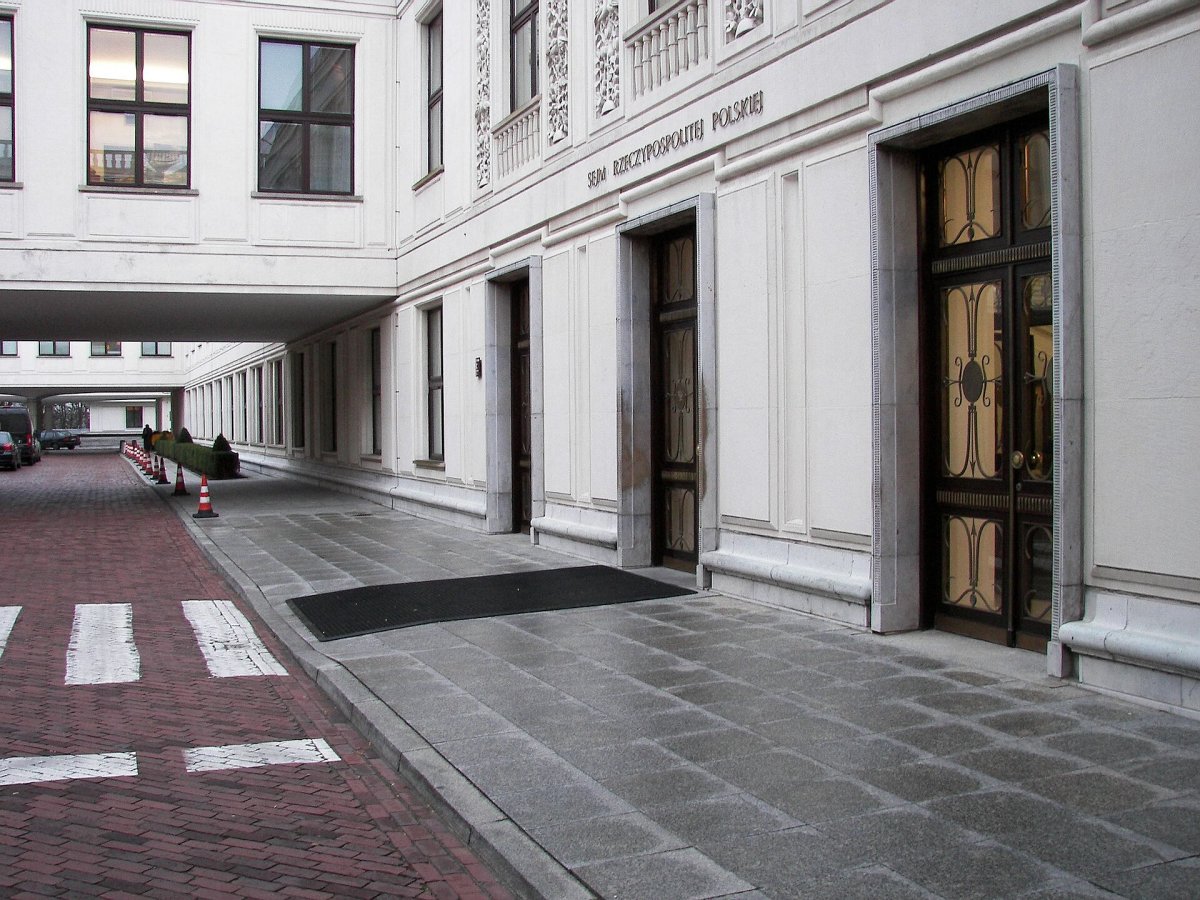
Moroccan media, however, connected them. The Yabiladi portal put directly in its headline that the minister recalled scholars from Ceuta and the "mobilization of Moroccans for the liberation of occupied cities". The Polish Rzeczpospolita, which in the article relies on the Moroccan portal Assahifa, wrote straight away that Toufiq designated Ceuta as "Moroccan territory" and supported its "liberation," and also quoted the argument for why Rabat attaches weight to this: the words were spoken "at an institutional event presided over by the sovereign". Rzeczpospolita ↗
More direct was the Justice Minister Abdellatif Ouahbi three days earlier. On Friday, August 21, speaking to the public television station 2M, he said that Ceuta and Melilla are Moroccan territories, to which the country has "historical and geographical rights," and called for the creation of a framework or commission for dialogue about their future. In the same statement about unaccompanied minors, he also declared that Morocco was prepared to take them back. Hespress ↗
None of this is new, and the overview from which we draw here was compiled by El Mundo. In December 2020, then-Moroccan Prime Minister Saadeddine Othmani said that Ceuta and Melilla are Moroccan "just as Sahara" is. In 2022, Muhammad VI himself declared that Morocco had not stopped calling for an end to Spanish occupation of both cities since independence, although he added that he chose the path of "clear reason". In September of the same year, Rabat sent a document to the UN High Commissioner for Human Rights claiming that no land borders exist between Morocco and Spain. In April 2023, the head of Morocco's House of Advisors said it was about "cities occupied by Spain," which the country would eventually recover through negotiation. El Mundo ↗
The Italian Ambassador Was Called, the Moroccan Ambassadress Was Not
- The question that started this text received an answer — and it is the opposite of what was expected. The Rabat government explicitly exonerated itself. It attributed the invasion of Ceuta to "foreign influence on social media, aimed at dividing the European Union". Madrid therefore not only did not call the Moroccan ambassadress, but designated someone else as the originator of the crisis. El Español ↗
- Overnight Wednesday to Thursday, twelve migrants who pelted a military patrol in the Benzú neighborhood were detained. Four soldiers were injured. It is the first case of this crisis when direct physical violence was directed against the army on Spanish territory. El Español ↗El Confidencial ↗
- Three ministers went to explain the crisis to Congress — twenty-eight days after its outbreak. Félix Bolaños, Ángel Víctor Torres, and Mónica García appeared before the National Security Commission. Bolaños asked the residents of Ceuta for "confidence and peace," and the People's Party responded that the government's inaction was to blame for the escalation of tensions. La Vanguardia ↗El Mundo ↗El Español ↗
- José María Aznar arrived in the city and, according to La Vanguardia, the government watched it in amazement. Aznar is the only Spanish prime minister who confronted Rabat directly — he reportedly told Hassan II: "If you wage war against Spain, you will lose it." His visit came on the day when the current government exonerated Rabat. La Vanguardia ↗El Español ↗
- An unpleasant detail from the past has been added to soft diplomacy: Marlaska decorated the head of Moroccan intelligence months before the crisis. According to ABC, it is Abdellatif Hammouchi, the same man whom the hacker group Jabaroot designates as the organizer of the Ceuta operation. The decoration is a documented fact; the group's accusation remains unproven. ABC ↗
- The first call from the left to break relations with Morocco was heard. Podemos speaks of an "inhuman and calculated" approach by the government. It is the first proposal for a specific diplomatic step from any party — and it comes from a former government partner, not from the right-wing opposition. La Vanguardia ↗
- On Thursday, Aznar will arrive in Ceuta, 24 years after the Perejil island crisis. The former prime minister then faced the dispute with Morocco with military action. The visit is symbolic, but precisely because of that it can be read as a reminder that an alternative approach exists. La Vanguardia ↗
Spain chose a hard response at home and a soft one externally. For the first time in history, it activated the national security law, declared Ceuta a "situation of national security interest," and established unified command headed by the minister for territorial policy Ángel Víctor Torres, who received extraordinary powers. The government has now extended them until December 31. In security doctrine, the country thereby moved a single step away from officially designating the event as a hybrid attack. El Español ↗
Diplomatically, nothing happened. The Foreign Ministry under José Manuel Albares did not call the Moroccan ambassadress Karima Benyaich for a formal protest, nor did it recall the Spanish ambassador from Rabat for consultations. The only step is a note from Friday, August 21, according to which Ceuta and Melilla are Spanish cities and an "integral part" of Spain's and the European Union's territory. The contrast is striking. When Italy suspended Schengen with Spain after the Ceuta crisis, Albares called the Italian ambassador immediately, and in smaller disputes Madrid even recalled its own ambassadress from Argentina. One diplomatic source summed it up for El Español by saying that "they would sooner call the nuncio or the ambassador of Andorra than the Moroccan one." El Español ↗
The difference from the past is measurable in one case. When in 2020 Othmani's statement about the Sahara was made, Spain called the Moroccan ambassadress to the Foreign Ministry and demanded respect for its territorial integrity. Since then, the demands have been repeated more firmly, the number of people who crossed the border has grown to tens of thousands, and no formal protest was issued. El Mundo ↗
Next date is 23 September
- The crisis has meanwhile shifted from borders to accommodation capacities. The government convened regions to agree on the distribution of minors, and El País writes that the struggle over spaces to house migrants is prolonging the whole matter. This is the phase in which a foreign policy dispute becomes an internal burden-sharing division. La Vanguardia ↗El País ↗
- The dispute has also spread to Melilla. The former head of its government, Imbroda, declared that "PSOE will go underground in Melilla for not supporting Ceuta," and accused the socialists of "placing personal interests above values." Spain's second enclave in Africa thus received its own branch of the same case. (El Español ↗)
- Foreign newsrooms stopped writing about the border and started writing about Sánchez. French Libération speaks of a test for the prime minister, Dutch NU.nl of a wound that "festers in Madrid," and Portuguese Observador asks whether the Ceuta crisis was a warning. They agree on what is essential about it after four weeks: not the number of people at the fence, but whether the government managed the crisis. (Libération ↗, NU.nl ↗, Observador ↗)
- A closer date than 23 September was added to the calendar: Friday. According to ABC, Sánchez will meet with Minister Torres and the president of Ceuta Vivas. For the first time, he will sit down for talks directly with the man who leads the city and who has criticized the government all week. ABC ↗
- The distribution of minors also divides the ruling party — Junta against PSOE. ABC writes of another rift, this time in Castile and León. The mechanism that was supposed to distribute the crisis among regions is meanwhile breaking it down within parties. ABC ↗
- Galicia as a counterexample: will accept the distribution of children. ABC states that it declared itself "in solidarity with Ceuta." Alongside the Junta's refusals and the dispute in Castile, it shows that the mechanism is not dead — only uneven. ABC ↗
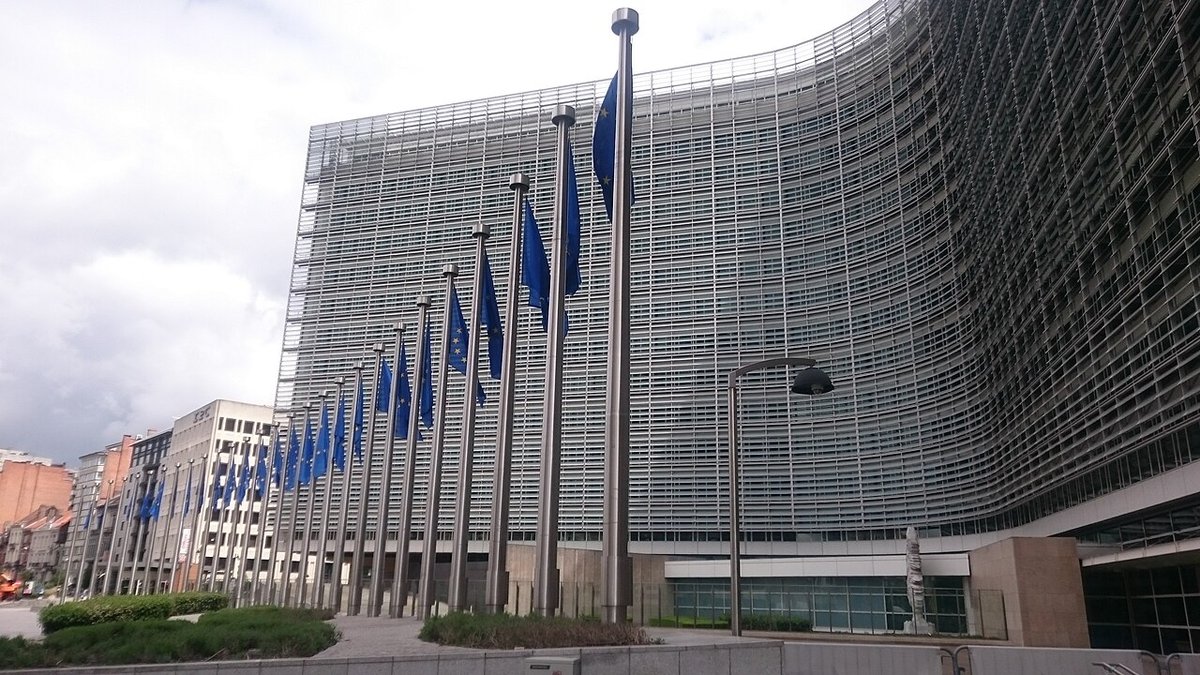
- And the question Spain is asking aloud: how to defend the common border? El Español writes that pressure on Ceuta is a challenge for all of Europe. It is the same idea as in the EU aid request from the previous wave, this time formulated as a European problem, not a Spanish plea. El Español ↗
- Madrid has Europeanized the crisis: Spain is asking the European Union for help. Swiss Tages-Anzeiger states that thousands of migrants continue to persist in Ceuta and the government has turned to Brussels. Until now it was a Spanish-Moroccan dispute; with this request it becomes an item on the European agenda — and simultaneously an admission that its own capacities are insufficient. Tages-Anzeiger ↗
- The crisis thus does not retreat, it just moved from headlines to administration. Austrian Kurier has it right in the headline: after the mass onslaught, the situation persists. Kurier ↗
- The government won all the votes on Ceuta on Wednesday — and yet lost. La Vanguardia writes that Sánchez maintained his majority, but lost credit with coalition partners. With a minority government, this is a more substantial figure than the vote result. La Vanguardia ↗
- The Popular Party wants to bring Sánchez and four ministers before Congress at once. It is not just about the prime minister's appearance, whose date was disputed in the previous wave; the PP is demanding an entire block of appearances on Ceuta and other crises. El País ↗
- The General Prosecutor will also travel to Ceuta on Thursday, due to the migrant situation. This means the matter has ceased to be merely a security and political issue and is taking on a legal dimension — especially regarding minors, whose numbers were being recalculated in the previous wave. La Vanguardia ↗
- Sánchez will go to Congress to explain — but the date differs in the two newspapers. La Vanguardia writes about September 3, ABC about September 9. The difference is six days and neither newspaper comments on it; which date is valid cannot be determined from our window. La Vanguardia ↗ ABC ↗
- The distribution of minors is falling apart before it begins. Junts refuses to take children from Ceuta and demands competencies in immigration and borders for it, Vox announced it will challenge every single file, and Castile and León, Extremadura, and Aragon will not come to the talks about children at all. El Confidencial ↗ ABC ↗ La Vanguardia ↗
- Madrid reclassified the situation as a national security matter. Hungarian Index writes that the Spanish government thus formally removed Ceuta from the Interior Ministry's agenda. This is the first step by which the government itself admits that it is not just a migration event (Index ↗).
- Congress will vote on summoning the prime minister and ten ministers. The Standing Committee decides on the appearance; if it passes, Sánchez and his government will have to explain to the deputies precisely those contradictions in the CNI warning that this text discusses (El Confidencial ↗).
Security sources tell ABC that the services continue to monitor social networks and are tracking one date in particular. It is September 23, when parliamentary elections are held in Morocco, the sixth in Mohamed VI's reign. Forums have already begun calling for another mass entry into Ceuta timed for election day, although with less intensity than in July. The argument that repeats in them according to these sources is that the elections are manipulated and undemocratic. ABC ↗
Mass entry attempts have been circulating since May and reached their peak on July 8, when a ruling by the Spanish Supreme Court began to be used in them, stating that whoever enters Ceuta by swimming cannot be returned on the spot. Another attempt called for August 15 failed because Morocco then deployed a large police apparatus at the border. From what security sources of ABC newspaper say about both dates, a sober answer emerges to the question of what the July collapse reveals. The same call on those same networks works or does not work depending on whether Moroccan border guards are at the border. ABC ↗
Hackers Claim It Was a State Operation
A data breach has also entered the dispute. A group acting under the name Jabaroot has released data on 70,381 people, whom it identifies as members of Morocco's internal intelligence service DGST and national police DGSN. According to El Mundo, this is the largest documented breach of Moroccan security services since their establishment. European services, including Spanish, Dutch, and French ones, according to the same newspaper, currently assess the data as authentic, although they may be outdated, because the names in the list exist and some have long been known to European intelligence. This is a reconstruction by one editorial office, not an official statement by any of those services. El Mundo ↗More importantly, what the group claims additionally. It has released excerpts from orders to agents who, according to it, traveled to the border city of Fnideq before and during the entry, threatens to release the full documents, and identifies Abdellatif Hamouchi, who heads both DGST and DGSN, and Fouad Ali El Himmu, the king's chief advisor, as responsible. This is a claim by a hacker group whose identity no one knows, not a verified fact. Morocco accuses Algeria of the breach, European services reject this origin, and companies that technically tracked the hacker locate him in Germany. El Mundo ↗
The official Spanish version says the exact opposite. Robles relied in Congress on a report by the General Staff of Defense and described the crisis as three phases characterized by spontaneity. A ruling about swimmers triggered a viral effect on social media, with the original hundreds of people becoming thousands, and on the day of entry, according to a footage analysis, the "vast majority was unprepared, did not plan the crossing and took advantage of the opportunity." The minister admitted the existence of "interested actors who probably facilitated the crisis or are using it for political destabilization," but did not claim it was a planned state operation. eldiario.es ↗
What Slovak and Czech journalism is missing
- The crisis spilled into the streets in the evening: more than two thousand residents in front of the government delegation building. El Confidencial speaks of a protest against "inaction" by the state. So far the dispute had been conducted between institutions in Madrid; this is the first time it has been seen on the streets in the enclave itself. El Confidencial ↗
- A sentence that makes the protest something other than politics: "We live in four blocks." El País describes a city where 84,000 people are packed into 18 square kilometers and where the distance between a reception center and living quarters is measured in meters. That is a difference compared to mainland debates about quotas. El País ↗
- Ceuta escalates protest directly against Sánchez. El Español cites the protesters' slogan: "We don't matter to him, his priority is not to bother Morocco." The target is no longer the ministry, but the prime minister personally. El Español ↗
- The government will send police to schools — and will guard them at night too. El Mundo writes that the goal is to prevent migrants from entering buildings before the start of the school year. It is the first measure that brings the crisis into the city's everyday infrastructure. El Mundo ↗
- At the same time, the government will withdraw sports halls as reception centers. According to El Mundo, amid protests it is backing away from the solution it deployed as emergency. Capacities will thus drop — and the question of what to do with the people returns to square one. El Mundo ↗
- The school community fears the start of the year: "How will they guarantee children's safety?" ABC collected voices of teachers and parents. It is the same question the government answers with police in schools — just posed from the other side. ABC ↗
- Fernando Simón is going to Ceuta to monitor epidemiological risk. ABC reports that the Ministry of Health sent an epidemiologist known from the pandemic. So far the crisis had been framed as a security and diplomatic issue; this is the first signal it is being taken as a health issue as well. ABC ↗
- Seville also calls a solidarity gathering. The mayor called on residents to participate in a rally in defense of Ceuta (ABC). The protest thus stops being local and begins to spread to the mainland. ABC ↗
- The key figure of the crisis shrank by nearly half overnight. The government reduced the number of registered minor migrants in Ceuta from 2,900 to 1,500 after cleaning up computer records. If the new figure is correct, it means that some children were registered multiple times — and that all previous capacity calculations were based on false premises. El Confidencial ↗
- German Tagesschau reminds us what is being lost in the dispute over the warning: thousands of people are still waiting in the enclave. It is the only text in today's window outside Spain that returns to what it looks like on the ground now. Tagesschau ↗
- The sharpest criticism came from within the ruling party, not from the opposition. Emiliano García-Page, the socialist leader of Castile-La Mancha, accuses Sánchez of addressing the "invasion" too late because he was on vacation and demands they all be sent back. The People's Party at the same time speaks of "civil war" within the government. The dispute thus is no longer between the government and opposition, but cuts across both. El Español ↗ La Vanguardia ↗
- German taz meanwhile published a report about "Ceuta's forgotten" — about people who remained in the enclave after the media wave subsided. It is so far the only text in our window that returns to human fates after attention shifted to sovereignty (taz ↗).
Ceuta is not missing from Slovak and Czech media. In the past week it was written about by SME, Aktuality, Pravda, Hospodárske noviny and Czech Novinky, Deník and Aktuálně, but almost exclusively as a migration and humanitarian crisis and as an internal problem for Pedro Sánchez. In the headlines of monitored Slovak and Czech sources over seven days there is not a single article about Toufiq's speech, about Madrid not summoning the Moroccan ambassador, about a data leak from Moroccan services, or about the date September 23.
The difference is not that Spanish newsrooms have information that ours cannot access. It is in how they categorize the event. While in Slovak and Czech coverage Ceuta is a chapter of migration policy, in Madrid it has been written about for three weeks as a dispute over sovereignty, involving the intelligence service, ambassadors, and the neighboring country's election calendar. For a reader in Central Europe, it is a difference with practical impact, because hybrid pressure on the EU's external border is a pattern they also know from the Belarus-Poland and Belarus-Latvia borders.
Read also: Morocco's electricity is held by 29 kilometers of cables under Gibraltar. After the crisis in Ceuta, Madrid is talking about an energy lever
Limits of this perspective
- This is the final update wave of this text. In two days, five layers were added to it and the dispute shifted from the question of whether Morocco is claiming Ceuta, to how Madrid is coping with its own crisis management. Further developments—Morocco's elections on September 23rd and the fate of unified command in Ceuta—go into a separate article and we continue to track open commitments in our public tracker.
Most of the newspapers that this text relies on—namely El Mundo, ABC, and El Español—stand to the right of center and are consistently critical of Sánchez's government. This influences what stands out most sharply in their reporting: contradictions between ministers, diplomatic inaction, and Moroccan claims. A counterweight is the left-wing eldiario.es, which was the only one to publish a strong denial from the Prime Minister's office and also presented an argument against Robles, namely that no one in the government considers it realistic that the CNI would have information and not pass it to its own minister, or that the minister would have it and not pass it to the Prime Minister.
The government deserves credit for what gets lost in critical coverage. Its position is not merely denial: it rests on an analysis by the General Staff, according to which it was a spontaneous movement triggered by a court ruling and social networks, and stopping a crowd of such size by force carries its own risks, which in Melilla in 2022 ended with dozens dead.
We read Moroccan sources with the same caution. Yabiladi and Hespress often reproduce the official Moroccan frame and routinely refer to Ceuta as an "occupied city," so the way they headlined Toufiq's speech is itself a political act. That is precisely why we separated in the text what the minister said from how it was presented.
The Jabaroot group's claim about state-planned entry remains unverified. What has been verified so far is only that the leaked lists appear authentic, not what conclusions the group draws from them. The contradiction between its version and the report of the Spanish General Staff remains unresolvable for now, and we therefore leave it standing side by side in the text.
This text ultimately says almost nothing about the people who remained in Ceuta. According to the NGO Caminando Fronteras, at least 145 people died during the July crossing, and since August 21st, 78 victims were buried at the Sidi Embarek cemetery. That is a separate topic with its own weight.
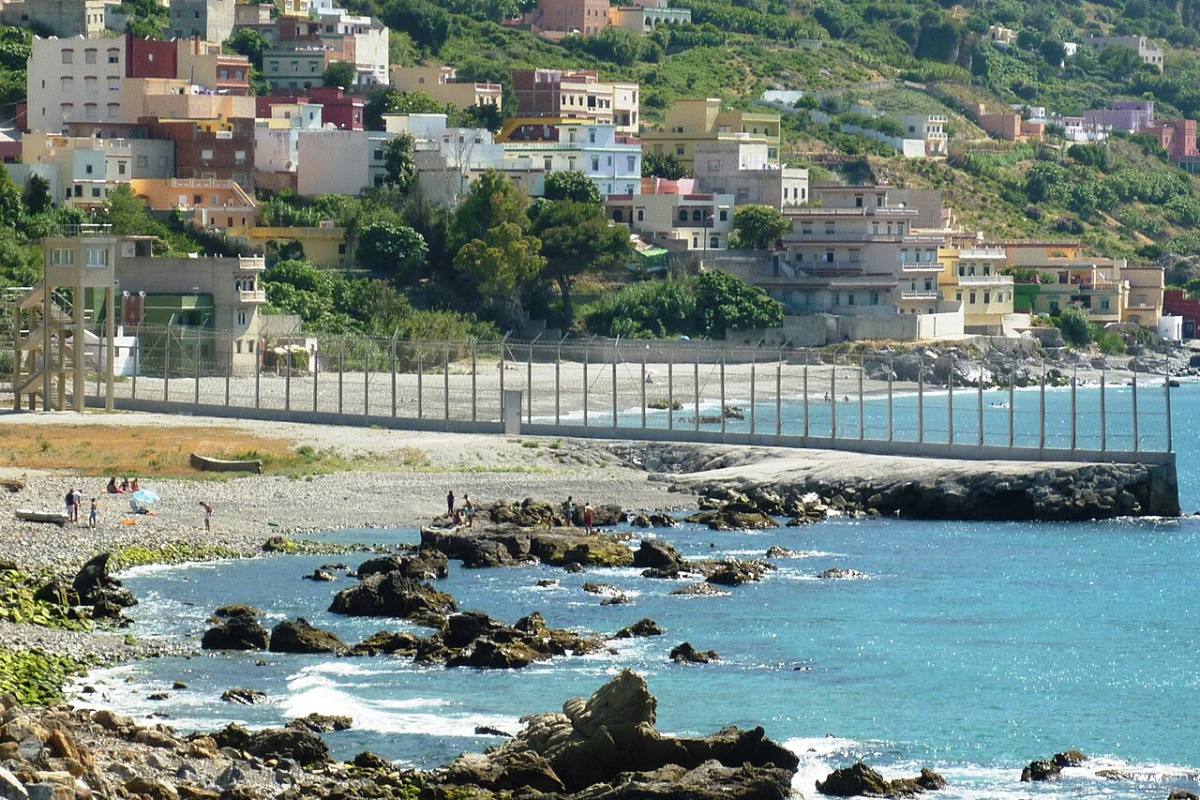
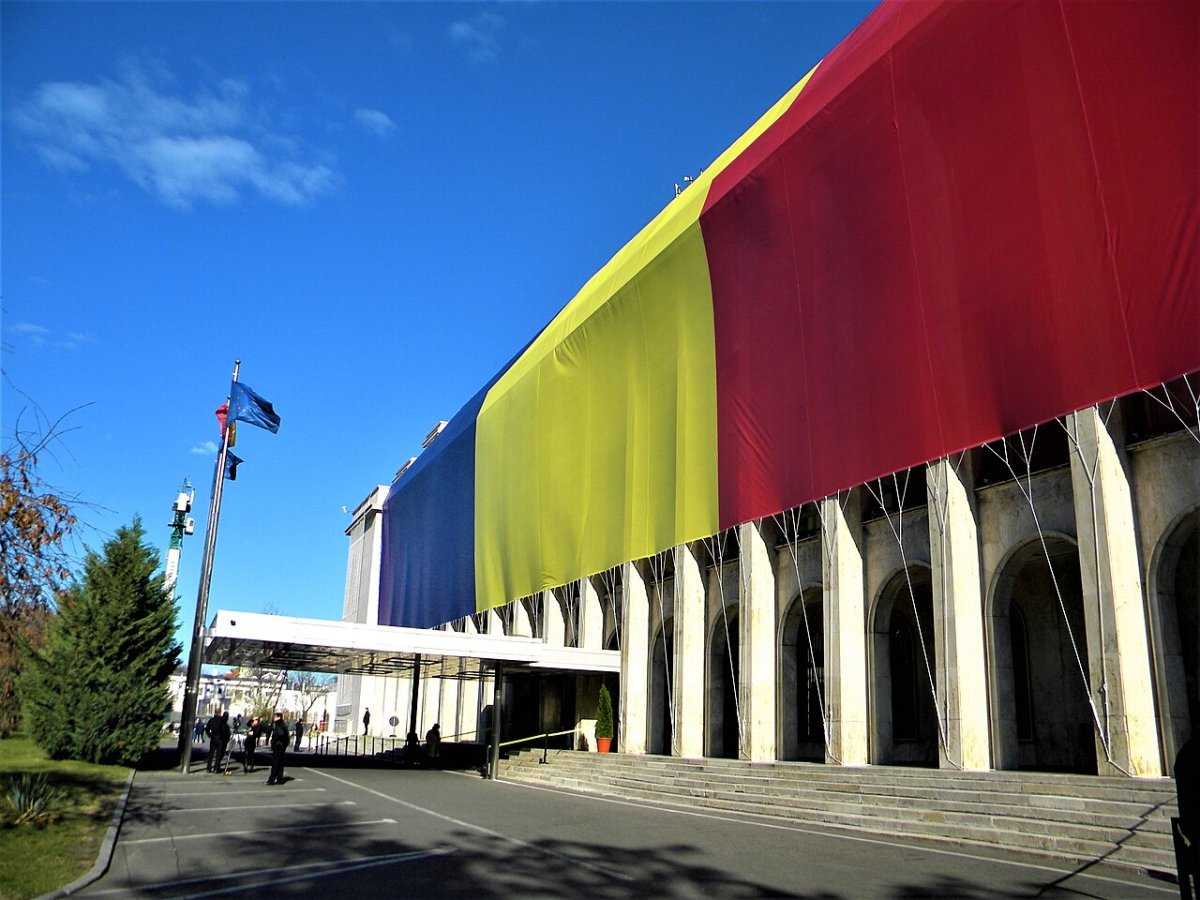
Illustration photo: Ceuta at the Strait of Gibraltar, view from the Moroccan road N16. Author hiroo yamagata, Wikimedia Commons, license CC BY-SA 2.0.
What hotinfo is tracking
- The CNI's director explained the July 29 warning before the parliamentary committee on official secrets.
- The Jabaroot group published the full documents it is threatening to release, or a European service confirmed or refuted their authenticity.
- The fate of the unified command in Ceuta after December 31, 2026 was decided.
- Spain summoned the Moroccan ambassador for a formal protest or recalled its own ambassador from Rabat for consultations.Vlna 5 (27.8.): vláda urobila opak — Rabat výslovne zbavila viny a inváziu pripísala „zahraničnému vplyvu na sociálnych sieťach s cieľom rozdeliť EÚ". Marocká veľvyslankyňa zvolaná nebola a po exkulpácii už na to nie je dôvod.
- Morocco's parliamentary elections took place on September 23 and it is known whether another mass attempt to enter Ceuta came that day.→ Ceuta: pláž Trampolín sa vypratáva pred kráľom, sudkyňa vidí indície proti vyso…Marocké voľby 23.9. prebehli, v ten deň hromadný prechod do Ceuty neprišiel; hranica pod silným dozorom, výzvy na sieťach sa nenaplnili. Voľby vyhrala strana blízka kráľovi.