

Belgrade: a seller who doesn't want to sell
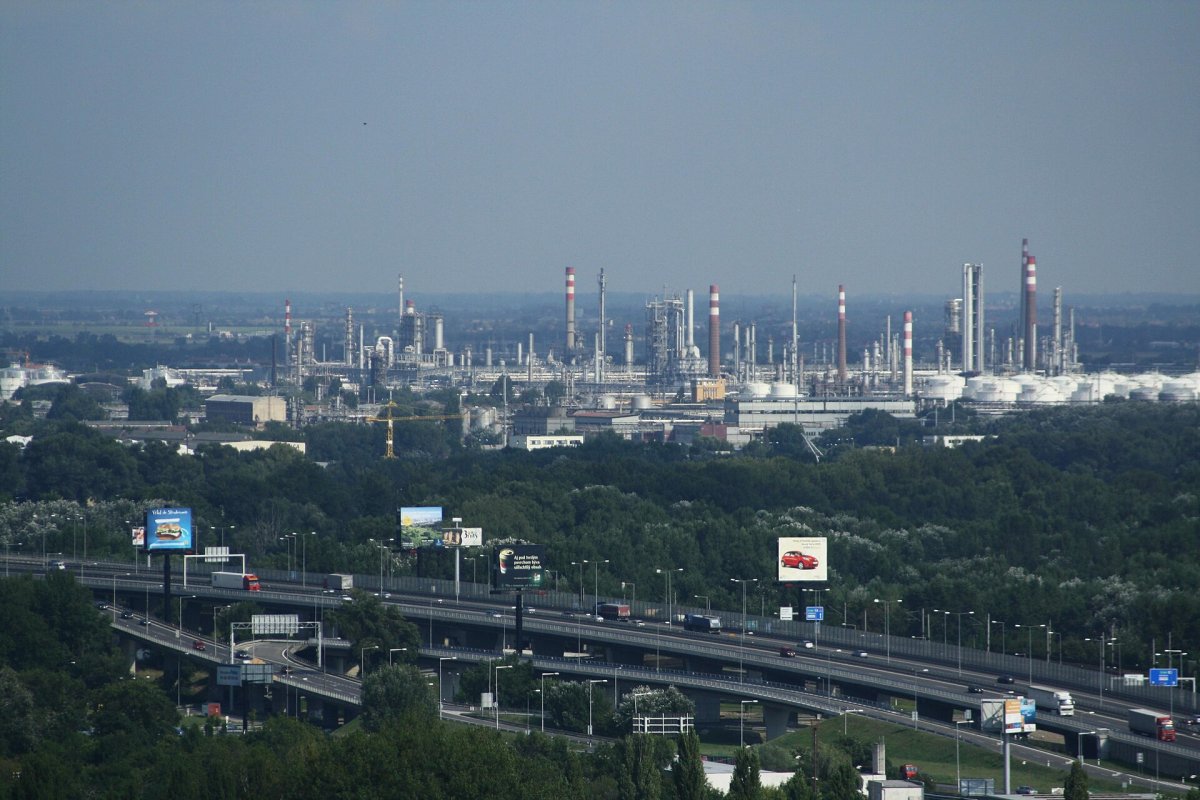
NIS operates the refinery in Pančevo — the only functioning one in Serbia, which covers around 80 percent of domestic fuel consumption. That is precisely why the deal is sensitive for Belgrade: the 56.15-percent stake held by Russia's Gazprom Neft together with parent company Gazprom must, under American pressure, be moved out of Russian hands, but Serbia does not want to lose influence over critical infrastructure. Danas ↗The US Treasury Department placed NIS on the sanctions list over Russian ownership at the start of 2025; the sanctions took full effect on October 9, when oil stopped flowing to Serbia through the Croatian Janaf pipeline. The refinery in Pančevo, after exhausting its reserves, ultimately halted production in early December, and the threat of a winter fuel shortage forced Belgrade to act. SeeNews ↗
Serbian independent media such as N1 and Danas, as well as the regional portal European Western Balkans, describe a government that is not satisfied with MOL's offer. Mining and Energy Minister Dubravka Đedović Handanović rejected it, saying it "does not correspond to the agreed and strategically important levels of processing" oil in Pančevo. Meanwhile a rival has emerged: Serbian businessman Ranko Mimović reportedly offered, according to regional media, up to two billion euros for the Russian stake — double what MOL is offering (according to President Aleksandar Vučić, MOL's offer amounts to 900 million to one billion euros). However, Vučić publicly cast doubt on him, saying he "doesn't know him" and that he lacks experience. European Western Balkans ↗
Budapest: a strategic win, or Orbán's legacy?
Hungarian newsrooms read the same news completely differently. The business desks of Index, Telex and Portfolio report "significant progress" and present it as good news for MOL, which is getting closer to taking over the Russian stake in NIS and is finalizing the transaction documentation. Not a word about Serbia's objections. Index.hu ↗ Portfolio ↗The opposition portal 444, long critical of Orbán, gives the deal another layer. It notes that the fate of NIS has so far essentially been decided by two men — Viktor Orbán and Aleksandar Vučić — and openly speaks of the "serious geopolitical significance" of the transaction as well as the risk that Hungary could serve as a tool for circumventing Western sanctions. 444 ↗
What Slovak media are missing
The most important context wasn't lost in translation — it's simply absent from Slovak reporting altogether. MOL signed the agreement on January 19, still under Orbán's government. Less than three months later, on April 12, Orbán lost the election, and Péter Magyar of the Tisza party became Hungary's new prime minister. It was precisely the personal trust between Orbán and Vučić that had held the whole deal together — and that trust is now unraveling following the change of government in Budapest. The outlet bne IntelliNews writes that after Orbán's defeat, the entire deal is uncertain: both Vučić and the Russian owners have lost their appetite for selling NIS to the Hungarians. bne IntelliNews ↗For a Slovak reader, this is not a distant Balkan story. MOL owns both Slovnaft and the Croatian refinery INA; if the Serbian NIS were added to them, a single Hungarian company would control significant refining capacity across Central Europe with a direct impact on the Slovak fuel market.
Also read: Hungarian press takes stock of Prime Minister Magyar's first month: successes in Brussels, skepticism at home
Limits of this view
Every lens has its own tilt. N1 and Danas belong to Serbian media critical of Vučić, so their framing highlights government failures and secrecy; the portal 444, meanwhile, writes from the position of the former Orbán opposition, and its labeling of Hungary as a "sanctions evader" also serves domestic politics. Moreover, we know the Russian side's position only indirectly — direct statements from Gazprom on the sale are lacking.What hotinfo is tracking
- Whether MOL manages to close the transaction by the new OFAC deadline of June 16, or requests a further extension.
- How Péter Magyar's government will approach the inherited deal — will it push it through, or reconsider it as part of a shift away from Orbán's pro-Russian line.
- Whether Mimović's two-billion offer is a real alternative or merely Belgrade's leverage to pressure the price offered by MOL.
- The impact of a potential takeover on Slovnaft and the Slovak fuel market.