
Key actors — tap for context
Jewish Code
Government Decree No. 198/1941 Coll. on the legal status of Jews, the most extensive anti-Jewish regulation adopted in Slovakia
Why here: The document whose text we read and analysed
More info →
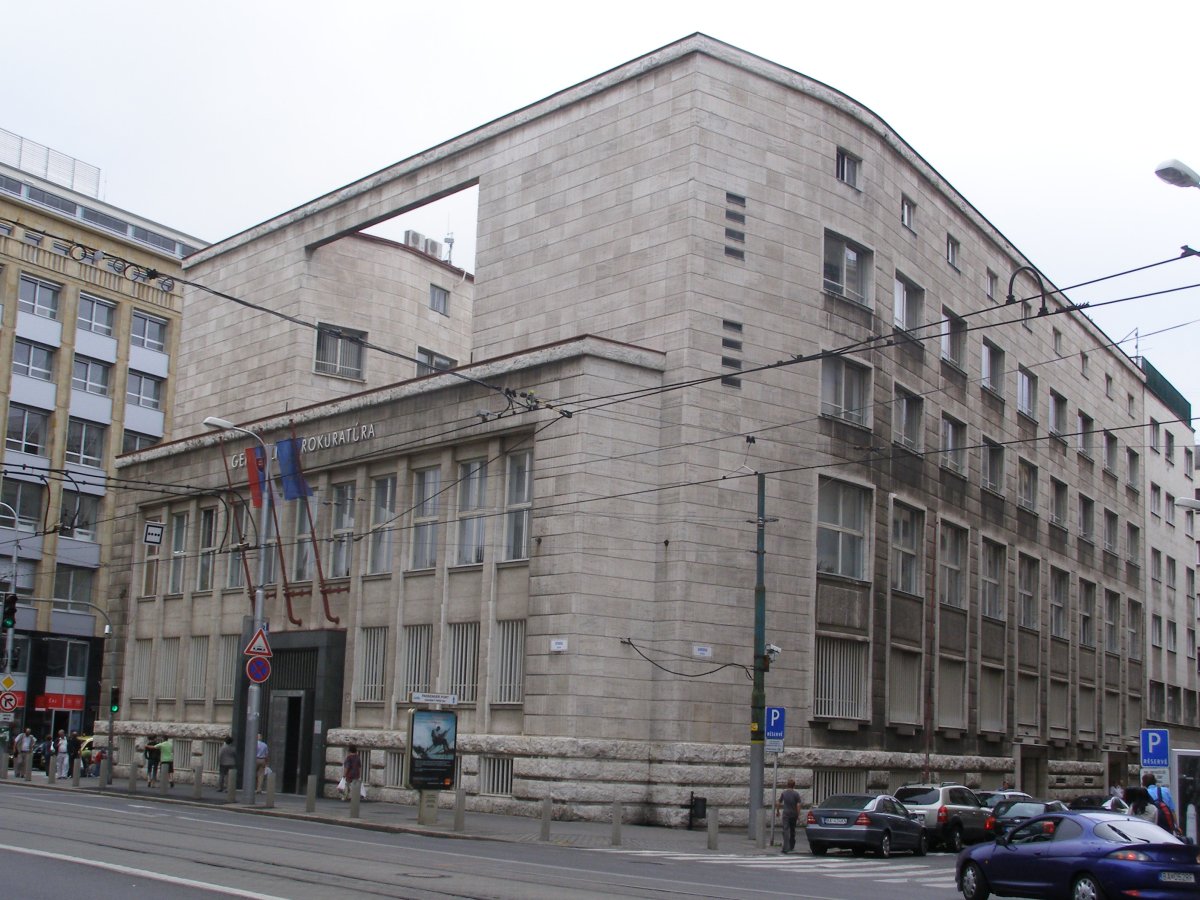
Nation’s Memory Institute
A Slovak public-law institution that makes documents from the years of unfreedom accessible
Why here: It publishes the full text of the code and the 1942 constitutional law
More info →Central Economic Office
An office established in 1940 to exclude Jews from the economy and transfer their property
Why here: The body to which the code grants the greatest powers over the handling of property
More info →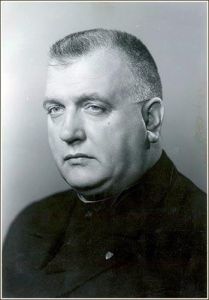
Jozef Tiso
President of the wartime Slovak Republic from 1939 to 1945
Why here: The code gives him general authority to grant exemptions; the 1942 constitutional law bears his signature
More info →
Vojtech Tuka
Prime Minister of the wartime Slovak Republic
Why here: The first person to sign the code
More info →Augustín Morávek
Head of the Central Economic Office from 1940 to 1942
Why here: He directed the Aryanization and liquidation of Jewish businesses
More info →
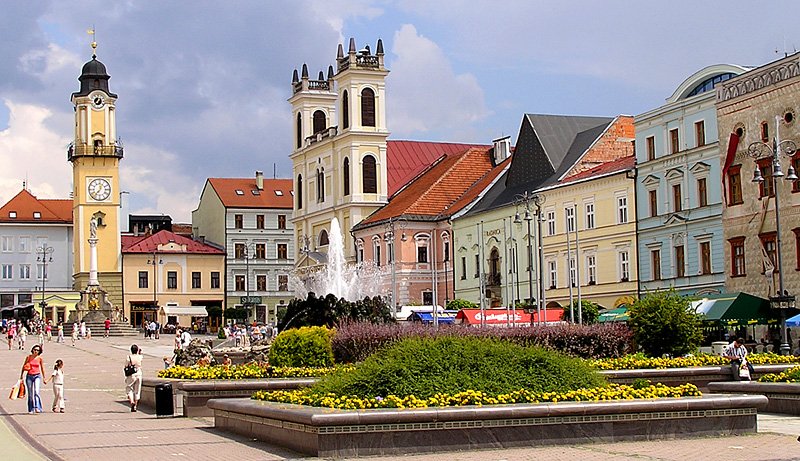
Poprad
A district town in north-eastern Slovakia
Why here: The first transport to Auschwitz departed from its railway station on 25 March 1942
More info →
Sereď
A town in the Trnava Region
Why here: The site of one of the camps on Slovak territory; the Holocaust Museum is now located there
More info →
Slovak National Gallery
A Slovak state art-history institution
Why here: Its project on the wartime state gives the number of presidential exemptions
More info →What is in those 270 paragraphs
The code contains unnumbered General Provisions followed by twelve numbered sections. The General Provisions contain five paragraphs; the Personal Status section contains 51 and the Exclusion from Public Life section 26. Property is covered by Legal Status of Property, with 27 paragraphs; Transfer of Property, with 105; the Fund for Supporting the Emigration of Jews, with one; Administration of Property, with 17; Bearing the Costs of the Review and Valuation of Businesses, with three; and Special Provisions on Taxes and Fees, with 14. The remainder consists of Common Provisions, with five paragraphs; Exemptions, with two; Transitional Provisions, with eleven; and Final Provisions, with three. ÚPN — plné znenie ↗The six property sections contain 167 paragraphs in total, or 61.9 percent of the 270. This is our own calculation based on the text published by the Nation’s Memory Institute, not a figure taken from the institution. It is a count of paragraphs according to their classification into sections, not a share of the text or a substantive classification of each provision separately.
The boundary is not clear-cut, moreover, because property-related provisions also appear outside those six sections. Paragraph 254 in the Common Provisions sets the rates of fees for exemptions, while paragraph 259 in the Transitional Provisions deals with the confiscation of radio receivers and weapons, together with the surrender of passports, driving licences and firearms licences. The figure 167 therefore refers to the classification of paragraphs into sections, not to a substantive classification of each one.
Whom the code entrusted with decision-making
The Central Economic Office received the greatest powers. Under paragraph 28, it could, in agreement with the Ministry of the Interior, order Jews to move out of a particular municipality and simultaneously require them to move into another, or designate districts to which they were not allowed to move. Under paragraph 110, Jews and non-Jewish spouses of Jews were required to declare all their property. The office decided on liquidation and Aryanization, authorised the employment of Jews, and controlled the handling of blocked accounts and deposited valuables; its decisions were final. ÚPN ↗This is also reflected in how often it appears in the text. According to our calculation, the Central Economic Office, including inflected forms, appears in 71 paragraphs and 137 times, while the Ministry of the Interior appears in thirteen paragraphs. Frequency alone does not measure power or responsibility; it merely shows which area of administration fills the regulation. ÚPN — plné znenie ↗
The office was not created by the code. It was established by Decree No. 222/1940 of 16 September 1940 and operated until 1945; according to an archival description, it began functioning in October 1940. Its head until July 1942 was Augustín Morávek, after which Ľudovít Paškovič took over and reorganised the office. EHRI ↗
Aryanization did not begin with the code. The first Aryanization law was Act No. 113/1940 of April 1940, and the second was Decree No. 303/1940 of 30 November 1940, under which more than 2,200 businesses were Aryanized. ÚPN ↗ The government issued the code under paragraph 1 of Constitutional Act No. 210/1940, which the Assembly adopted on 3 September 1940 and which authorised it to take measures to exclude Jews from economic and social life and transfer their property into Christian hands. ÚPN ↗ The dominance of property-related provisions in the text therefore corresponds to what the government had been empowered to do.
Who was a Jew under the code
The code embraced a racial criterion, but based it on religious records. Under paragraph 1, a Jew was considered to be anyone descended from at least three grandparents who were Jewish by race. However, a so-called Jewish person of mixed descent with two such grandparents was also considered a Jew if additional conditions were met—for example, if, as of 20 April 1939, they belonged to the Israelite faith or entered it after that date. There are more conditions in the paragraph and they are tied to specific dates, so this summary is not a complete definition. ÚPN — plné znenie ↗The key definition appears in the following paragraph: a grandparent who belonged to the Israelite faith was to be considered a Jewish grandparent by race. Race was therefore not determined biologically, but from registry records. The regulation thus affected people who were not themselves religious or who had been baptised. Certificates stating that someone was not Jewish were issued by municipal and district notary offices; in doubtful cases, the Ministry of the Interior decided.
What the code left to implementing regulations
The code itself does not specify the form of the compulsory mark. Paragraph 8 imposes the duty to wear a Jewish mark, but leaves details of its form and how it is to be worn to a decree by the Minister of the Interior published in the Official Gazette, while also entrusting that same minister with general exemptions. The Jewish star is mentioned only once in the text, in paragraph 27, which orders that it be placed on postal items. Failure to wear the mark was punishable by a fine of 100 to 10,000 crowns, converted, if uncollectible, into one to fifteen days’ imprisonment. ÚPN — plné znenie ↗The other measures are specified in the text. Paragraph 9 prohibits marriage between a Jew and a non-Jew, and knowingly violating the ban was punishable by up to three years in prison, together with loss of office and voting rights. Paragraph 10 made knowingly engaging in extramarital sexual intercourse between a Jewish man and a non-Jewish woman, or between a Jewish woman and a non-Jewish man, punishable by up to five years in prison—in other words, intercourse between groups that the regulation itself defined. Paragraph 12 deprived Jews of the right to vote and to be elected to the Assembly, the document’s only mention of parliament. Under paragraph 22, Jews aged 16 to 60, subject to specified exceptions, were required to perform work ordered by the Ministry of the Interior. Paragraph 41 prohibited the employment of non-Jewish domestic helpers in Jewish households, and paragraph 257 stipulated that such employment had to end no later than 31 October 1941.
Exemptions had a fee schedule
The tenth section is called Exemptions and Exceptions and consists of two paragraphs. Paragraph 255 states that the President of the Republic may grant exemptions from the provisions of the decree, that they may be full or partial, and that they may be made conditional. The third subsection adds one sentence: exemptions may be revoked at any time. Paragraph 256 treats previously granted exceptions as exemptions from corresponding provisions of the new regulation and subjects them to the same revocability. An exemption was therefore not a legal entitlement; it could be conditional and could be withdrawn. ÚPN — plné znenie ↗The code also includes a schedule of fees. Paragraph 254 sets a fee for an official act concerning exemptions under paragraph 255: an exemption from paragraph 1—that is, from being considered Jewish under the regulation—cost 1,000 to 500,000 crowns; an exemption from paragraph 2 cost 500 to 100,000 crowns; and an exemption from individual provisions cost 10 to 300,000 crowns. A certificate that someone was not Jewish cost 10 crowns. A Slovak National Gallery project on the wartime state states that there were approximately 1,100 presidential exemptions and that they were granted for a considerably high fee. The schedule in the regulation itself shows that the high price was not a marginal administrative practice, but part of the legal norm. Slovenská národná galéria ↗ The number of decisions, however, is not the number of people protected. The 1942 constitutional law extended the exemption to a spouse, minor children and, in some cases, parents, and the Nation’s Memory Institute states that exemptions granted by the presidential office protected approximately 20,000 people from deportation. ÚPN ↗
The code bears eight signatures of government members: Tuka, Sivák, Mach, Pružinský, Fritz, Medrický, Stano and Čatloš. President Jozef Tiso’s signature is not on it, nor did it have to be, because government decrees, unlike laws, did not require approval by the Assembly or the president. ÚPN ↗ This in itself says nothing about his political responsibility, nor does the number of mentions say anything about it. A single paragraph entrusted him with the power to decide to whom the entire regulation would not apply.
Deportations and the May 1942 law
The code contained no explicit authorisation for deportation across the border, although it recognised forced relocation within the state and included a Fund for Supporting the Emigration of Jews. The first transport left the railway station in Poprad on 25 March 1942 and headed to Auschwitz. From that day until 20 October 1942, 57,752 people were deported in 57 transports, and only several hundred survived this wave. SNM ↗ The deportations also had a financial dimension: the Slovak state undertook to pay Nazi Germany a so-called resettlement fee of 500 Reichsmarks for every deported Jew. ÚPN ↗The Constitutional Act No. 68/1942 on the deportation of Jews was adopted by the Assembly only on 15 May 1942, nearly two months after the deportations began. Its first paragraph contains a single sentence stating that Jews may be deported from the territory of the republic. The third states that deportees, as well as those who had left or would leave the territory of the state, lost their citizenship and that their property was forfeited to the state, while the state guaranteed creditors only up to the value of the property it had taken over. The fourth left movable property to persons exempted from deportation, but prohibited them from asserting in court a claim for the return of movable property taken from their possession under previous regulations before 16 May 1942. The fifth authorised the government to issue implementing regulations by decree “even if the Constitution required regulation by law”. ÚPN — plné znenie ↗
The law expressly refers to the code. Among others, it exempted from deportation people to whom the president had granted an exemption under paragraph 255 of Decree No. 198/1941, for as long as the decision remained valid. Tiso’s signature is on this law, together with the signature of Assembly chairman Sokol and those of government members.
According to the United States Holocaust Memorial Museum, German and Slovak authorities deported more than 70,000 Jews from Slovakia, and the Germans murdered more than 60,000 of them. According to the census of 15 December 1940, 88,951 Jews lived in the territory of the then Slovak Republic. A second wave came after the German occupation: from September 1944, German units deported approximately 12,600 Slovak Jews, most of them to Auschwitz and Theresienstadt, and German units together with the Hlinka Guard killed several thousand people who were hiding or fighting with partisans. USHMM ↗
Behind these figures were real people. Matilda Hrabovecká was taken with her youngest sister from Prešov via Poprad to Auschwitz and recalled her first night in the camp. Among the prisoners were two sisters, one of whom had diabetes. She suffered a diabetic shock, her sister called for help, and she died by morning. “She was the first victim of the so-called solution to the Jewish question,” Hrabovecká said. SNM ↗
What this analysis does not say
Counting paragraphs measures the space the regulation devoted to something. It does not measure the degree of suffering, power or responsibility. The fact that the six property sections contain 167 paragraphs while there are only a few on marking does not mean that marking was less cruel, just as the fact that the president appears once in the text does not mean that his role was marginal. The confiscation of property and livelihoods was part of the persecution, not a milder alternative to it.The code did not operate on its own, nor was it the beginning. Persecution and displacement in Slovakia had already begun during the period of autonomy in autumn 1938, and the selection of legal regulations published by the Nation’s Memory Institute also includes a government decree defining the term Jew from 18 April 1939. ÚPN ↗ An analysis of one document is therefore a view through one window, not the whole house. Readers can also verify the text of the regulation itself outside the archives. Wikizdroje ↗
On Wednesday, Foreign Minister Juraj Blanár said that the remembrance day recalls the importance of protecting peace and human dignity, and warned against hatred, racism and antisemitism. SITA ↗ The reading of victims’ names, held in Bratislava and across the regions as part of the remembrance day, brings back to the paragraphs what has disappeared from them—names. Aktuality.sk ↗
What hotinfo is monitoring
- Ústav pamäti národa sprístupnil ďalšiu časť archívneho fondu Ústredného hospodárskeho úradu
- Inštitúcia zverejnila doložený počet oslobodení podľa § 255 spolu s vybratými dávkami podľa § 254
- Múzeum holokaustu v Seredi otvorilo novú expozíciu alebo rozšírilo stálu expozíciu
- Štátna pripomienka pamätného dňa 9. septembra 2027 sa uskutočnila a je známa jej podoba
Illustrative photo: a Slovak Railways carriage on the grounds of the Holocaust Museum in Sereď, photographer Christian Michelides, Wikimedia Commons, CC BY-SA 4.0 licence.