




Key actors — tap for context
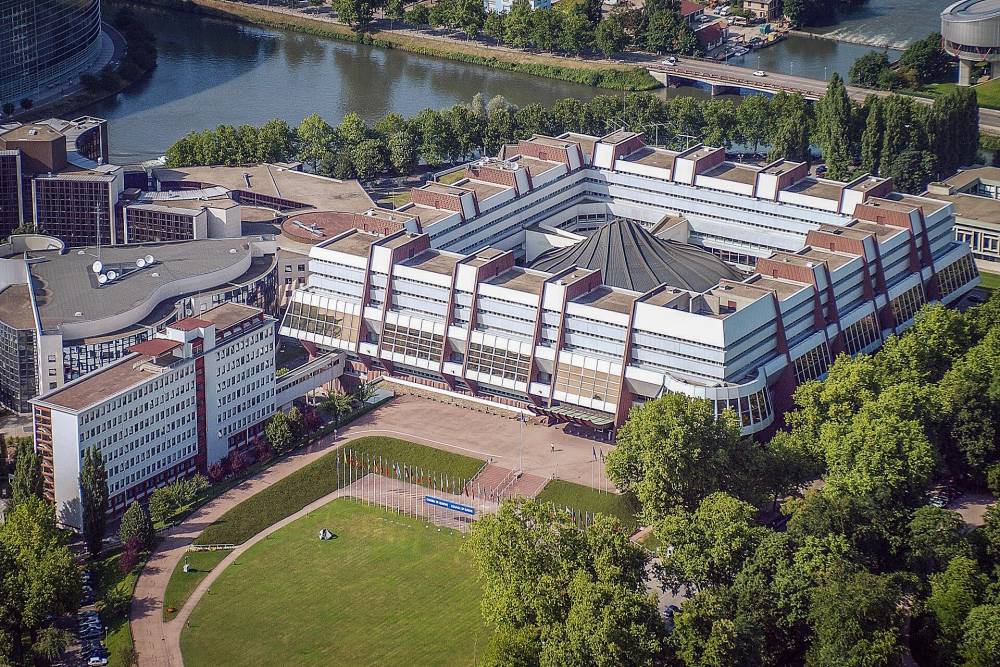
European Court of Human Rights
Court of the Council of Europe based in Strasbourg, which has been ruling on complaints about violations of the European Convention on Human Rights since 1959.
Why here: On Thursday it closed 879 complaints against Russia, and the Slovak judge's seat there has been empty since September 2025.
More info →
Council of Europe
An international organization of 46 states founded in 1949, from which the court emerged. It is not an institution of the European Union.
Why here: Russia was expelled from it on 16 March 2022 after the invasion of Ukraine.
More info →
Russia
The country that ceased to be a party to the convention on 16 September 2022.
Why here: It remains responsible for acts committed before that date, but it does not recognize the court's decisions and does not pay the awarded sums.
More info →
Strasbourg
A French city, the seat of both the Council of Europe and the court itself.
Why here: Thursday's decision came from there.
More info →Marcela Kosová
Chair of the Judicial Council of the Slovak Republic.
Why here: On 2 September she announced a new election to fill the Slovak nominees for judge, because the list remained incomplete.

Judicial Council
A constitutional body that selects candidates for judge of the Strasbourg court in Slovakia and submits them to the government.
Why here: The third candidate will be elected on 10 November 2026.
More info →Alena Poláčková
Slovak judge at the European Court of Human Rights since December 2015.
Why here: Her mandate expired on 28 December 2024 and she remained in office until 31 August 2025; since then the seat has been empty.
More info →Branislav Jablonka
One of the three candidates approved by the government in January 2026.
Why here: He withdrew his consent to the candidacy, and the Slovak list thus fell apart.
Ondrej Laciak
A judge candidate whom the Judicial Council elected at its June 2025 meeting.
Why here: He remains on the list even after Jablonka's withdrawal.
Katarína Roskoványi
A candidate elected at the December 2025 meeting of the Judicial Council.
Why here: She completed the list that Slovakia had not been able to finalize until then.

Parliamentary Assembly of the Council of Europe
Assembly of representatives of the national parliaments of the Council of Europe member states.
Why here: It is the body that elects the judge from the trio submitted by the state, so without a complete list it cannot vote.
More info →Ioannis Ktistakis
Greek judge of the European Court of Human Rights.
Why here: He presided over the seven-member chamber that ruled unanimously on the 879 complaints.

Alexei Navalny
Russian opposition politician, lawyer, and political prisoner, the Kremlin's best-known critic.
Why here: His poisoning with novichok is among the matters the court ruled on before this decision.
More info →
Boris Nemtsov
Russian liberal politician and critic of Vladimir Putin, murdered in 2015.
Why here: The court also ruled on a complaint about his murder; it is not among the closed cases.
More info →Maxim Olenichev
Russian lawyer.
Why here: He described the court's decision as a serious mistake, both legal and reputational.

Lev Shlosberg
Russian opposition politician from the Yabloko party and former member of the Pskov regional parliament.
Why here: His mandate was taken away in 2015 and his complaint is among the closed cases, according to Meduza.
More info →Thomas Nilsen
Norwegian journalist, editor-in-chief of The Independent Barents Observer.
Why here: Russia banned him from entering in March 2017 as an alleged threat to national security, and his complaint is also among the closed cases, according to Meduza.
More info →Team Against Torture
Russian human rights organization that represents victims of torture and police violence before courts including the Strasbourg court.
Why here: It described the decision as the collapse of the last hope for justice for Russians.
Meduza
Independent Russian media outlet based in Latvia, which Moscow has labeled an undesirable organization.
Why here: It was the only source to provide details on the age of the complaints as well as reactions from Russian lawyers.
More info →What the court decided
The decision is titled Lebedeva and Others v. Russia and combines application no. 49120/07 with another 878 files. The seven-judge chamber led by Greek judge Ioannis Ktistakis adopted it unanimously on 7 July 2026 and delivered it on 3 September. It is final and currently exists only in English. European Court of Human Rights ↗The reasoning has four parts. According to the court, the remaining complaints did not raise questions of fundamental importance for Russia's responsibility, did not require development or clarification of its case law, were not suited by their factual or legal nature to the simplified procedure for repetitive cases, and their individual examination would have required significant additional resources, possibly at the expense of complaints against other states. The court also stated that the decision cannot be understood as retroactively relieving Russia of obligations from the period when it was a party to the convention, and that it does not affect obligations arising from judgments already issued. It retained the possibility of returning a complaint to the list. European Court of Human Rights ↗
Russia was expelled by the Council of Europe on 16 March 2022 after the invasion of Ukraine and ceased to be a party to the convention on 16 September 2022. For acts committed before that date, the court still considers it responsible. Moscow, however, does not recognize any of its decisions and refuses to pay the amounts awarded. G4Media ↗ Rzeczpospolita ↗
The number 879 makes sense only with the denominator
This is the part that did not fit into the wire report, and without it the decision sounds different from what it is. Complaints against Russia that were unrelated to the war or to interstate disputes numbered roughly 15,800 at the court in September 2022. It disposed of most of them through the simplified procedure for repetitive cases, and more than sixty cases of fundamental importance, covering more than 600 complaints, were decided by the Grand Chamber or a chamber. Only after this work did those 879 remain. European Court of Human Rights ↗Among the cases the court decided are precisely the ones the reader would expect first: the poisoning of Alexei Navalny with novichok, the dismantling of his anti-corruption foundation, the murder of Boris Nemtsov, the persecution of the family of Chechen opposition activists, the use of facial recognition against a peaceful demonstrator, the foreign agents law, and action against Novaya Gazeta and Google. European Court of Human Rights ↗
And one more thing that the first reports mixed up. The list of topics that agencies attributed to the closed complaints, namely the treatment of opposition politicians and democratic activists or repressive legislation, describes in the press release the entire category of files since 2022, not those 879. The court describes the closed complaints more narrowly as cases concerning the right to a fair trial and protection of property, freedom of expression, detention conditions, immigration, freedom of movement, and protection of personal data. The distinction matters, because the agency version makes it seem as if the court tossed out political cases. It had in fact already ruled on the best-known ones. La Libre ↗
War cases are still ongoing, and there are many more of them
The second category, that is, cases connected with Russian military actions against neighbors and with control of territories outside recognized borders, has not been stopped. The court has recorded about 5,550 individual complaints concerning Crimea, eastern Ukraine, the Sea of Azov, and operations on Ukrainian territory since 24 February 2022, of which it has already communicated about 2,150 to the parties. Another roughly 150 concern the 2008 Georgian conflict. The court registry has set up a special conflict unit for them. European Court of Human Rights ↗The oldest complaint waited nineteen years
The number of the lead complaint, 49120/07, reveals the year it was filed. Meduza narrows that down to September 2007, so the complainant waited nearly two decades to learn that no one would deal with the case. In the decision, the court admits that the closed complaints may be potentially well-founded. Meduza ↗Among the closed cases, according to the same source, is also the complaint of Norwegian journalist Thomas Nilsen, whom Russia banned from entering in March 2017 as an alleged threat to national security and whose reasons the Russian Supreme Court refused to explain a year later, as well as the case of opposition politician Lev Shlosberg, who lost his seat in the Pskov regional parliament in 2015. Neither of them is a Russian citizen being prosecuted at home in the sense in which the first headlines wrote about the decision. Meduza ↗
The Russian organization Team Against Torture, which represents such complainants, reacted sharply. "For Russians, this court has always been the last hope for justice, and today that ghostly hope has finally collapsed," it said, adding that the court had denied access to international justice to more than a thousand people and acted discriminatorily. Lawyer Maxim Olenichev called it a serious mistake, legal and reputational, and argues that the court effectively relieved Russia of responsibility for the violations described in those files. Meduza ↗
Slovakia has had no judge of its own in that court for more than a year
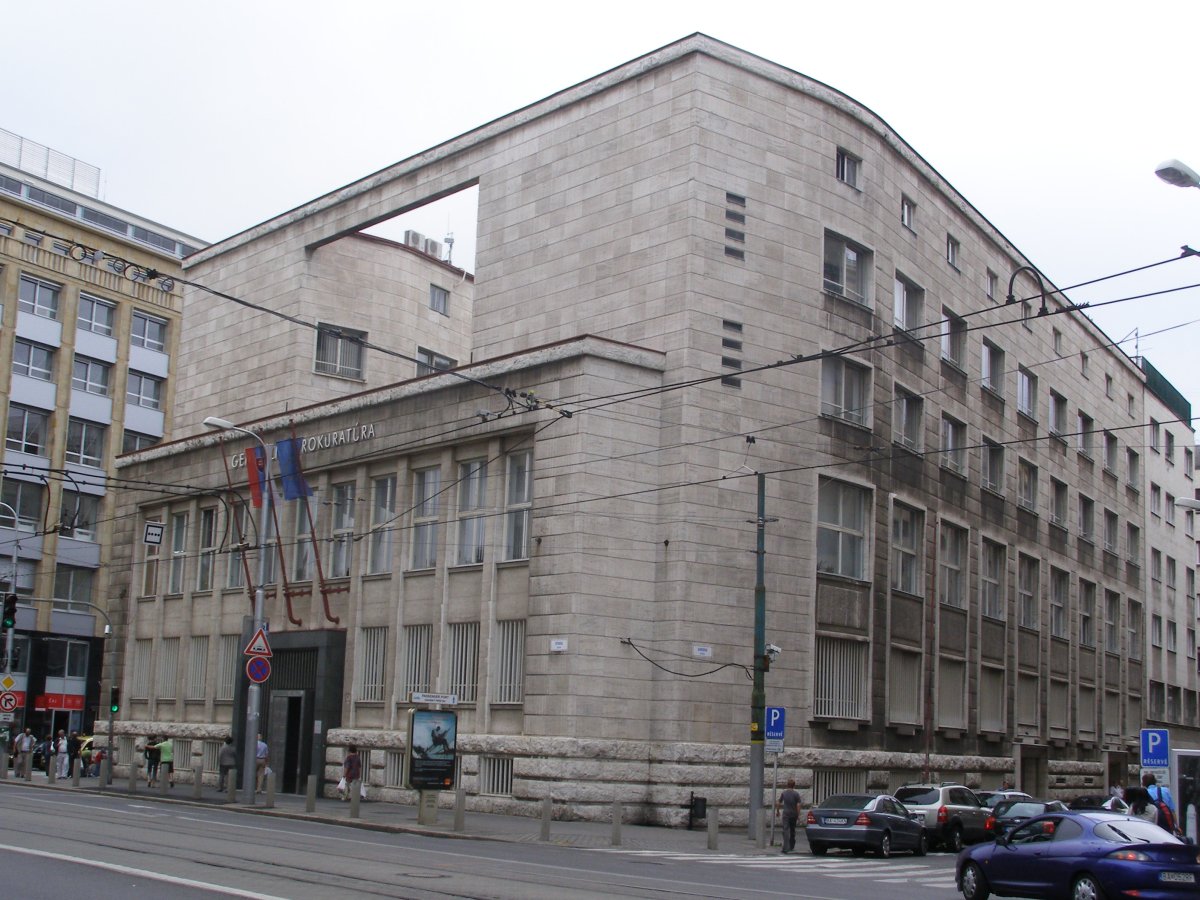
While Strasbourg announced that it did not have defensible capacity to finish the last not-quite-nine-hundred files, Slovakia received a message that almost nobody noticed. The chair of the Judicial Council, Marcela Kosová, announced on 2 September a new election to complete the candidates for judge of that same court. The reason is prosaic: Slovakia did submit a trio of candidates, but Branislav Jablonka withdrew his consent to the candidacy, and the list therefore remained incomplete. A new election for one seat will take place on 10 November 2026, with nominations possible until 9 October. SITA ↗ STVR ↗There is a longer story behind that sentence. Slovak judge Alena Poláčková's mandate expired on 28 December 2024, and she remained in office until 31 August 2025, so the seat has been empty since 1 September 2025. The Judicial Council elected Branislav Jablonka and Ondrej Laciak at its June 2025 meeting and Katarína Roskoványi at its December meeting, and the government approved the trio on 9 January 2026. A hearing before an advisory panel was to follow, and then the election in which the Parliamentary Assembly of the Council of Europe chooses one judge from the trio. SITA ↗
The sequence of steps is fixed: without a complete trio, the assembly cannot proceed to the election. So if the Judicial Council elects the third name on 10 November, the whole process will continue sometime in 2027, more than two years after the Slovak seat became vacant. For comparison, the first attempt to assemble the list dates back to September 2024, when the Judicial Council elected a completely different trio of names. Judicial Council of the SR ↗
Limits of this view
The two things are not directly related, and it would be dishonest to claim otherwise. The empty Slovak seat did not cause the Russian backlog, and one judge would not change the volume of cases against Russia. Moreover, a national judge sits in chambers for cases against his or her own state, so in any case would not take part in deciding Russian complaints. What they do have in common is only that both speak to the capacity of the same institution, once seen from above and once from our side.Caution is required when it comes to the source base. The Belgian, Romanian, and Polish editions carried essentially the same wire text, so three media outlets do not mean three independent findings, and it was precisely in that copy that the confusion arose between two different lists of topics, which we described above. Of the available sources, only Meduza provides details about the age of the complaints, the specific names, and reactions from Russian lawyers, so in the text they are marked as its findings.
The reasoning on which this text is based comes from the court's own press release, that is, from the institution assessing its own workload and its own decision. The numbers on the scale of the docket are verifiable; the assessment that "we have already said enough" is its own. Critics also have their own stake here, and Team Against Torture represents such complainants, which does not mean they are wrong, only that this should be understood.
And finally, the main point that is easy to misread. This is not the end of Russian cases in Strasbourg. It is the closure of the part of the docket that concerned repression inside Russia and that the court considers to have been resolved in earlier judgments. What remains open is the war, and there are six times more of those files than the closed ones.
What hotinfo is watching
- Slovakia's Judicial Council has elected a third candidate for judge at the European Court of Human Rights and the list is complete.
- The Parliamentary Assembly of the Council of Europe has elected a Slovak judge and the start date is known.
- The Court has reopened at least one of the 879 struck-out applications against Russia.
- The full decision or the Court's press release has been published, showing how the applications were sorted.
- The Court has stated whether the same approach will apply to the war-related applications against Russia it still examines.