




What Norway signed
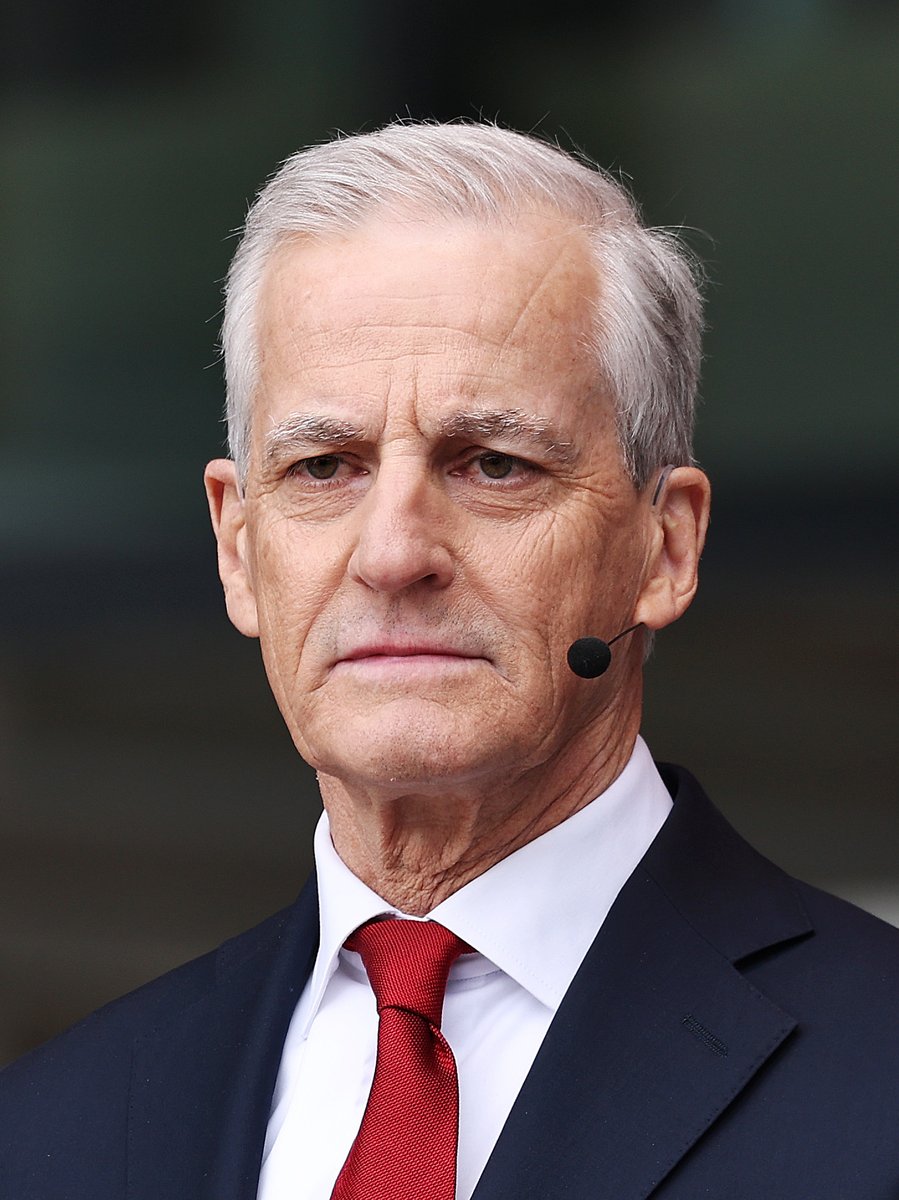
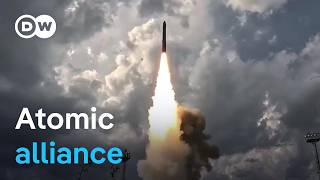
The so-called Narvik Agreement, named after the two countries' joint victory at Narvik in 1940, includes cooperation in the Arctic, crisis planning, forward storage of equipment, joint exercises, and defense-industrial cooperation. It also contains a mutual defense clause, which according to Oslo complements Article 5 of the North Atlantic Treaty. Norwegian government ↗At the same time, Norway set clear boundaries. No nuclear weapons will be stationed on its territory in peacetime, the country will not contribute to the French nuclear program, and it is not changing its own nuclear policy. "Our deterrence will continue to be provided by NATO," emphasized Støre, who described the current situation as the most serious security situation since World War II. According to the Norwegian government, French capabilities are merely an "important contribution" to the defense of the continent, not a replacement for American protection. Norwegian government ↗
Macron's forward deterrence
The groundwork was laid by Macron on March 2 in a speech at the Île Longue submarine base. He presented the doctrine of "dissuasion avancée," or forward deterrence, and for the first time since 1992 announced an increase in the number of French warheads. The arsenal today has just under 300 warheads in its air and naval components, though Paris no longer discloses the exact number. Atlantic Council ↗ The doctrine envisions joint exercises, deeper consultations, and the temporary deployment of nuclear-armed aircraft on allied territory. "To be free, we must be feared," Macron declared. France 24 ↗However, this is not an American-style nuclear guarantee. Macron explicitly said he was not speaking of a "guarantee in the strict sense," and the decision to use the weapons rests solely with the French president. "The final decision will not be shared, neither its planning nor its execution," he warned. No ally, then, will have a finger on the trigger. ECFR ↗
Limits of the French umbrella
French deterrence has two limits compared to the American one. An arsenal of just under 300 warheads is a fraction of Russia's stockpile, which in the non-strategic category alone is estimated at roughly 1,500 to 2,000 warheads, and Paris rejects tactical nuclear strikes on the battlefield. Arms Control Association ↗ When Macron presented the first circle of partners in March — Germany, Poland, the Netherlands, Belgium, Denmark, Sweden, Greece, and the United Kingdom — it was missing precisely the countries that border Russia most closely: the Baltic states, Finland, and Norway. Oslo, now the ninth partner, has just filled part of that gap. Defense News ↗The question of credibility has not disappeared, though. Polish Prime Minister Donald Tusk has already stated that Warsaw wants to be "autonomous when it comes to nuclear deterrence" in the future, and is negotiating with Paris on the specific form of its participation. Chatham House ↗ Meanwhile, Germany and France have opened talks on how to extend French deterrence to other European Union states — a debate Berlin would not have allowed itself just a few years ago. Defense News ↗
Where Central Europe stands
For Slovak and Czech readers, one thing stands out on the map of the umbrella. Of the Central European countries, only Poland is part of the initiative so far. Slovakia, Czechia, Hungary, and Austria do not appear among the partners, and this new layer of European deterrence is taking shape without them. France 24 ↗What hotinfo is watching
- Another signatory to a bilateral nuclear agreement on the Norwegian model (Germany or Poland in particular).
- Washington's response — whether the Trump administration welcomes the initiative or sees it as weakening NATO.
- The topic of an indigenous nuclear deterrent entering the central European debate (Poland above all).
- The outcome of the Franco-German talks on extending French deterrence to further EU states.→ German military to join French nuclear exercise for first timeFrancúzsko-nemecké rozhovory dali konkrétny výsledok: Nemecko sa 16.7.2026 prvýkrát v histórii zúčastnilo francúzskeho jadrového cvičenia (Politico). Širší rámec: po Macronovom prejave z 2.3.2026 o „dissuasion avancée" sa k júnu 2026 na štruktúrovaných bilaterálnych rozhovoroch s Francúzskom zúčastňuje DEVÄŤ štátov — Británia, Nemecko, Belgicko, Holandsko, Dánsko, Poľsko, Švédsko, Grécko a Nórsko…