




A month without a step toward peace
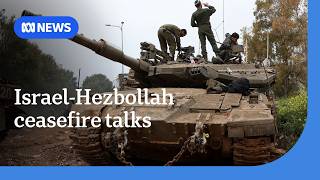
Trump declared the ceasefire on April 10 after two historic negotiations at the US State Department, it took effect a week later, and the American side extended it twice — Israel has since attacked targets in Lebanon almost daily. "And Washington once again faces the expiration of the ceasefire, without anything having fundamentally changed," writes the Austrian Der Standard. The last HotInfo article covered the second week of May, when Israel struck the Beirut suburb of Ghobeiry and killed a commander of the elite Radwan unit. The Israeli army also called on residents of nine villages in the south to evacuate immediately. Since March, Israeli strikes have claimed more than 2,700 victims and driven more than a million people from their homes. Der Standard ↗Also read: Israel escalates operations in Lebanon, calls for village evacuations and continues attacks despite the ceasefire
Wednesday: 40 targets, 22 dead, 50,000 destroyed homes
Wednesday's toll is among the heaviest since the start of the second round of the war. Israeli forces struck around forty targets in southern and eastern Lebanon, and two drones hit vehicles south of Beirut. In the southern Lebanese town of Jiyeh, strikes cost the lives of at least three people. From Wednesday to Thursday, the death toll rose to 22, including eight children, the Lebanese Ministry of Health announced. Die Zeit, citing AFP, AP and Reuters, reports that more than fifty thousand homes have already been damaged or destroyed during the second war — which, according to the German daily, corresponds to an Israeli strategy oriented toward a permanent presence rather than the disarmament of Hezbollah. Die Zeit ↗Washington: third round, Hezbollah openly opposed
On Thursday morning, Israeli and Lebanese negotiators met in Washington for the third time since the ceasefire was declared. Italy's ANSA notes that the April 16 ceasefire "was never actually observed" and that Israeli airstrikes continue even during the negotiations. France24 writes of a meeting held "under high tension" — Hezbollah is openly opposed to the negotiations, complicating the position of the Lebanese government of Prime Minister Nawaf Salam and President Joseph Aoun. Negotiators are set to continue on Friday, May 15, as well. ANSA ↗ France24 ↗"The goal is to erase our identity"
In the shadow of the negotiations, a large-scale demolition campaign continues in southern Lebanon which, according to local residents and a France24 report, also targets cultural and religious heritage — churches, mosques and archaeological sites. In its report from May 14, French television cites local witnesses who say "the goal is to erase our identity." According to them, the destruction of sacred and archaeological sites is not incidental damage from the fighting, but part of a systematic effort to erase the Lebanese presence in the border zone. Israel has not officially commented on these claims. France24 ↗Settlers dream of southern Lebanon beyond the Litani
What part of Israel's far-right scene calls a solution is opening up further political pressure on the negotiations. The Uri Tzafon movement — in Hebrew "Awaken, North Wind" — is openly calling for pushing the Israeli border at least to the Litani River, about thirty kilometers north of today's border. The movement's co-founder Anna Sloutsky told the AFP agency that the goal is "to move the Israeli border deeper into Lebanese territory and prevent the return of the local population." Sloutsky also claims that what the Israeli army is doing today is "the first phase": "The Israel Defense Forces will go in, capture the territory and clear it. And then we must not withdraw, but settle it." SITA ↗Another activist of the movement, Ori Plasse, who came to Israel from New York in the 1990s, described his visit to southern Lebanon as "wonderful": "You feel like you're home, that it's your country." In his home he showed maps depicting the borders of Israel from present-day Egypt to Iraq and quoted the Old Testament: "The land of Israel was promised to us — most people say from the Nile to the Euphrates." Benjamin Netanyahu's government has not publicly commented on the movement's statements.
Hotels refuse online bookings
On the other side of the front, Lebanese society is changing under the pressure of the renewed conflict. The Czech weekly Respekt, citing Anush Safaryan, coordinator of the humanitarian organization ADRA Lebanon, writes that "some hotels in central Beirut have stopped accepting online bookings after two of them were hit by rockets." Accommodation must be arranged in person, and documents are strictly checked — the caution stems from the fact that, according to Israel's reasoning, Hezbollah infrastructure and command capabilities are located in dense residential areas, so a "safe zone" effectively no longer exists in the country. "Anyone can become the target of a rocket," Safaryan adds. More than a million displaced people remain within the country, mostly from the south, which is effectively administered by Hezbollah. Respekt ↗What hotinfo is watching
- Whether the Trump administration announces a further extension of the ceasefire before it expires on Sunday, May 17.
- Whether the Lebanese and Israeli delegations agree on any concrete framework for a deal after the third round of negotiations — or whether the talks end without result.
- Whether the Israeli government takes a position on the statements of the Uri Tzafon movement, which openly calls for the annexation of Lebanese territory up to the Litani River.
- Whether UNESCO, the Lebanese Ministry of Culture or the UN respond to the systematic destruction of sacred and archaeological sites in the south, as reported by France24.
- Whether the summit between President Joseph Aoun and Israeli Prime Minister Benjamin Netanyahu, discussed in the April negotiations, takes place still in May.