


Key actors — tap for context

Delo
Slovenian national daily newspaper headquartered in Ljubljana, one of the most influential in the country.
Why here: The lens of this article. It framed the event with the headline "Slovenia Against the Current" and requested Israeli analysis on the veto.
More info →
Janez Janša
Chairman of the Slovenian Democratic Party, Prime Minister of Slovenia since May 2026 and previously three times in the same role.
Why here: His government scrapped measures against Israel and vetoed the EU's joint statement. Netanyahu publicly thanked him for it.
More info →
Tone Kajzer
Slovenian diplomat, Minister of Foreign and European Affairs in Janez Janša's government since June 2026.
Why here: He called the shift in relations with Israel a "180-degree turn." The Social Democrats announced an interpellation against him.
More info →
Gideon Sa'ar
Israeli politician and Foreign Minister, founder of the New Hope party and former Minister of Interior and Justice.
Why here: The first head of Israeli diplomacy in Ljubljana in sixteen years. He called the opening of the embassy a historic day.
More info →Sharon Pardo
Professor of European Studies and International Relations at Ben-Gurion University of the Negev and researcher at the JPPI institute.
Why here: He explained to Delo that Slovenia's value to Netanyahu lies not in its size, but in the EU's unanimous voting.

Robert Golob
Slovenian businessman and politician, Prime Minister from 2022 to 2026, now leader of the opposition Freedom Movement.
Why here: Under his government, Slovenia recognized Palestine and spoke of genocide. Netanyahu called him the most hostile European prime minister.
More info →
Nataša Pirc Musar
Slovenian lawyer and President of Slovenia since 2022, previously Information Commissioner and journalist.
Why here: She objected to the veto together with the opposition.
More info →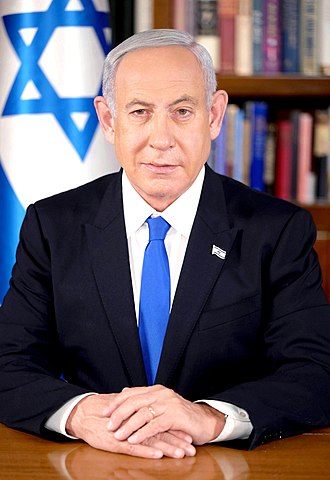
Benjamin Netanyahu
Prime Minister of Israel, the longest-serving prime minister in the country's history.
Why here: Recipient of Slovenia's veto. He publicly thanked Janša for it.
More info →
Kaja Kallas
Former Estonian Prime Minister, EU High Representative for Foreign Affairs and Security Policy since 2024.
Why here: After Slovenia's veto, she had to issue the statement on settlements only in her own name.
More info →
Itamar Ben-Gvir
Israeli politician and lawyer, Minister of National Security since 2022, representative of the far right.
Why here: Slovenia banned him from entering in July 2025. Under Janša's government the measure was dropped.
More info →
Bezalel Smotrich
Israeli politician and lawyer, Minister of Finance since 2022 and leader of the Religious Zionism party.
Why here: The second of the two ministers whom Slovenia banned from entering.
More info →What Delo Says
The newspaper Delo gave the whole event a headline that's hard to overlook: "Slovenia Against the Current." According to it, Ljubljana is deepening ties with Israel at exactly the moment the rest of the West is toughening its stance. The ministers signed a bilateral cooperation program in education, science, culture, youth and sport for 2026 to 2030, and an accompanying business forum with more than fifty companies was held behind closed doors. Sa'ar called the opening of the embassy a "historic day" and added that "Israel does not forget its friends." Delo ↗ Delo ↗More significant, however, is the question Delo posed in a separate analysis: why does Netanyahu need the support of a country of two million people at all? It got the answer from an Israeli academic. "From Netanyahu's perspective, Slovenia's value lies not in its size, but in its place within the EU's decision-making system. A small member state can gain considerable influence whenever unanimity is required," Sharon Pardo, professor of European Studies and International Relations at Ben-Gurion University of the Negev, told the newspaper. According to him, Israeli governments have long and deliberately built bilateral relations with far-right parties and governments of individual member states precisely because of how foreign policy is decided within the Union. Delo ↗
In this context, Delo recalls the end of August. At that time, Slovenia vetoed a joint statement by the Union and its twenty-seven members that was meant to condemn Israel's tender for 1,200 housing units in the contested E1 settlement project. As a result, the text could only be issued as a communiqué by High Representative Kaja Kallas, not as a joint statement by all members. Slovenia's Ministry of Foreign Affairs justified this by saying the statement "would not add value at this moment." Netanyahu publicly thanked Janša for the veto. bne IntelliNews ↗ ANSA ↗
What Slovak and Czech Media Are Missing
The sanctions imposed by twelve countries were picked up by wire services and newspapers here. Slovenia was also written about over the past month, but almost exclusively in connection with Pogačar, the condemnation of the glorification of Mladić, and the parliament stripping former Prime Minister Robert Golob of immunity. The fact that one member state had blocked a joint European statement on the settlements did not come up in that coverage.Yet the contrast is stark. The previous Golob government recognized Palestine, described Israel's actions in Gaza as genocide, and in July 2025 banned far-right Israeli ministers Itamar Ben-Gvir and Bezalel Smotrich from entering the country. The Janša government scrapped these measures and announced it would no longer condemn Israel. Meanwhile, in a 2024 recording, Netanyahu described Golob as probably the "most hostile" European prime minister. Al Jazeera ↗ Delo ↗
At home, it did not go unnoticed. President Nataša Pirc Musar, along with the opposition, objected to the August veto, and the Social Democrats announced an interpellation of Minister Kajzer. On Wednesday evening, opponents then called a protest right on Dimičeva Street, where the embassy is located, and proposed to the city commission that it be renamed Palestinian Street. ANSA ↗ RTV Slovenija ↗
Limits of This Perspective
Delo is a liberal-leaning newspaper that was critical of Janša during his previous governments as well, and the "against the current" framing is its own. The government explains it differently: as a return to normal relations after a period it considers ideological. Also worth noting is something that comes up less often in the Slovenian debate — Israel was among the first states to recognize independent Slovenia, and bilateral trade grew fourteen percent year-on-year last year. Moreover, the argument about unanimity comes from a single Israeli academic, not from any document, and Delo presents it as an interpretation, not as proof of intent.What hotinfo Is Watching
- Slovinsko zablokovalo ďalšie spoločné stanovisko Únie k Izraelu.
- Slovinský parlament prerokoval interpeláciu ministra zahraničia Toneho Kajzera.
- Mestská komisia v Ľubľane prerokovala návrh na premenovanie Dimičevej ulice.
- V Rade EÚ sa k slovinskej pozícii pridala ďalšia členská krajina.
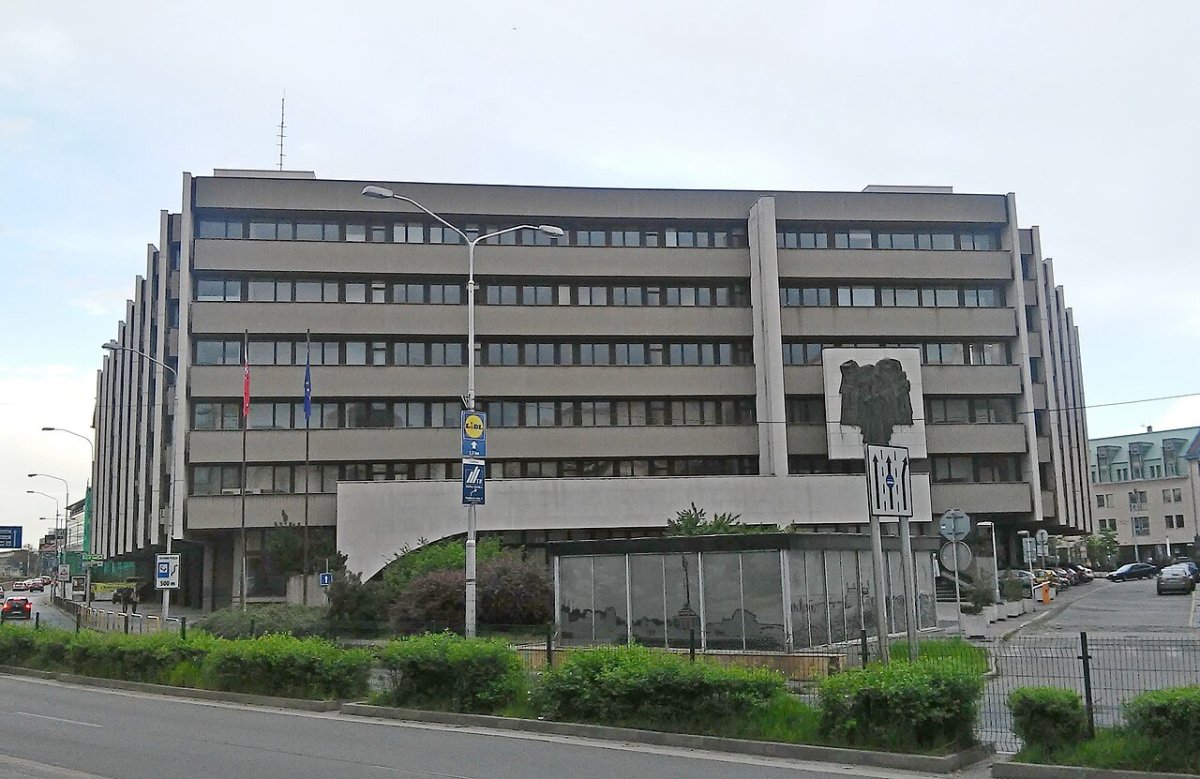
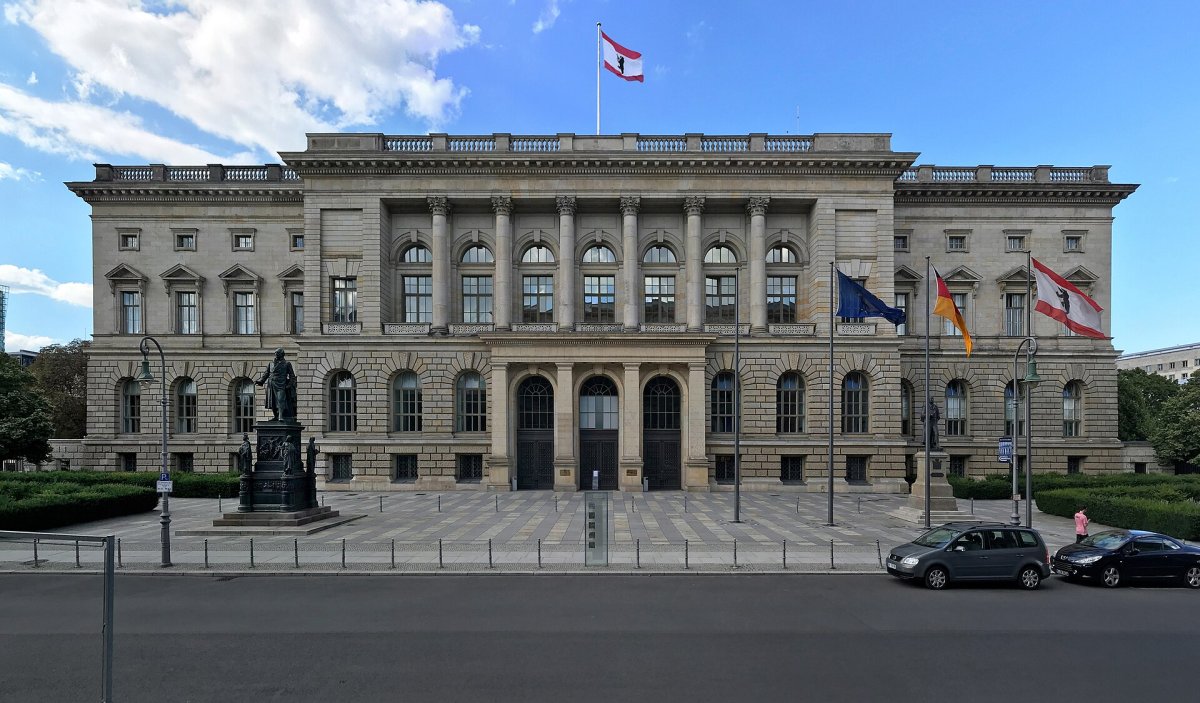
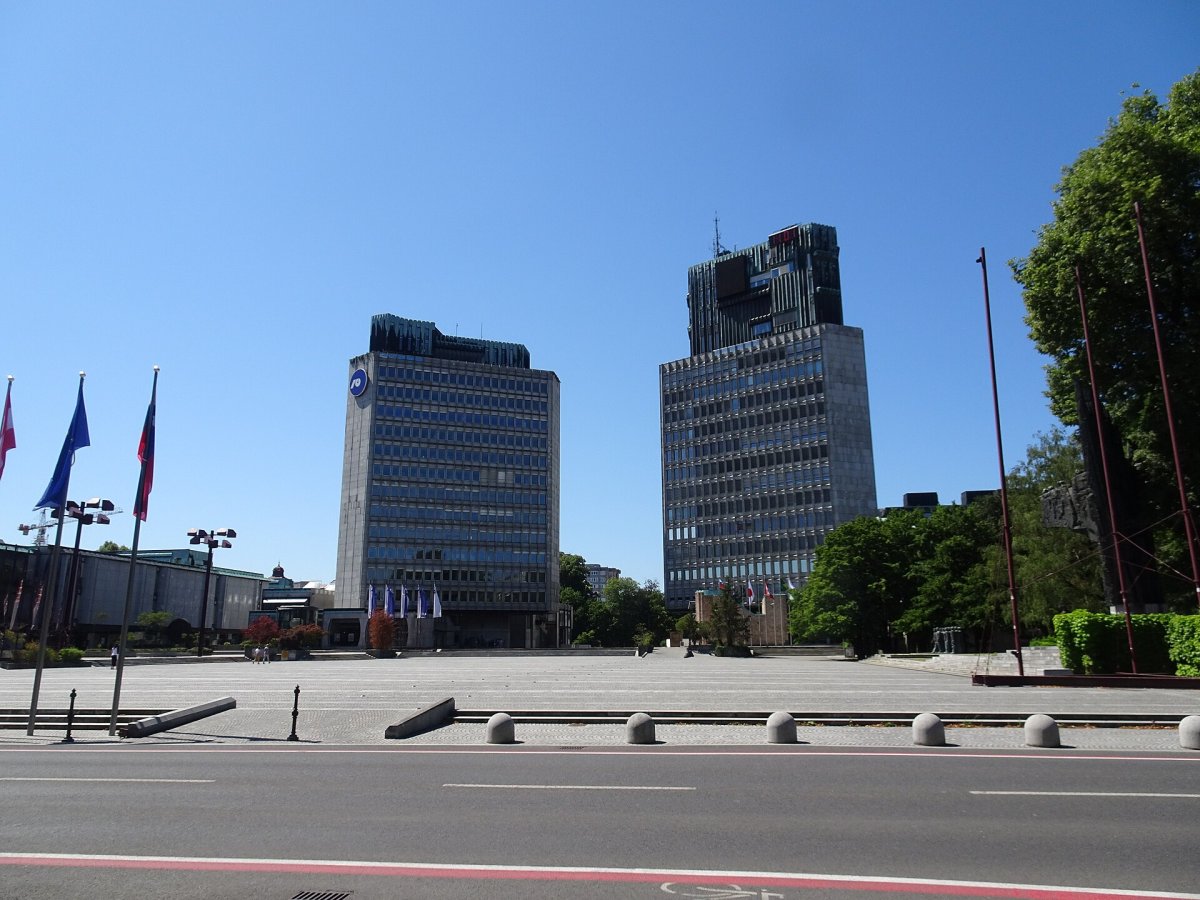
*Photo: Trg Republike in Ljubljana, home to the Slovenian parliament, in an archive image. Author: Palickap / Wikimedia Commons / CC BY-SA 4.0. The image has been resized.*