


Key actors — tap for context
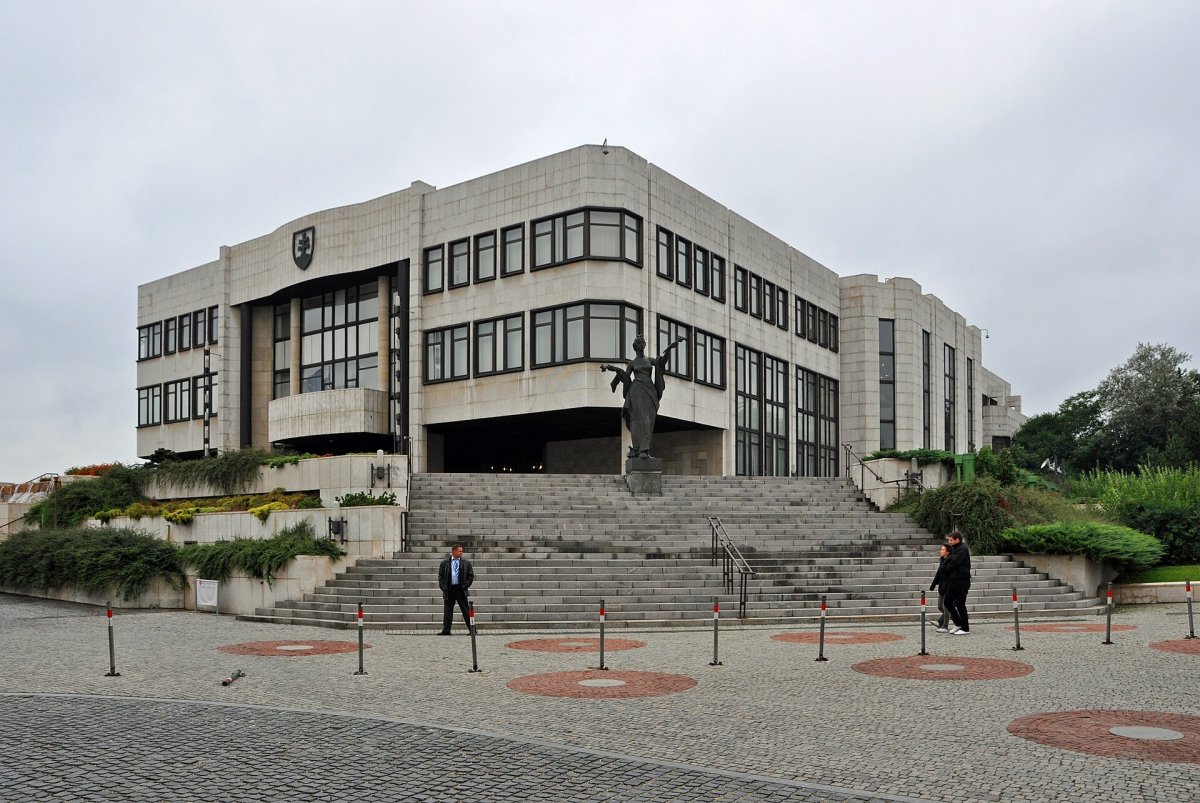
Agency for State-Supported Rental Housing
An association of legal entities whose sole founder is the Ministry of Transport. It administers the regulated rental-housing system under the 2022 law, proposes investment partners to the government, maintains a register of applicants and verifies whether they meet the requirements.
Why here: It handles both tenant selection and the inclusion of projects in the scheme.
Eva Lisová
Director General of the Agency for State-Supported Rental Housing.
Why here: She discusses the timing of registration in Košice and says it depends on the investment partner.

Jaroslav Polaček
Independent mayor of Košice, in office since 2018.
Why here: He is behind Košice’s rental-construction plan and the municipal company established with an Austrian investor.
More info →
Ministry of Transport
The ministry responsible for transport and construction. It is the sole founder of the Agency for State-Supported Rental Housing, with exclusive voting rights.
Why here: Through the agency, it oversees the entire scheme and, together with the State Housing Development Fund, also finances municipal construction.
More info →State Housing Development Fund
A state institution that provides municipalities and cities with preferential loans for rental-housing construction, usually alongside a grant from the Ministry of Transport. It operates separately from the Agency for State-Supported Rental Housing and under different rules.
Why here: It finances the second branch of rental construction, which is often confused with the first.

Kooperativa
A Slovak insurance company in the Vienna Insurance Group, and the first private investment partner in the state-supported rental-housing scheme.
Why here: It is behind the Ovocné sady project in Bratislava and Lesopark in Žilina.
More info →
Luník IX
A district of Košice and Slovakia’s largest Roma housing estate.
Why here: New apartment buildings there are being built with EU funds and under transitional-housing rules, not under the agency’s scheme.
More info →
Žiar nad Hronom
A district town in the Banská Bystrica Region, with an aluminium plant as its main employer.
Why here: One of the agency’s few projects outside Bratislava and Žilina, still under construction.
More info →A formula that does not include the tenant
The maximum regulated rent is set by a formula published by the agency on its website. It multiplies the region’s average monthly nominal wage, according to the Statistical Office, by 0.35, then by a coefficient based on flat size, and divides the result by the average floor area of such a flat. According to the agency, the 35 percent is meant to represent the share of housing costs at which rent does not “overwhelm the household budget”. Agentúra ŠPNB ↗There are four size coefficients: 0.6 for a one-room flat with a model floor area of 27 square metres, 1 for a two-room flat of 48 square metres, 1.45 for a three-room flat of 71.5 square metres, and 1.7 for a four-room flat of 85 square metres. Smaller flats therefore cost more per square metre and larger ones less — the agency explains this by saying that larger flats are occupied by families with higher combined incomes. Agentúra ŠPNB ↗
What matters is what the formula does not contain. It does not include an individual tenant’s income or family circumstances. Income and household composition determine whether an applicant qualifies for a flat at all, not how much they will pay for it. The cap is therefore set by the regional wage even when an applicant earns far below it.
What this means in euros
The agency has published rates for 2026, calculated from average wages in 2025. They are upper limits per square metre, not prices for specific flats. For a model two-room flat with a floor area of 48 square metres, they produce the following monthly caps — the first figure is without an employer contribution, the second after deducting the maximum contribution:- Bratislava Region: €682, or €420 with the contribution
- Trenčín Region: €533, or €271 with the contribution
- Trnava Region: €528, or €267 with the contribution
- Košice Region: €528, or €266 with the contribution
- Žilina Region: €513, or €251 with the contribution
- Banská Bystrica Region: €498, or €236 with the contribution
- Nitra Region: €483, or €221 with the contribution
- Prešov Region: €450, or €188 with the contribution
None of these figures includes utilities or service charges. They are billed separately according to actual consumption, and the agency explicitly warns on its website that a tenant’s total costs may be higher. Agentúra ŠPNB ↗
This is why comparisons made when projects are presented need to be handled with care. According to representatives of Košice and the agency, an ordinary commercial two-room rental in the city costs €800 to €900. To illustrate how such figures are measured: for the third quarter of 2025, analytical company Bencont Investments put the average rent for a two-room flat in Bratislava at €899. Outside the Old Town, it was €843 to €873 — always including utilities. By contrast, Bratislava’s €682 cap excludes utilities and applies to a model floor area, so a directly comparable saving cannot be calculated from the two figures. Košicak.sk ↗ ASB ↗
A contribution to which there is no automatic entitlement
The second amount on each line depends entirely on the employer. An employer may contribute up to €5.45 per square metre of floor area towards rent, which for a two-room flat of 48 square metres amounts to €262 per month. This applies to full-time employment and an employment relationship lasting the entire calendar month — for shorter working hours or employment starting during the month, the contribution is reduced proportionally. The contribution is exempt from income tax under Section 5(7)(p) of the Income Tax Act and is a tax-deductible expense for the employer under Section 19. But the exemption is not unconditional — it does not apply if the employer used the contribution to replace part of taxable wages, or if it simultaneously provided the employee with a non-cash accommodation benefit. Agentúra ŠPNB ↗ Finančná správa ↗The word “may” is literal in the Labour Code. Section 152c says that an employer may provide the contribution, not that it must, and the National Labour Inspectorate describes it on its website as voluntary. Employees therefore have no automatic statutory entitlement — this would have to be established, for example, by a collective agreement or internal regulation. The law addresses the rules rather than the entitlement itself. The employer may not reduce wages because of an application or disadvantage someone who applies, and must pay the contribution by the end of the following month. Národný inšpektorát práce ↗
The contribution has another feature. It is a flat amount per square metre, the same throughout the country, while rent rises with the regional wage. A comparison of the rates shows that for a model two-room flat, the maximum contribution covers roughly 58 percent of the rent cap in the Prešov Region but only 38 percent in the Bratislava Region. The tool intended to make rent cheaper thus helps relatively least precisely where housing is most expensive.
At the agency’s first completed project, Ovocné sady in Bratislava, there are six contracted employers: University Hospital Bratislava, the Ministry of the Interior of the Slovak Republic, IKEA Bratislava, the Office of the National Council of the Slovak Republic, the National Security Authority, and private company MB cleaning & Services. The agency notes that an agreement with an investment partner is not a condition and that any employer may contribute. Agentúra ŠPNB ↗
Who can apply at all
The system is not social housing, and the agency does not conceal that. Applicants must have an income high enough to cover both the rent and their household’s subsistence minimum — while not exceeding eight times the household’s subsistence minimum. Anyone whose income falls below the lower threshold or exceeds the upper one is excluded from selection. Agentúra ŠPNB ↗Debt to the public sector is also disqualifying. It covers debt to the tax office, social insurance agency or health insurer, as is an entry in the register of enforcement authorisations. The agency verifies most of this itself through public-administration information systems, so applicants need provide only documents that the state cannot obtain on its own. Household income also includes pensions, maternity benefits, parental allowance, child benefit, maintenance payments and doctoral scholarships. Agentúra ŠPNB ↗
According to the agency, after the first year a tenancy agreement may be extended to five years and, after five years, converted to an indefinite term. In the meantime, rent may be increased only by inflation. Agentúra ŠPNB ↗
How many flats actually exist
The law took effect on 1 July 2022, with some provisions taking effect only six months later. The agency lists three projects on its website. In Žilina, 121 flats were handed over on 21 May 2026. Of those, 33 went to the Ministry of the Interior and nine to Slovak Post, at least one tenth is reserved for socially and health-disadvantaged people, and the remainder went to the general waiting list. According to a statement at the time, another 256 applicants were waiting on the list. At Ovocné sady in Bratislava, the Interior Ministry handed over the first 26 flats to police officers and firefighters on 30 July 2026, and it will have a total of 38 flats there for its employees and another 35 in Žilina. TASR ↗ STVR ↗In Žiar nad Hronom, construction began in September on a building with 78 furnished flats, built by management company 365.invest. It is due to be completed in two years. TASR ↗
The Košice plan is by far the largest and also the least advanced. Mayor Jaroslav Polaček speaks of 5,400 flats across eleven locations, but the first two apartment buildings on Jesenského and Thurzova streets do not yet have building permits, and the city council is only due on 17 September to approve the contribution of municipal property to a joint company with an Austrian investor. According to the city, the first approximately 350 flats should be available around the turn of 2027 and 2028. According to the agency’s Director General Eva Lisová, registration of binding interest is due to open in October, but the exact date depends on when the investment partner submits the project for approval. Korzár ↗
Nitra shows a similar gap between announcement and construction. Under the agency’s original announcements, the Zoborka complex with 273 flats was meant to begin rising last year, then at the start of this year. By the end of August it had received a zoning decision, but building-permit proceedings had been suspended. By 17 December last year, 927 applicants had registered for it on the agency portal, 571 of them directly from Nitra. My Nitra ↗
Three branches that are easily confused
Under the banner of “new rental flats”, construction in Slovakia is financed in three different ways, and their rules cannot be conflated.The first is the agency’s scheme, founded by the Ministry of Transport, which includes private investment partners — insurer Kooperativa, Vienna-based WBG, Tatra Asset Management, 365.invest and others — who rent flats at regulated rates under the formula above. The second is the State Housing Development Fund, which lends to municipalities. In Diviaky nad Nitricou, in the Prievidza District, 54 flats are thus being built with total eligible costs of €5,944,960. The municipality received a loan of €3,777,340 at an annual interest rate of one percent, repayable over 40 years, plus a grant of €2,167,620 — support provided jointly by the fund and the Ministry of Transport. It is the municipality, not the agency, that decides on tenants there. TASR ↗
The third branch is represented by Luník IX, where the city district is building four apartment blocks with 48 flats using EU funds worth €5.9 million. This is transitional housing with rent of around €300: paying residents of the estate will first move into the new flats, and their vacated flats are intended for families from the illegal Mašličkovo settlement, where according to mayor Marcel Šaňa around 400 people live. This project is not part of either the agency’s scheme or its regulated-rent system. Korzár ↗ STVR ↗
What hotinfo is watching
- Registrácia záväzného záujmu na košický projekt sa otvorila
- Mestské zastupiteľstvo v Košiciach schválilo vklad majetku do spoločnosti Nájomné bývanie Košice
- Projekt Zoborka v Nitre dostal stavebné povolenie
- Agentúra zverejnila sadzby regulovaného nájomného na rok 2027
- K príspevku na nájomné sa pridal zamestnávateľ mimo štátneho sektora
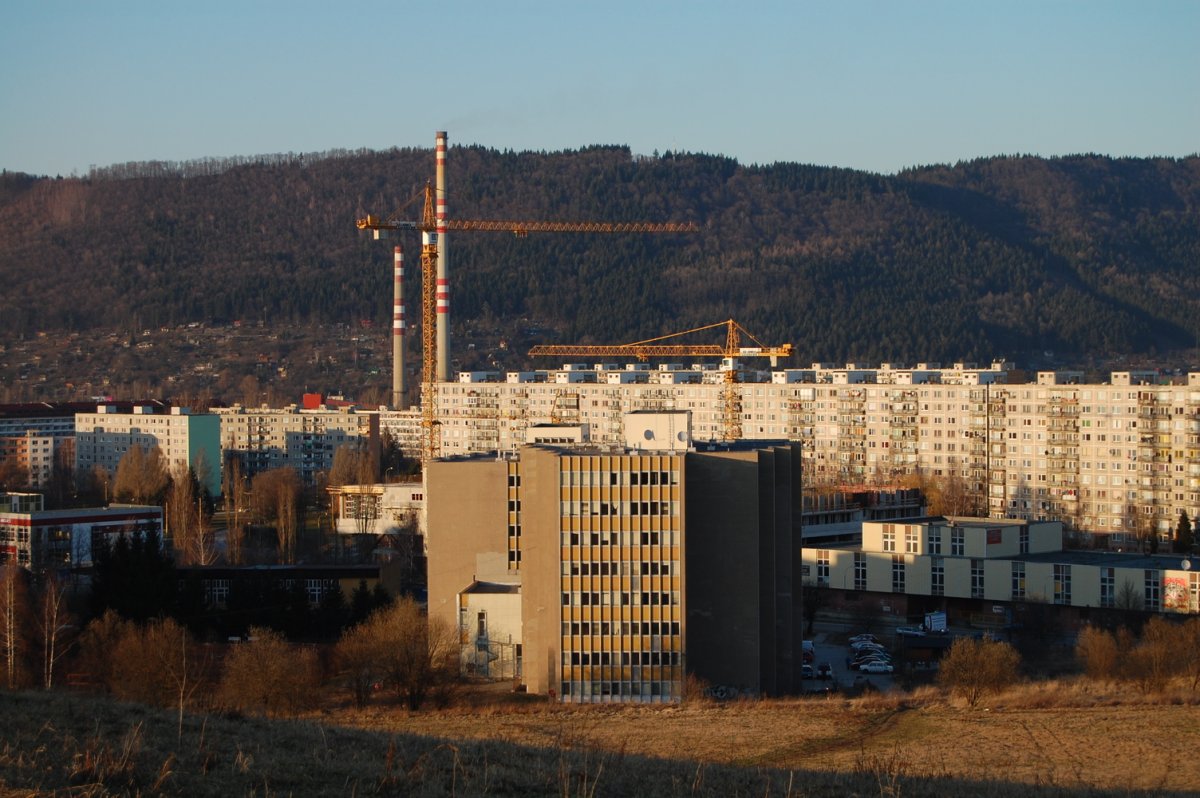
Photo: Housing construction in the Vlčince estate in Žilina. Author Andrej Krivulčík, via Wikimedia Commons, CC BY 3.0. The image has been reduced in size.