
Key actors — tap for context

Isar Aerospace
A German space startup from Ottobrunn near Munich that builds launch vehicles for small and medium satellites.
Why here: The company whose Spectrum rocket became the first from Western Europe to reach orbit.
More info →Spectrum
A two-stage launch vehicle 28 metres tall with ten engines, designed to carry up to one tonne to low Earth orbit.
Why here: The rocket that on Saturday carried five small satellites and one technology experiment into orbit.
Kármán line
The agreed boundary between the Earth's atmosphere and outer space at an altitude of one hundred kilometres, named after the Hungarian-American aerodynamicist Theodore von Kármán.
Why here: The line Spectrum crossed in under four minutes, even though most of the speed needed for orbit was still missing.
Daniel Metzler
Co-founder and chief executive of Isar Aerospace.
Why here: After the launch he said the company had opened space from continental Europe.

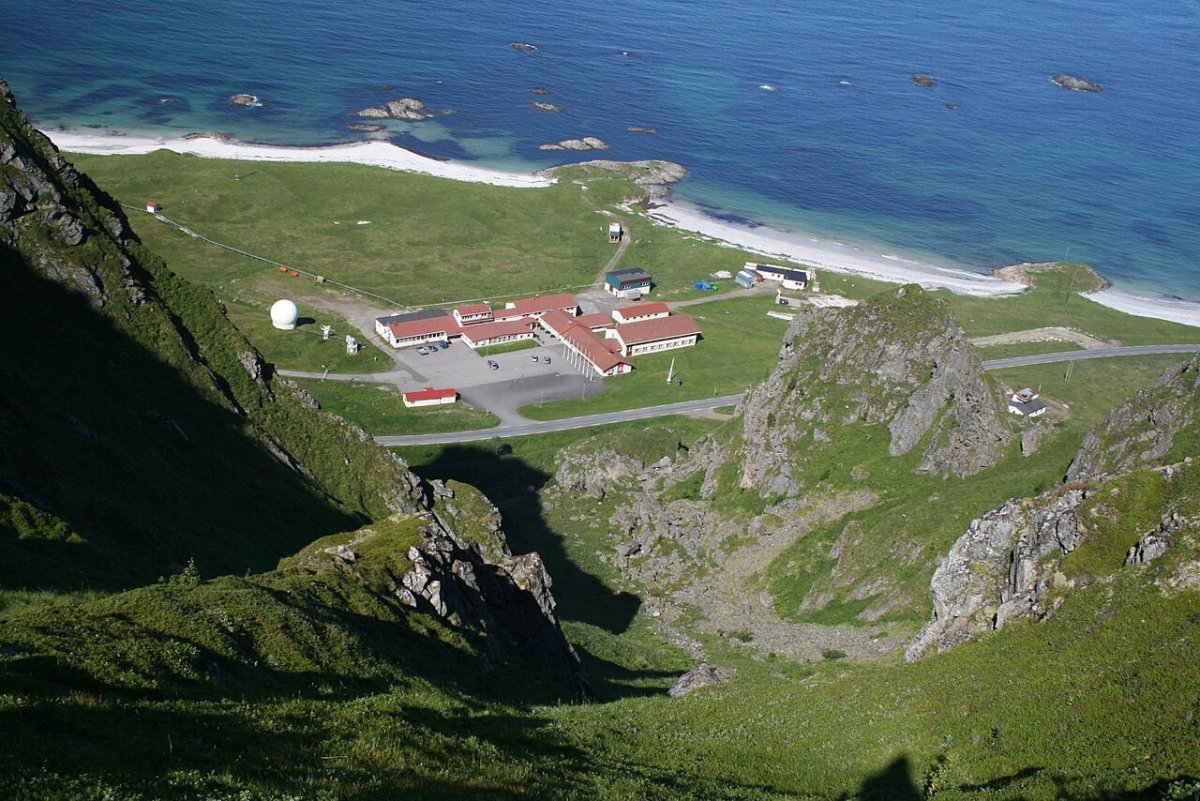
Andøya Space
The Norwegian operator of the spaceport on the island of Andøya above the Arctic Circle, originally a firing range for research rockets.
Why here: The site Spectrum lifted off from, with an ambition of up to thirty launches a year.
More info →
Jonas Gahr Støre
Prime Minister of Norway, a social democrat in office since 2021.
Why here: He called the launch a breakthrough for Norway as a space nation.
More info →
Friedrich Merz
German Federal Chancellor.
Why here: He congratulated the company, speaking of the beginning of a new era.
More info →
European Space Agency
An intergovernmental organisation of 23 member states that coordinates European spaceflight and awards contracts in proportion to what each country puts in.
Why here: A month before the launch it awarded the first contracts of the European Launcher Challenge.
More info →SpaceX
Elon Musk's American space company, which dominates the global market for putting satellites into orbit.
Why here: The reference point against which most European newsrooms framed this launch.
More info →Western Europe, since Saturday
1 299 km
Europe, but the Russian part
9 658 km
Europe's gateway, but in South America
Seven minutes, five satellites and one student project
According to the company, the rocket crossed the Kármán line — the agreed boundary of space one hundred kilometres above the ground — completed stage separation, ignited the second stage, jettisoned the payload fairing and released the satellites after a final burn. Presenters on the live broadcast said it crossed that line in under four minutes. Al Jazeera ↗ Crossing it is the easier half of the job. Reaching orbit also takes a horizontal speed of around 7.8 kilometres per second, and that is what the remaining three minutes of the flight were for. NASA ↗ On board, according to the European Commission, were five so-called cubesats — small satellites assembled from ten-centimetre cubes — and one technology experiment, selected through a competition run by the German space agency and supported by ESA's Boost! programme. European Commission ↗Among the satellites is the Norwegian FramSat-1, built by students from the Orbit NTNU society at the university in Trondheim, which is to test a Norwegian-made sun sensor in space. The live feed from the rocket cut out ten minutes after lift-off, once the vehicle had passed beyond the range of the link. "This is right now making history — making history for Spectrum, making history for Isar, making history for Europe," said Nikolaos Perakis, the rocket's chief engineer, during the broadcast. NRK ↗ Space.com ↗
The previous attempt went considerably worse. The first Spectrum stayed in the air for thirty seconds in March 2025 and ended up in the sea. The second flight was scheduled for January and the company postponed it several times over technical problems, the weather and, on one occasion, a fisherman who strayed into the safety zone. Friday's attempt was called off because of wind. Aftenposten ↗
Why Andøya, and not Kourou
Europe has had its own spaceport for decades, except that it sits in South America. The Guiana Space Centre near Kourou lies five degrees above the equator, which hands rockets roughly 465 metres per second for free from the Earth's rotation. For geostationary satellites it is the best address in the world. ESA ↗Andøya solves a different problem. It lies on the 69th parallel, above the Arctic Circle, and a rocket launched from it flies north over open sea without ever crossing inhabited land. That is exactly what polar and sun-synchronous orbits require, the orbits where Earth observation satellites and most of today's small spacecraft sit. Kourou and Andøya are therefore not rivals but complements. The Norwegian operator talks of a target of up to thirty launches a year within a few years. Andøya Space ↗
That leaves the question of why a "first launch from the European continent" is an event at all, when rockets have been flying out of Europe since the 1960s. The answer lies in which Europe. The only orbital launch site on the European continent has until now been the Russian one at Plesetsk in Arkhangelsk Oblast, operating since 1966. Western Europe tried in January 2023, when an aircraft belonging to Virgin Orbit took off from an airfield in Cornwall with a rocket under its wing, but the rocket failed to reach orbit because of a dislodged fuel filter. The precise wording of the record is therefore either "a first from Western Europe" or "the first privately developed rocket from continental Europe". The shorthand "a first from Europe" is convenient, but inaccurate. Space.com ↗
The same rocket, twelve different stories
More interesting than the launch itself is what individual newsrooms made of it. Across the twelve countries HotInfo monitors, the same story appeared in four entirely different frames.Germany wrote about itself. The public broadcaster Tagesschau put a line from the federal research and space ministry in its headline, "Germany can do spaceflight", Chancellor Friedrich Merz spoke of "the beginning of a new era", and Süddeutsche Zeitung presented the rocket as "the Munich rocket". Süddeutsche Zeitung ↗
Norway wrote about Andøya. For NRK and Aftenposten the lead character was not the Bavarian company but the island and its spaceport. Prime Minister Jonas Gahr Støre called the launch "a breakthrough for Norway as a space nation" and the result of close Norwegian-German cooperation, while trade and industry minister Cecilie Myrseth spoke of strengthening European access to space.
Greece's Protothema picked an entirely different angle and put Elon Musk in the headline: "Europe's answer to SpaceX." The Swiss papers were drier, with Tages-Anzeiger calling it "Europe's route into space" and NZZ recalling months of delays. France's Le Monde read it as competition for Arianespace. Protothema ↗
And then there are Belgium and the Netherlands. De Morgen, Het Laatste Nieuws and the Dutch AD all ran an identical wire story under the headline "German Isar makes second test flight with rocket from Norway". No history, no era, no Musk. Just a second test flight. De Morgen ↗
The money: 543 million, and where Slovakia stands in it
Behind the enthusiasm sits a concrete budget. Less than a week before the launch, on 27 August, the European Space Agency signed the first contracts of the European Launcher Challenge and split 543.6 million euros between three startups. Isar Aerospace received 197.8 million, Augsburg's Rocket Factory 186.9 million and Spain's PLD Space 158.9 million. The aim is to widen Europe's launch options beyond the existing Ariane 6 and Vega-C. ESA ↗The structure of that money matters. Isar's contract is funded mainly by Germany, with contributions from Austria and Norway. ESA works on the principle of geographical return, meaning a state gets back in contracts roughly what it puts into a given programme. A country that does not pay into an optional programme cannot get its companies into it either.
Slovakia has been an associate member of ESA since 13 October 2022, for a seven-year term. Under the earlier PECS arrangement, between 2016 and 2022, it put 14.5 million euros into the agency and roughly 80 percent came back as contracts for Slovak organisations, across 68 projects in total. Slovak Ministry of Education ↗
Associate membership is a weaker category than full membership. In practice it means that when half a billion euros for launch vehicles is being handed out in Europe, Slovak firms are not at the table. Slovenia has shown that the route exists. It was an associate member from 2016 and became the agency's 23rd full member on 1 January 2025. Slovakia's associate term runs out in 2029, and the debate about what follows is, next to other budget arguments, still almost invisible. ESA ↗
Read also: SpaceX and Blue Origin pulled out of the Paris space summit, France speaks of pressure from the US
The limits of this view
The enthusiasm comes with three caveats that were lost in the first wave of coverage. First, this was a second test flight, not commercial service. Isar itself said the goal was to gather data for future launches, and after lift-off it was still confirming the state of the satellites with their owners, so what we know about the flight comes largely from the company's own account. Second, Spectrum carries up to one tonne, a fraction of what Ariane 6 manages, so it is nowhere near replacing Europe's large rockets. Isar Aerospace ↗Third, the difference in scale remains vast. Eight European orbital launches last year against more than 190 American ones will not be erased by a single successful flight, and Isar has yet to prove the launch rate that would make it an alternative to SpaceX. "Europe's answer to Musk" is a headline, not a description of the market. Al Jazeera ↗
What is defensible is more modest, but not trivial. Since Saturday Europe's space industry has a second place, alongside Kourou, from which it can put a payload into orbit, and the first such place on European soil outside Russia.
What hotinfo is tracking
- Isar Aerospace potvrdila, že všetkých päť satelitov na obežnej dráhe funguje.
- Isar Aerospace uskutočnila tretí štart rakety Spectrum.
- Niektorá z firiem Rocket Factory Augsburg alebo PLD Space dosiahla obežnú dráhu.
- Kozmodróm Andøya zvládol za rok viac ako jeden orbitálny štart.
- Slovensko sa oficiálne vyjadrilo k prechodu z pridruženého na plné členstvo v ESA.