Key actors — tap for context

Édouard Geffray
French Minister of Education
Why here: asked school councils to collect students' demands and condemned the violence
More info →
Sébastien Lecornu
French Prime Minister
Why here: in a letter to ministers, asked that teaching resume everywhere security allows
More info →
Laurent Nuñez
French Minister of the Interior
Why here: rejects claims that police interventions were disproportionate
More info →
Jean-Luc Mélenchon
leader of La France insoumise
Why here: the government accuses his party of organizing the movement; he speaks of government "repression"
More info →
Valérie Glatigny
Belgian Minister of Education of the French Community (MR)
Why here: Liège students demand the withdrawal of her reforms
More info →
Elisabeth Degryse
Minister-President of the French Community of Belgium (Les Engagés)
Why here: together with Glatigny, defends the austerity decree being protested against
More info →
La France insoumise
French radical left party
Why here: the prime minister's office describes it as the organizer of the movement; the party denies this
More info →IGPN
French police inspectorate
Why here: has received ten investigations into incidents during the protests

What is happening in France
A lycée is a French secondary school for students roughly 15 to 18 years old. "Blocus" means that students block the entrance and keep others from getting in. The movement began on September 17 in the Paris region and, according to France24, has since spread to other cities. France24 ↗The students do not have a single demand. They have a range of complaints about school conditions: teachers who are not replaced, overcrowded classes, dilapidated buildings, long timetables, and stress over university admissions through the Parcoursup platform. Students summed it up with the phrases "lycée pourri" and "cantine dégueu," meaning "rotten school" and "disgusting canteen." According to Café pédagogique, protesters say: "Our struggle is dignified; we are fighting for our dignity." Café pédagogique ↗
According to France24, the organizers demand concrete measures, such as replacing long-absent teachers, filling vacant posts, and renovating schools. They want to keep up the pressure until the autumn holidays, which begin on October 17. France24 ↗ Education Minister Édouard Geffray acknowledges that demands about how schools function are legitimate but stresses: "Violence is not legitimate." RTL ↗ In a letter dated October 4, Prime Minister Sébastien Lecornu asked ministers to resume teaching everywhere security allows. France24 ↗
How blockades turned into violence
According to the Ministry of Justice's tally of October 5, since the violence began police have taken 5,060 people into custody (garde à vue), 4,406 of them minors (87%). A total of 1,802 people are being prosecuted (319 adults and 1,483 minors), and 14 people have been placed in pretrial detention. Ministry of Justice ↗ Schools have also suffered damage. Geffray speaks of 24 schools that were "set on fire or vandalized." France24 ↗ Justice Minister Gérald Darmanin has urged prosecutors to recover the damages from parents: "It's not the minor who pays, it's the parents." franceinfo ↗Students have also been injured. The police inspectorate IGPN has received ten investigations. Among them is a 16-year-old student from Tours who lost sight in one eye on September 30. According to the local prosecutor, the injury is consistent with being shot by a LBD, a weapon that fires rubber projectiles. There is also a 14-year-old boy from Saint-Ouen-l'Aumône whose teeth, according to his lawyer, were knocked out after a tear gas grenade launcher was used against him. ICI ↗
In Lens, the prefect described a group of 200 to 250 students throwing stones, firecrackers and mortar fireworks at police. The prosecutor from Béthune said he was "not in a position to say formally" whether the student picked up the grenade or it was thrown at him. franceinfo ↗ Interior Minister Laurent Nuñez rejects claims that police interventions were disproportionate. France24 ↗
Political dispute: who is to blame
Citing intelligence services, the prime minister's office accused La France insoumise and its allied ultra-left groups of organizing the movement, and spoke of "urban violence." LCP ↗ The party denies this and says the protest was a spontaneous mobilization. Jean-Luc Mélenchon accuses the government of having "ordered repression." Lecornu, in turn, accuses the party of "irresponsibly raising the stakes" and "endangering students." franceinfo ↗ According to an Odoxa-Backbone poll for Le Figaro, 62% of French people consider the student movement justified, but 61% think the LFI party is "not in its role." Odoxa ↗Belgium: a different dispute, the same form
In Belgium, education is not managed by the federal government but by the communities. French-speaking schools are run by the Fédération Wallonie-Bruxelles, which is led by a coalition of MR and Les Engagés. The Minister-President is Elisabeth Degryse, and education is handled by Valérie Glatigny. The goal is a deficit of €1.2 billion in 2029, so education must save €306 million, of which €75 million will go to new policies. The measures are set out in a programme decree that the Parliament of the French Community adopted in June 2026. RTBF ↗According to a ministerial communiqué from July, senior secondary teachers' basic workload will rise from 20 to 22 teaching hours per week, without a corresponding salary increase. Minister's communiqué ↗ The plan to abolish "nomination" (a permanent state position) and replace it with an open-ended contract has been suspended, according to Glatigny's statement of August 20. The reason is that it would raise employer contributions from 5.26% to 23.62%. Télésambre ↗ Since the 2026/2027 academic year, university tuition (minerval) has a full rate of €1,194, though some students pay a lower rate or are exempt. UCLouvain ↗ Students and teachers already protested the cuts in June. VRT ↗ The wave from France took a new form: since Thursday, October 1, schools in Liège and the surrounding area have been blocked. The students there are protesting the decree, the higher minerval, and the end of the annual €12 TEC transport subscription. Their banners accuse Minister Glatigny of "destroying education." L'Avenir ↗ The subscription is being cancelled by a separate Walloon decree of September 2, 2026, and the new transport fare applies from February 1, 2027. LETEC ↗
On October 2, Glatigny condemned the violence and called for students to return to class: "Preventing students and teachers from entering the classroom, throwing projectiles at police, or destroying school property is not an acceptable way to express disagreement." She also warned against radical movements exploiting students. L'Avenir ↗ According to the police's evening tally of October 5 in Liège, 30 people were detained: 23 administratively and seven judicially. Qu4tre ↗ School operators, together with Mayor Willy Demeyer, planned to reopen the schools on Monday. However, several remained inaccessible in the morning because of the blockades. L'Avenir ↗
What they share and where they differ
The form is what they have in common: blockades of entrances, violence on the margins, and students who want better conditions for learning. The difference lies in the target of the complaint. In France, there is no single law that could simply be withdrawn. In Belgium, the protests concern several specific measures: the austerity decree, tuition fees, and a separate decree on transport fares. The sources do not say whether changing these measures would end the protests more quickly.Limits of this view
The figures come from ministries, the prime minister's office and the police, all of which are parties to the dispute, and they change daily depending on the source. We verified the number of people detained in France directly against the Ministry of Justice communiqué of October 5. Belgian measures take effect on different dates, and some are still changing. We do not know whether a student picked up the grenade in Lens or it was thrown at him. The claim about LFI's role comes from the prime minister's office, and the party denies it. We checked only the statements of officials and the party and did not look for independent evidence. We know the voices of the students themselves mainly through the organizations that call the movement.What hotinfo is watching
- IGPN uzavrela vyšetrovanie prípadu v Lens a prokuratúra rozhodla o ďalšom postupe.
- Francúzska vláda ohlásila konkrétne opatrenia pre lýcea, napríklad náhrady učiteľov alebo obnovu škôl.
- Vláda Francúzskeho spoločenstva Belgicka zmenila alebo odložila opatrenia z úsporného dekrétu.
- Žiacke organizácie vo Francúzsku vyhlásili koniec blokád alebo pauzu cez jesenné prázdniny.
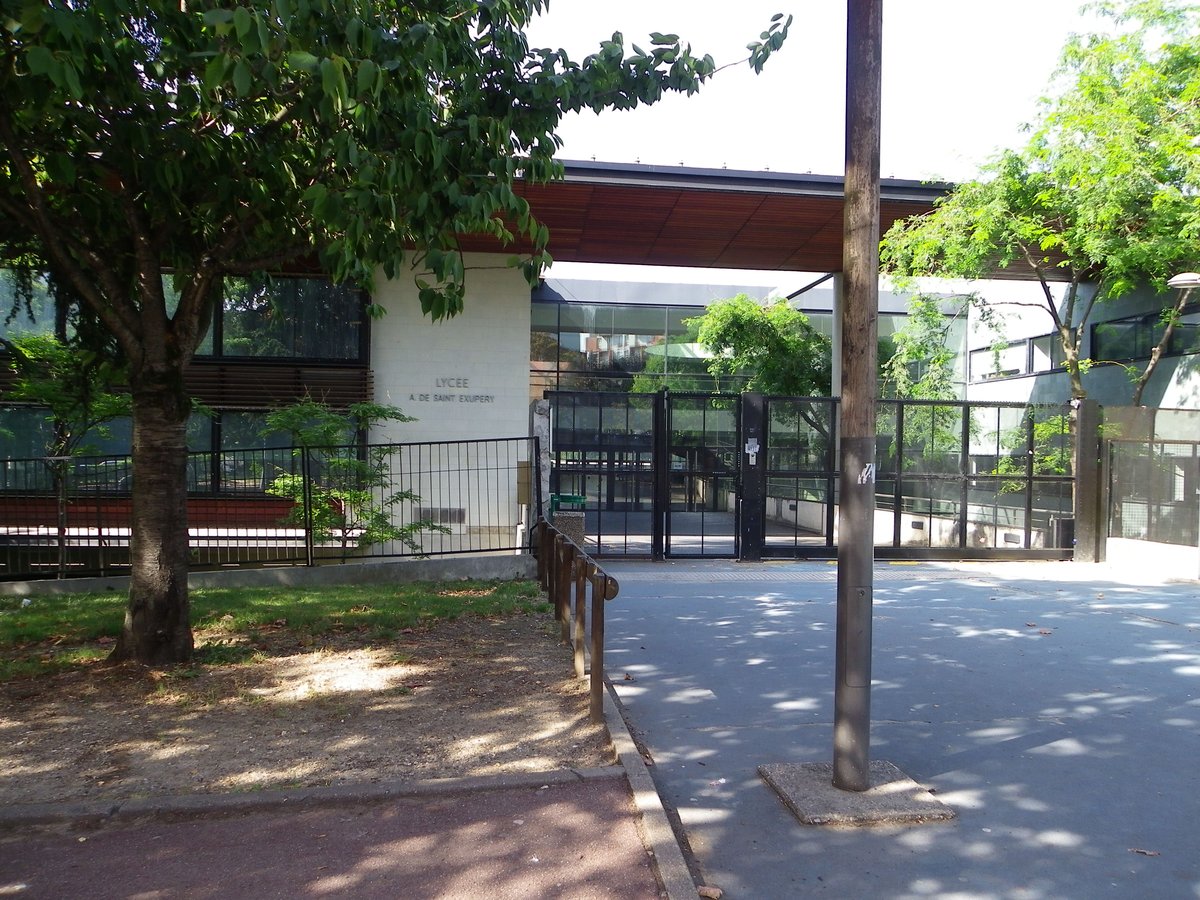
*Photo: Lycée Antoine-de-Saint-Exupéry in Créteil, near Paris. Erwmat / Wikimedia Commons, CC BY-SA 3.0.*