

The United States on Thursday ended its presence at major bases in Syria. The final convoy of American troops and equipment left the Qasrak base in Hasaka province. The base was taken over by Syrian army units composed mostly of former fighters from the Kurdish-led Syrian Democratic Forces (SDF). This brings to a close a nearly decade-long mission that began in 2014 as part of the coalition against the Islamic State. AP News ↗
A spokesman for the US Central Command (CENTCOM), Captain Tim Hawkins, stated that American forces "completed the handover of all major bases in Syria as part of a deliberate and conditions-based transition." The Pentagon emphasized that the US will "continue to support partner-led counterterrorism efforts" aimed at preventing the return of the Islamic State. This is therefore not the end of operations in the region, but a shift in model from direct presence to indirect support. Military.com ↗
The drawdown began in February 2026, when President Donald Trump ordered the withdrawal of approximately one thousand American troops. CNN and Stars and Stripes confirmed that the strategic al-Tanf base in the south of the country, near the border with Jordan, was the first to fall on February 12. Al-Shaddadi in the northeast followed, and finally Qasrak. Troops and equipment left Syria via Jordan in order to avoid potential attacks by pro-Iranian militias in Iraq. CNN ↗ Stars and Stripes ↗
According to the AP news agency, before closing the bases the American military transferred approximately 5,700 detained Islamic State fighters from detention centers in northeastern Syria to prisons in Iraq, where they are to be tried. This was one of the key conditions of the withdrawal — during the Syrian civil war, it repeatedly happened that jihadists returned to the battlefield by escaping from overcrowded prisons. AP News ↗
On the same day, April 16, Syrian President Ahmad al-Sharaa received SDF commander Mazloum Abdi and Ilham Ahmad, a representative of the North Syrian Rojava administration, in Damascus. They discussed completing the integration of Kurdish forces into the Syrian army, based on the agreement of January 29, 2026. Kurdish fighters are joining the army individually, not as a separate bloc. In March, Sipan Hemo, one of the most prominent Kurdish commanders and a co-founder of the YPG, was appointed assistant minister of defense for the eastern region. Rudaw ↗
The US withdrawal fundamentally changes the position of the Kurds. The autonomous Rojava administration, which the American presence had de facto protected for the past decade, is losing its independence. The SDF has given up control over Raqqa and Deir ez-Zor; while the governor of Hasaka is nominated by the Kurdish side, the police chief is appointed by Damascus. Turkey welcomed the condition of the agreement that the SDF must expel non-Syrian fighters linked to the Kurdistan Workers' Party (PKK) from Syrian territory. Middle East Eye ↗
Ankara itself, however, does not intend to leave. Turkish Defense Minister Yaşar Güler stated in early February that "the decision on withdrawal from these areas will be made by the Republic of Turkey." According to analysts, President Recep Tayyip Erdoğan, together with Saudi Crown Prince Mohammed bin Salman, played a key role in Washington's acceptance of al-Sharaa as an acceptable counterterrorism partner. FDD ↗
Russia, which faced an uncertain future in Syria after the fall of Bashar al-Assad in December 2024, is choosing a different path. In January 2026, it withdrew forces from the airport in Qamishli in the northeast, but with the blessing of the new Syrian government it kept its strategic naval facility in Tartus and its air base in Hmeimim. Al-Sharaa has visited Vladimir Putin in Moscow twice in four months. Moscow Times (Reuters) ↗
Washington is thus moving from a "boots on the ground" strategy to an "over-the-horizon" model — without a permanent presence, but with the ability to respond rapidly from regional allies. Bases remain available in Jordan, Iraq, and Qatar. Trump already spoke of leaving Syria back in 2018, but at the time the Pentagon and allies held him back. This time, the decision is holding. Al Jazeera ↗
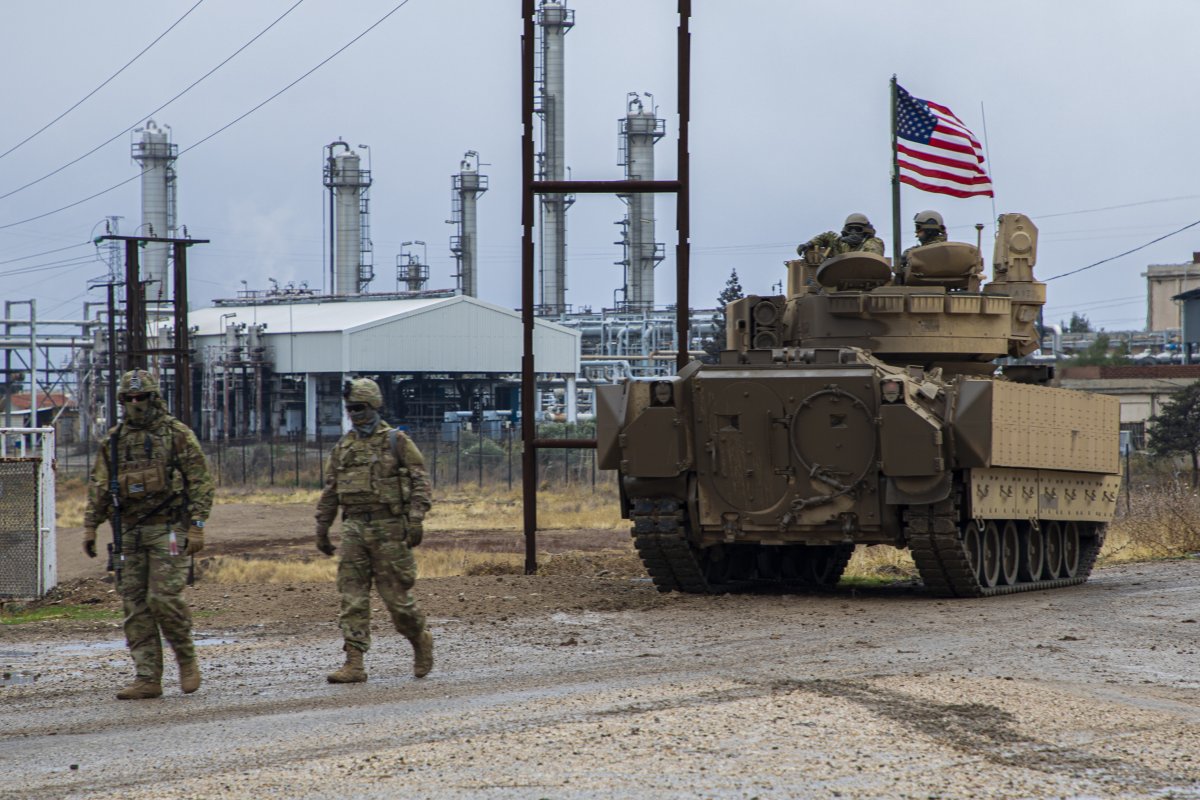
US hands over final bases in Syria. Direct mission ends, fight against ISIS continues through partners
🔥 You might also like

European Union
What Europe is Writing About: Putin Signed Three Secret Decrees, Kurdish Forces in Syria Dissolved, US Not Planning Strikes on Iran for Now
Putin signed three secret decrees on the day of unannounced CIA chief's trip to Moscow, Kurdish forces in Syria dissolved, US not planning strikes on Iran for n …
📰
World Politics
Syria to send 3,000 soldiers to the Saudi-Yemeni border
Syria has agreed to deploy its soldiers in Saudi Arabia and Yemen to support the fight against Yemeni Houthis. According to available data...
European Union
What Europe Is Writing About: Israel Without a Majority After Elections, Finland and Norway Called Putin, Serbia After Vučić's Fall
Israeli elections without a winner, Finland and Norway's call with Putin divided Europe, in Serbia the Student List won elections after Vučić's fall. A European …
Geographic locations


From our newsroom original
All →
Bayern seeks to ease dispute over Musiala's salary, Rummenigge stands firm
V4 and Austrian Leaders Reject EU Budget Proposal
Jensen Huang returns to the helm of Nvidia after scandal
Belgium facing a day without flights on Monday: air traffic controllers' strike halts operations

What Ukraine is writing about: EU proposes another 45 billion, protest against a Russian at the IAEA, civilian casualties up 95%

What Germany is writing about: nine hours on the electricity tax, Brunnermeier to the ECB, CSU against Berlin's Left

What Europe is Writing About: Crimean Bridge Divides Washington and Berlin, US Bombs Kesm, Shenzhen as a New Yalta?

Pentagon questioned Ukrainian strikes deep in Russia. Berlin and London pushed back