
A few hours later, CBS and Reuters, citing anonymous sources from the US Department of Justice, reported that prosecutors are preparing a criminal indictment of 94-year-old Raúl Castro. According to them, the indictment concerns the 1996 shooting down of two small planes belonging to the Florida-based organization Brothers to the Rescue, and still needs to be approved by a grand jury. CBS News ↗ Seznam / Reuters ↗
On the same day, the US State Department officially offered the island one hundred million dollars in humanitarian aid to be distributed through the Catholic Church. At the same time, Washington tightened sanctions cutting Cuba off from world energy markets. In just 24 hours, the Trump administration thus opened a channel of negotiations, offered aid, and prepared criminal prosecution of the regime's symbolic figurehead.
A meeting that was unthinkable for decades
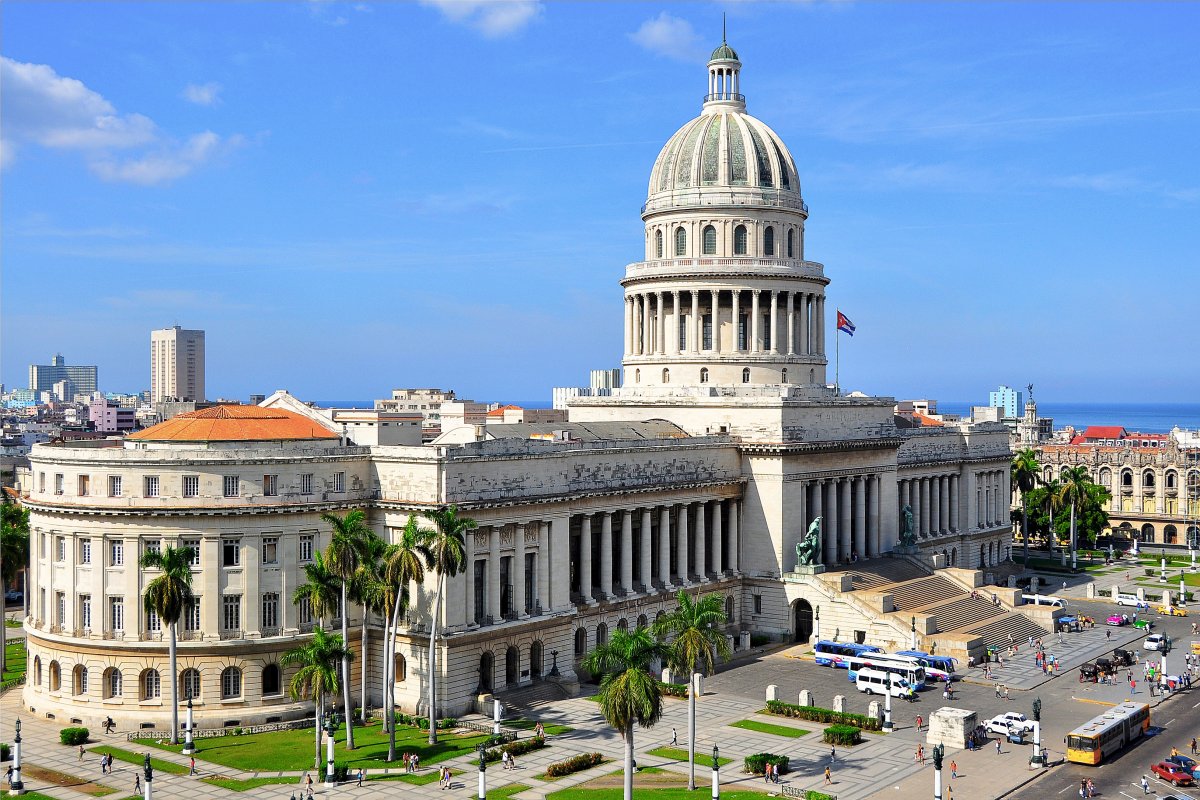
A Boeing C-40B Clipper, an aircraft used for state visits, landed in Havana on Thursday morning. The delegation was led by Ratcliffe, who according to Axios met not only with the interior minister and the head of Cuban intelligence but also with Raúl Guillermo Rodríguez Castro — Raúl's grandson and an officer of the Ministry of the Interior, familiarly known in Havana as Raulito. He commands the General Directorate of Personal Security (DGSP), which protects his grandfather, and according to US officials cited by Axios, he is described as "a real decision-making link" in the aging leader's inner circle. Axios ↗The meeting was held at the request of the US government, and the Cuban side officially described it as an effort to "advance political dialogue in light of complex relations." Der Standard ↗ The Communist Party of Cuba called it "part of an effort to come to terms with the current situation," and the Italian agency ANSA added a quote from the Ministry of the Interior, according to which the Cuban side "explained to the CIA that Cuba does not threaten the United States." ANSA ↗
According to El País, the Havana meeting was "the culmination of two months of opaque negotiations" that, since February, had been secretly led through Raulito by a Cuban American and US Secretary of State Marco Rubio. An anonymous CIA source told Axios that Ratcliffe conveyed a simple message to Cuba's security leadership: the US is ready to "seriously negotiate on the economy and security, if Cuba makes fundamental changes." As a warning, he added a reminder of the January operation in which US forces detained Venezuelan President Nicolás Maduro and transported him to a prison in New York. El País ↗
Castro before a federal grand jury
A few hours after the Havana photograph, CBS and Reuters released their information. Federal prosecutors are weighing an indictment against 94-year-old Castro — brother of Fidel and first secretary of the Cuban Communist Party until 2021 — over an incident that the Cuban-American community in Florida still calls an unresolved murder: on February 24, 1996, a Cuban MiG-29 shot down two civilian Cessna 337 Skymaster planes belonging to the Florida organization Brothers to the Rescue. Four crew members from Miami were killed: Carlos Costa, Armando Alejandre Jr., Mario de la Peña, and Pablo Morales. CBS News ↗Raúl Castro commanded the Cuban armed forces at the time; his brother Fidel later admitted to CBS that the military had acted on his "general orders" to stop flights over the island. Havana still insists to this day that the planes violated Cuban airspace. However, the Organization of American States, in its official report, concluded that both aircraft were shot down over international waters — nine and ten nautical miles from the Cuban coast. OAS Human Rights Commission ↗
Although Raúl Castro holds no political office today and lives a secluded life in Santiago, according to US analysts he still remains one of the most powerful men on the island. The indictment would need to be formally confirmed by a grand jury, and according to CBS sources this could happen in the coming weeks. Florida's Cuban-American congressmen had been calling for prosecution since February, on the 30th anniversary of the shootdown.
An island without fuel, "Opción Cero"
The day before Ratcliffe's arrival, Cuban Energy Minister Vicente de la O Levy said on state television a sentence that had not been heard in Havana before: "We have absolutely no fuel. No reserves." The Guardian ↗ According to him, the national power grid is in a "critical state." The country generates electricity mainly at eight aging thermal power plants, some of which have been operating for more than forty years and frequently fail or must be taken offline.The last tanker delivery — approximately one hundred thousand tons of Russian oil brought in March by the tanker Anatoly Kolodkin — ran out at the end of April. It was the first tanker shipment in roughly three months, following the tightening of the US oil blockade in January, which also affected supplies from Venezuela after Maduro's detention. AP ↗ Power outages in Havana now last more than 19 hours a day, and in the provinces sometimes entire days.
In Havana's Marianao district, according to El País, residents in desperation banged on pots and set street corners ablaze on Wednesday evening — a gesture of protest not seen on the island since the summer of 2021. Meanwhile, according to the newspaper, a notice signed by the National Civil Defense Staff is circulating on WhatsApp, warning of the activation of the "Opción Cero" plan — a regime of extreme rationing last applied by Fidel Castro's government during the economic crisis of the 1990s.
One hundred million as a test
Shortly before Ratcliffe's meeting, the US State Department officially announced an offer of one hundred million dollars in humanitarian aid for Cuba. The aid is meant to flow through the Catholic Church and be directed toward food, fuel, and medicine. Rubio first spoke publicly about the offer during his April visit to Rome, when Havana rejected it.This time, President Miguel Díaz-Canel responded via X: if the offer is "genuine and in line with universally recognized standards for humanitarian aid, it will encounter neither obstacles nor ingratitude in Cuba." However, he added the caveat that he considers the whole package "inconsistent" — since, in parallel, Washington imposed secondary sanctions by executive order against foreign persons and financial institutions doing business with Cuba in the sectors of energy, defense, security, or finance. El País ↗ White House — executive order ↗
Also read
- No one left to perform operations. Under pressure from Trump, Cuba's medical program ends in eight countries
- USA Today: Pentagon expands scenario planning for Cuba, Havana speaks of threat of invasion
- Cuban crisis: Díaz-Canel refuses to step down, Washington chokes off oil supplies, island plunges into darkness
What hotinfo is following
- Moscow or Beijing sends another oil tanker to Cuba; or the deliveries stay blocked
- Sheinbaum's Mexico and other Caribbean countries end the Cuban medical programme, or hold out against Washington's pressure
- A grand jury approves or rejects the indictment of the 94-year-old Raúl Castro (Brothers to the Rescue 1996, four dead)→ USA vznesli obvinenie proti Raúlovi Castrovi v súvislosti so zostrelením lietad…USA federálne obvinenie podané 20.5.2026 na Floride proti 94-ročnému Raúlovi Castrovi; DOJ konšpirácia na vraždu amerických občanov v incidente Brothers to the Rescue 1996. Pokryté HotInfo briefingom (article 928106).
- The Catholic Church accepts the role of intermediary for $100m in humanitarian aid, or the Vatican declines the offer→ Obísť komunistov, distribuovať cez cirkev. Kuba prijala od USA pomoc za 100 mil…Pravda 21.5.: 100M USD humanitárnej pomoci sa bude distribuovať cez Katolícku cirkev, obíduc komunistický režim - sprostredkovateľská rola cirkvi de facto potvrdená.
- Activation of the "Opción Cero" plan — extreme rationing as under Fidel in the 1990s→ Kuba na prahu katastrofy: V krajine chýba palivo a hrozí hlad, zúfalý ostrov ži…Kuba - masívna palivová a potravinová kríza; minister Rodríguez žiada medzinárodnú pomoc (pravda.sk + teraz.sk 27.5.2026). Opción Cero-typ racionovanie de facto nastalo.
- Rubio turns the humanitarian gesture into structured negotiations; or it stays a mix of sanctions plus a one-off offer→ Rubio doubtful of diplomacy with Cuba as Trump renews threat of military action22.5.: Rubio doubtful of diplomacy (Guardian #934486), Trump threatens new Cuba crackdown (Independent #934963). Sčastnil sa druhý scenár: kombinácia sankcií + jednorazovej ponuky. Žiadne štruktúrované rokovanie.
- The Trump administration and the DOJ are preparing an indictment of Raúl Castro (Brothers to the Rescue 1996) — no formal indictment has been filed yet, but the BBC, the Independent and El Mundo have the scoop→ US planning to criminally indict ex-Cuban leader Raúl CastroDOJ planning to indict (BBC 15.5.), Trump prepares to seek indictment (Independent 15.5.), Ratcliffe CIA director priamy tlak na rodinu Castro (El Mundo). 94-ročný Raúl ešte nie je formálne obvinený.
- UN human rights experts called the escalating US pressure on Cuba "colonial-era practices" that endanger international peace (Geneva, June 2, 2026)→ Experti: Hrozby USA voči Kube pripomínajú praktiky z koloniálnej éryTASR/AFP; 3 RSS zdroje (teraz.sk, svet.sme.sk, Novy Cas) — kondemnácia OSN, kandidát na /article follow-up alebo večerný briefing update
- A foreign-lens analysis of the escalation (the Guardian plus Al Jazeera) — the Venezuela parallel, the UN on collective punishment, the Sherritt pullout→ USA zvýšili vojenskú hrozbu voči Kube. Al Jazeera a Guardian pripomínajú Venezu…22.5.: HotInfo článok 937024 cez AJE 22.5. + Guardian Editorial 17.5. — pridáva 3 vrstvy ktoré SK redakcie vynechali
- Cuba on the brink of catastrophe: fuel is short, hunger looms, and the Cuban minister asked the UN Security Council for international aid (May 27–28) — the regime has moved close to the Opción Cero scenario→ Kuba na prahu katastrofy: V krajine chýba palivo a hrozí hlad, zúfalý ostrov ži…Pravda.sk 27.5. + SITA 27.5., Min. zahraničia Rodríguez v BR OSN
- The US imposed sanctions on the Cuban state oil company CUPET (escalating oil pressure on the regime)→ USA uvalili sankcie na kubánsku štátnu ropnú spoločnosť12.6. /udrzba Phase B: 3+ RSS (teraz.sk 1040378, svet.sme.sk 1040465, seznamzpravy.cz 1040329) - Treasury sankcie na CUPET