Key actors — tap for context

ProRail
State-owned company that manages the Dutch rail network, its tracks, switches and signalling equipment.
Why here: It described Tuesday's disruptions as a deliberate act and found the attached material.
More info →
AIVD
Dutch civilian intelligence and security service, the equivalent of Slovakia's SIS. It also deals with hybrid threats and the activities of foreign states.
Why here: It joined the investigation to determine the origin of the attack. It has not yet named a specific perpetrator or motive.
More info →
Rob Jetten
Dutch prime minister, who took office in February 2026 at the head of a minority coalition of D66, VVD and CDA.
Why here: Speaking about the sabotage and the farmers' protests together, he said it had "crossed all boundaries".
More info →
Farmers Defence Force
A more radical Dutch farmers' organization, known for blocking motorways during the nitrogen protests.
Why here: It confirmed that farming activists started the straw bale fires near motorways. It denies the railway sabotage, but does not rule out that farmers are behind it.
More info →Prinsjesdag
The third Tuesday of September, when the Dutch king opens the parliamentary year with a speech from the throne and the government presents next year's budget.
Why here: Both the sabotage and the farmers' actions fell on exactly this day.

Steenwijk
A town in the province of Overijssel in the northeast of the Netherlands.
Why here: It was there that a train ran into the attached material; no one was injured.
More info →
Deutsche Bahn
German state railway operator and manager of the largest rail network in the European Union.
Why here: Its internal tally gives the total number of attacks and thefts on the network, but does not offer a breakdown by motive.
More info →
Cléon
A commune in the Seine-Maritime department in Normandy.
Why here: A regional train derailed near it on 11 September, injuring 44 people.
More info →DIGOS
Italian police unit for general investigations and special operations, which also handles terrorism and political extremism.
Why here: It is investigating the February series of attacks on the Italian railway, one of which was claimed by anarchists.
More info →Emilian Gebrev
Bulgarian arms dealer, owner of the company EMCO. In 2015 he survived a poisoning attempt, for which Bulgarian prosecutors charged three Russians.
Why here: His warehouses caught fire in both August and September; the company speaks of sabotage.
A piece of metal shuts down the track — and that's by design
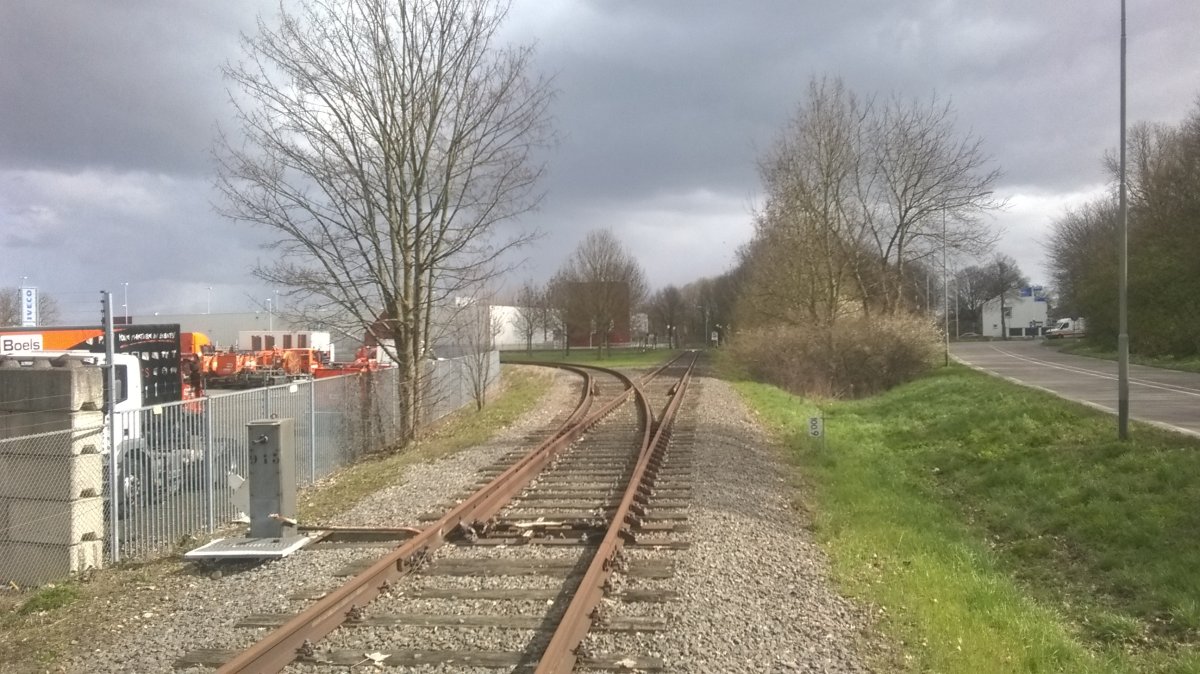
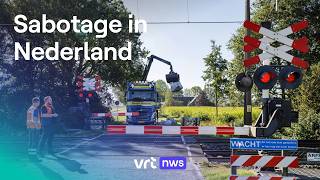
According to ProRail, the pipes were attached to the rails. They did not need to derail a train to stop traffic: it was enough for the metal to electrically bridge both rails, which is exactly the signal a track circuit uses to report that a train is occupying the section. The signals therefore switched to red and traffic stopped on its own. At Steenwijk in the province of Overijssel, a train ran into the attached material, though no one was injured. At Meppel, investigators additionally found a jump-start cable that was meant to cause a short circuit. SpoorPro ↗ DutchNews ↗The signalling system, then, worked exactly as intended. It is designed so that, in case of any doubt, it stops everything rather than letting a train proceed into an unknown situation. It is precisely this feature that makes it a target that can be hit with nothing more than a piece of metal. An expert consulted by Dutch media described it as a fairly simple act. By evening, ProRail counted more than thirty disrupted sections, and the operator NS began restoring the full timetable in the afternoon.
Belgian public broadcaster VRT NWS summed up on Tuesday what was known about the incident at that point, including footage of the pipes fastened to the rails. The report is in Dutch.
NOS ↗
The secret service is involved, but no one has named a motive
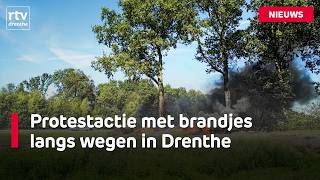
AIVD has joined the investigation, and according to its own statement is determining "which side this is coming from". The national counter-terrorism coordinator NCTV declined to say whether the act was terrorist in nature, referring instead to the conclusions of the police and prosecutors. Prime Minister Rob Jetten said of the sabotage and the protests together that it had "crossed all boundaries". None of them named a perpetrator or a motive. Transport Online ↗ NOS ↗A candidate explanation, meanwhile, was on offer all day. It was Prinsjesdag, the day of the speech from the throne and the budget, and the Farmers Defence Force had announced actions for this date in advance. In the afternoon, bales of straw were set on fire near the motorways A7 by Scheemde, A28 at several points in Drenthe, and A2 near Breukelen, where police detained six people aged between 25 and 70. The organization confirmed that farming activists had started the fires. It denied the railway sabotage — but at the same time admitted that farmers could be behind it. Public broadcaster NOS summed it up cautiously: whether the two things are connected is not clear.
Regional public broadcaster RTV Drenthe filmed straw bales, tyres and oil drums burning by roads in Drenthe that same day, while tractors headed for The Hague.
Reformatorisch Dagblad ↗ NOS ↗
Three similar cases, three different leads
This is exactly why it is worth looking at where previous attacks on European railways have led so far. They agree in their effect and diverge in almost everything else.In France, a regional train carrying 186 passengers derailed near Cléon in Normandy on the evening of 11 September; one carriage overturned and 44 people were injured. A five-metre piece of rail, which according to SNCF sources weighed around three hundred kilograms, was lying on the track, and investigators are trying to determine where it came from. The Rouen public prosecutor's office, however, stated that at this stage it had no grounds even to claim a deliberate act, let alone an attack. The independent agency BEA-TT has opened a technical investigation into the matter. Some Central European media were already reporting that day that authorities were calling it sabotage. CNews ↗ CBS News ↗
In Italy, three targets were hit at once on 7 February: a switch-control device set on fire near Pesaro, damaged cables at Castel Maggiore near Bologna, and timed incendiary devices, one of which failed to explode. Traffic came to a halt in northern and central Italy, affecting thousands of passengers. Two days later, a text celebrating the attacks appeared on an anarchist blog, and a claim of responsibility for the Pesaro attack followed the next day. The series continued throughout the Olympics, and in June the counter-terrorism unit DIGOS detained seven people whom the Rome prosecutor accuses of terrorist conspiracy. Of the cases in this text, the Italian one has gone furthest — it is the only one so far to have produced charges. CBC ↗ Al Jazeera ↗
And then there is the strand where a Russian trail genuinely exists. On 1 September, the German government officially named Russia as responsible for an attempted drone attack on Leipzig/Halle Airport, and in Bulgaria, on the night of 11–12 September, a warehouse belonging to the arms company EMCO exploded for the second time in five weeks. The company speaks of sabotage, and Bulgarian prosecutors have in the past linked earlier explosions at its facilities to Russian military intelligence. In the case of the latest fire, however, the authorities have not presented evidence of Russian involvement. NPR ↗ The Sofia Globe ↗ Washington Post ↗
Read also: Moscow retaliated for Leipzig by closing the consulate in Saint Petersburg. The investigative trail leads to northern Serbia
What German statistics say about it
The best yardstick is offered by the largest network in the Union. According to an internal Deutsche Bahn tally cited by the newspaper Tagesspiegel, the company recorded roughly 2,200 cases of sabotage, arson, dangerous interference with traffic and metal theft between January and June 2026. That is seven percent more than a year earlier and cost more than 220,000 minutes of delay. Deutsche Bahn itself did not comment on the figures at the time. Tagesspiegel ↗The most important thing about that figure, though, is what it doesn't say. The published summary lumps together several types of crime at once and offers no breakdown by motive, so it is impossible to read off from it the share attributable to a foreign hybrid operation. The vulnerability of railway tracks is widespread and anyone can exploit it — which is exactly why first impressions tend to be a poor guide.
What this means for the Slovak passenger
Track circuits triggered by an electrical connection between both rails are also used on the Slovak network, although on part of the lines axle counters detect whether a section is occupied. No ill intent is even needed. On the same Friday that the train derailed near Cléon, a passenger train on the line between Trenčín and Chynorany hit a fallen tree and came off the tracks. None of the nine people on board was injured, but 85 damaged sleepers had to be replaced, and buses were still replacing trains on the section three days later. The difference between an accident and an attack only becomes visible after an investigation — the passenger never sees it at all. SME ↗What a real war against the railways looks like can be seen in Ukraine. Russian strikes there have hit hundreds of locomotives, according to the head of the country's railways, and are intensifying every week. There, no one is debating whether it was sabotage. SITA ↗
What hotinfo is monitoring
- Dutch police or the AIVD have named who carried out Tuesday's sabotage.
- Investigators have confirmed or ruled out a link between the rail sabotage and the farmers' actions on Prinsjesdag.
- The Rouen prosecutor has concluded whether the Cléon derailment was a malicious act or had a technical cause.
- Bulgarian authorities have named who caused the September blast at the EMCO depot.
- Another attack on rail infrastructure has occurred in an EU country.