


Key actors — tap for context

Svalbard
Norwegian Arctic archipelago halfway between the mainland and the North Pole, administered under a 1920 treaty that grants signatories, including Russia, the right to economic activity.
Why here: The Russian exercise took place off its coast, and it is linked to the mainland by two fiber-optic cables that are at the heart of the matter.
More info →GUGI
The Main Directorate for Deep-Sea Research of the Russian Ministry of Defense — one of the most secretive branches of the Russian military, which operates deep-sea submarines and mother ships.
Why here: According to two Western officials, it was the one that led the exercise.
SvalSat
A satellite ground station on the Platåberget plateau near Longyearbyen, the largest facility of its kind in the world and part of NASA's Near Space Network.
Why here: The data it downloads travels out into the world precisely via those two cables.

NATO
The North Atlantic Alliance, a defense pact of 32 states including Slovakia, whose Article 5 enshrines collective defense.
Why here: Some American analysts fear that Russia could use the destruction of cables to test Article 5.
More info →
John Ratcliffe
Director of the American Central Intelligence Agency, the CIA.
Why here: In August he was in Moscow, among other things, to warn Russia against escalating sabotage in Europe.
More info →Norway
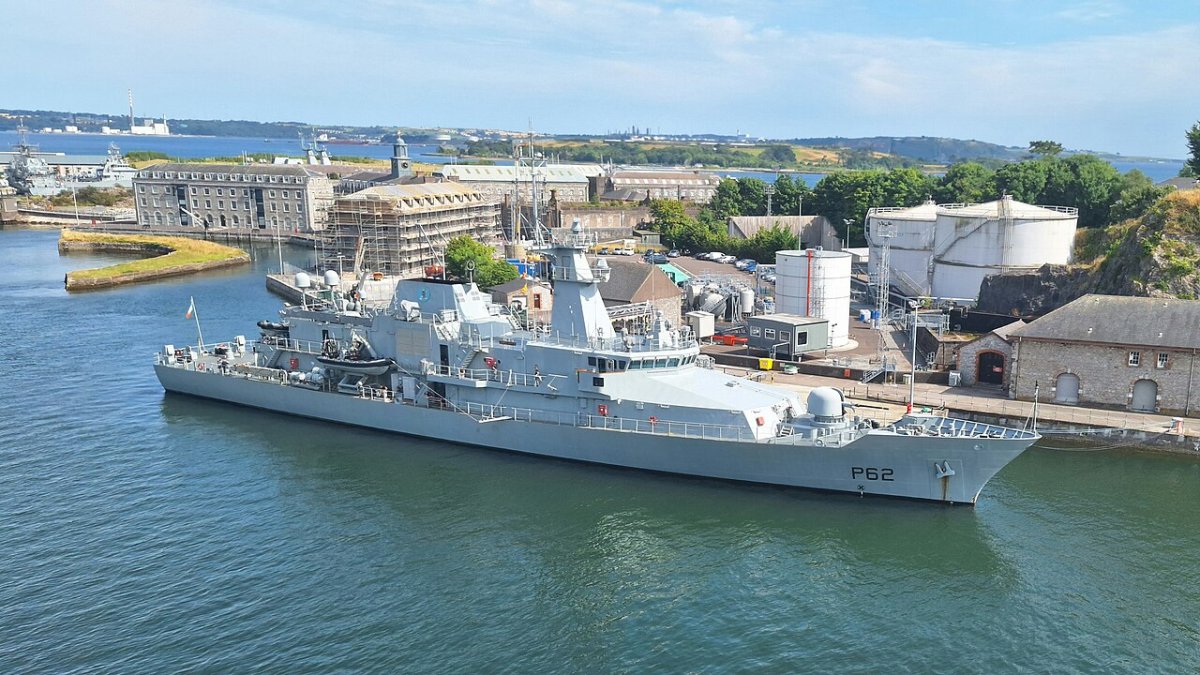
A NATO member state that administers Svalbard and maintains a permanent naval presence in Arctic waters.
Why here: Together with Britain and the United States, it led the operation against the Russian vessels.
More info →What happened near Svalbard
According to two Western officials who spoke on condition of anonymity, the operation was led by the Main Directorate for Deep-Sea Research of the Russian Ministry of Defense, known by the acronym GUGI. It used deep-sea submersibles and mother ships and simulated the deployment of technology capable of seriously damaging undersea infrastructure. Index.hr ↗British, Norwegian and American forces tracked the Russian vessels and confronted them at sea in a joint operation. This prevented them from completing the exercise, and the Russians eventually left the area. HRT ↗
The discovery itself of the secret Russian operation in Arctic waters was announced by Britain and Norway back in April. What's new about Thursday's revelation are three things: that the Russians were testing a new weapon, exactly where it took place, and that the United States also took part in the operation. Irish Independent ↗
Why these two particular cables
A pair of fiber-optic cables, each roughly 1,400 kilometers long and laid at depths of up to 2,700 meters, connect Svalbard to mainland Norway. They carry enormous volumes of satellite data downloaded by the SvalSat station — the largest ground satellite station in the world and part of NASA's Near Space Network. LSM ↗The cables themselves are no thicker than a garden hose and lie on the seabed or just beneath it. It is precisely this disproportion between their fragility and their importance that makes them a target — they are irreplaceable for global internet connectivity and financial transactions alike, and they have been targeted in past conflicts too. Vijesti ↗
Read also: 29 kilometers of cables under Gibraltar keep Morocco's electricity running
A weapon designed to leave no signature
The key feature of the technology being tested is not its destructiveness but its anonymity. According to Reuters' sources, it was designed to damage the cables without leaving obvious evidence of who was responsible. N1 ↗That marks a substantial difference from previous cases in the Baltic Sea, where cable damage was linked to cargo ships dragging their anchors — that is, to a trail that can be investigated and prosecuted. This very week, the Russian captain and ship's master of the tanker Eagle S stood trial in a Finnish court for damaging undersea cables. SITA ↗
Signature-less technology cuts off that very branch. Without an identifiable perpetrator, there is no one to accuse, no one to sanction, and nothing to tie retaliation to.
How this fits into the rest of the year
Some Western officials say Moscow has stepped up its targeting of European states in recent months, at a time when the front line in Ukraine has barely moved. Poland, Lithuania and Romania have all confirmed various violations of their territory or airspace. Diena ↗An attempted drone attack on Leipzig/Halle Airport in August triggered a series of German responses, including the closure of the Russian consulate in Bonn and a cultural center in Berlin. That same month, CIA Director John Ratcliffe visited Moscow — among other things, to warn Russia against escalating sabotage operations in Europe. Reuters was unable to determine whether the talks also touched on covert operations targeting undersea infrastructure. Radio Sarajevo ↗
Read also: Berlin blames Moscow for sabotage after the Leipzig incident
The Arctic, meanwhile, is not an abstraction for Slovakia. Just a few days ago, Norway detained a Russian ship near Spitsbergen, the seizure of which Ukraine's Naftogaz is using to recover €4.22 million. Daily Mail ↗ And according to Slovak defense media, London is pumping billions precisely into the fight against Russian submarines and the protection of undersea cables. Defence News ↗
Read also: Norway detained a Russian ship near Spitsbergen
Limits of this account
The entire report rests on two anonymous Western officials and three American officials who spoke about concerns over testing Article 5. Neither the nature of the weapon nor the precise location can be independently verified. Russia's Ministry of Defense did not respond to Reuters' request for comment, and the Kremlin has long denied conducting sabotage operations in NATO countries or preparing for any conflict. Pro TV ↗At the same time, the public learns the content of Western intelligence warnings when it suits someone. The timing — three days before the Swedish elections and in a week when defense funding is being debated in Europe — is not a coincidence, and we're not pretending it is. Expressen ↗
None of that, however, changes three verifiable facts: that Britain and Norway announced the discovery back in April, that the cables really do lie in that location, and that a Finnish court is currently trying a specific crew for specific damage. Aftonbladet ↗
What hotinfo is watching
- Norway or Britain confirmed the April disclosure officially, not through anonymous sources
- Norway announced concrete measures to protect the two Svalbard cables
- A Finnish court delivered its verdict in the Eagle S crew case
- The alliance presented a mechanism to protect undersea infrastructure in the Arctic
- Russia publicly commented on the Svalbard operation