



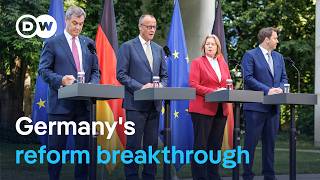
Key actors — tap for context

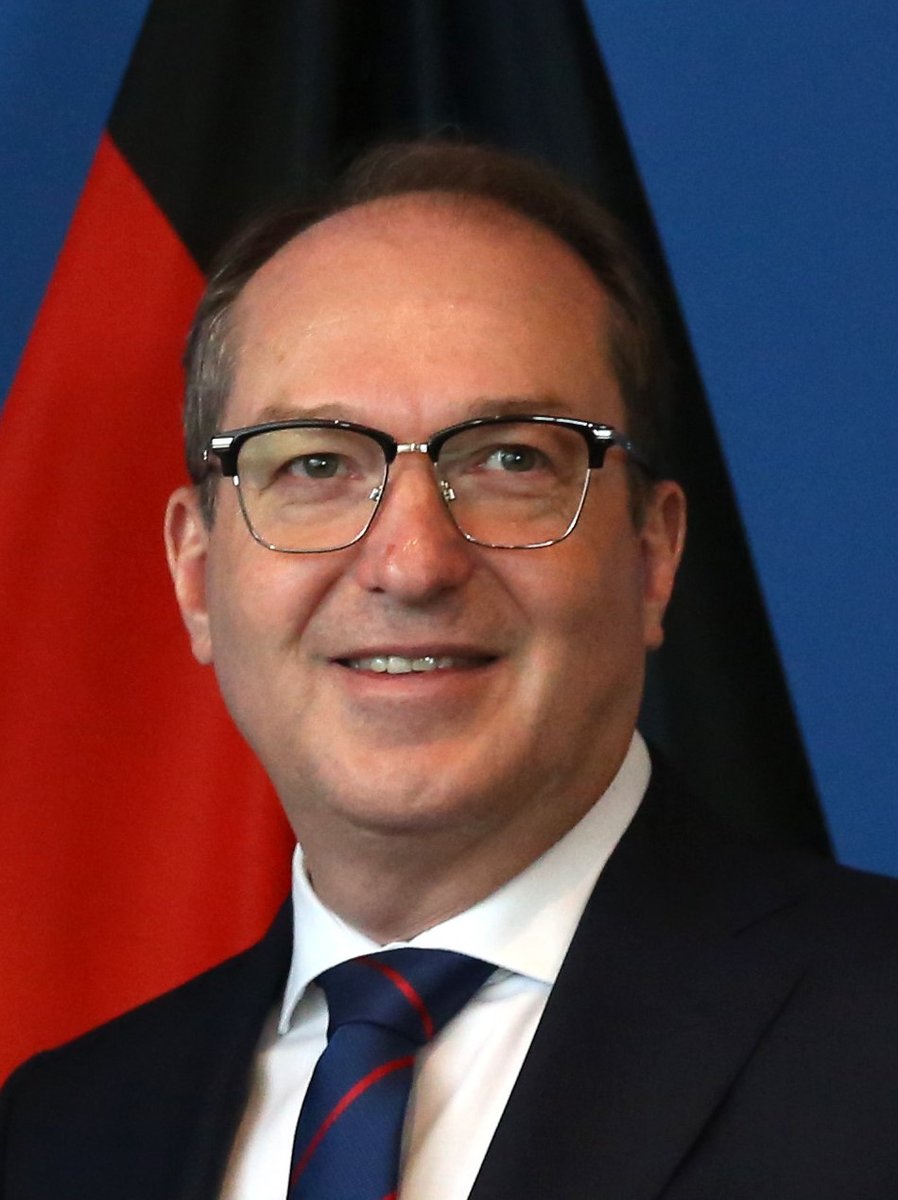
Alexander Dobrindt
German Federal Interior Minister for the Bavarian CSU.
Why here: Submitted the reform and defends it as a shift "toward genuine intelligence services".
More info →
Nina Warken
German Federal Minister for Special Tasks and head of the Chancellor's Office under which foreign intelligence falls.
Why here: Presented the reform together with Dobrindt and called it the most fundamental in the history of German intelligence services.
More info →
Bundesnachrichtendienst
German foreign intelligence service, subordinate to the Chancellor's Office.
Why here: Will receive the right to actively intervene in foreign systems and retain collected data longer.
More info →
Federal Office for the Protection of the Constitution
German civil internal counterintelligence that monitors extremism and foreign espionage.
Why here: It too will receive active powers, but only against material goods and only when no one else can intervene.
More info →
Federal Constitutional Court
Germany's highest court with headquarters in Karlsruhe.
Why here: Gave the government a deadline by the end of the year to rewrite the rules for surveillance at the border between domestic and foreign.
More info →
Bundestag
German Federal Parliament, the lower chamber.
Why here: Without its approval the reform does not take effect — there it will become clear whether coalition partners' objections change the text.
More info →
Federal Council
Chamber in which German federal states are represented.
Why here: Can initiate deliberation proceedings, but its approval is not required for this law.
More info →Independent Review Board
New oversight body composed of lawyers intended to oversee the services.
Why here: Takes over preliminary oversight of the most intensive powers, oversight of data processing and of active measures, and with it the competencies of the G10 commission.

Ulrich Thoden
Member of the Bundestag for the Left party and defense policy expert of the faction.
Why here: Rejects the reform and invokes the separation of powers as a lesson from the time of the Gestapo.
More info →
Marc Henrichmann
Member for the CDU and chair of the parliamentary oversight committee of the Bundestag.
Why here: Defends the reform by saying that Germany is entering uncharted territory, but has no other option.
More info →
Josef Oster
Member for the CDU, current chair of the Bundestag committee on the interior.
Why here: Denies that a secret police is being created — according to him, it is a matter of precisely defined cases.
More info →Martin Hagen
General Secretary of the liberal FDP.
Why here: Objects that the BND will be allowed to operate within the country against its own citizens.
Felix Banaszak
Co-chair of the German Greens.
Why here: Supports the direction of the reform, but refuses to give the government a blank check.
Hans-Jakob Schindler
German security analyst, director of Counter Extremism Project.
Why here: Calls the reform a revolution and claims that Germany is merely catching up to the European average.
Reporters Without Borders
International organization for the defense of press freedom based in Paris.
Why here: Claims that the reform systematically dismantles the protection of journalists and their sources.
More info →Maximilian Jung
Advocacy officer at Reporters Without Borders, focuses on state surveillance of journalists.
Why here: Named the practical consequence: to surveil a journalist would require only a broader connection to a threat.

netzpolitik.org
German news website on digital rights and freedoms.
Why here: Brought an interview in which the journalistic layer of the reform appeared.
More info →
Frankfurter Allgemeine Zeitung
German conservative-liberal daily newspaper.
Why here: In its Technology and Motors section pointed out the obligation of automakers to provide data.
More info →Johannes Winterhagen
Reporter in the business section of Frankfurter Allgemeine Zeitung.
Why here: Author of a commentary from which the detail about cameras in cars comes.

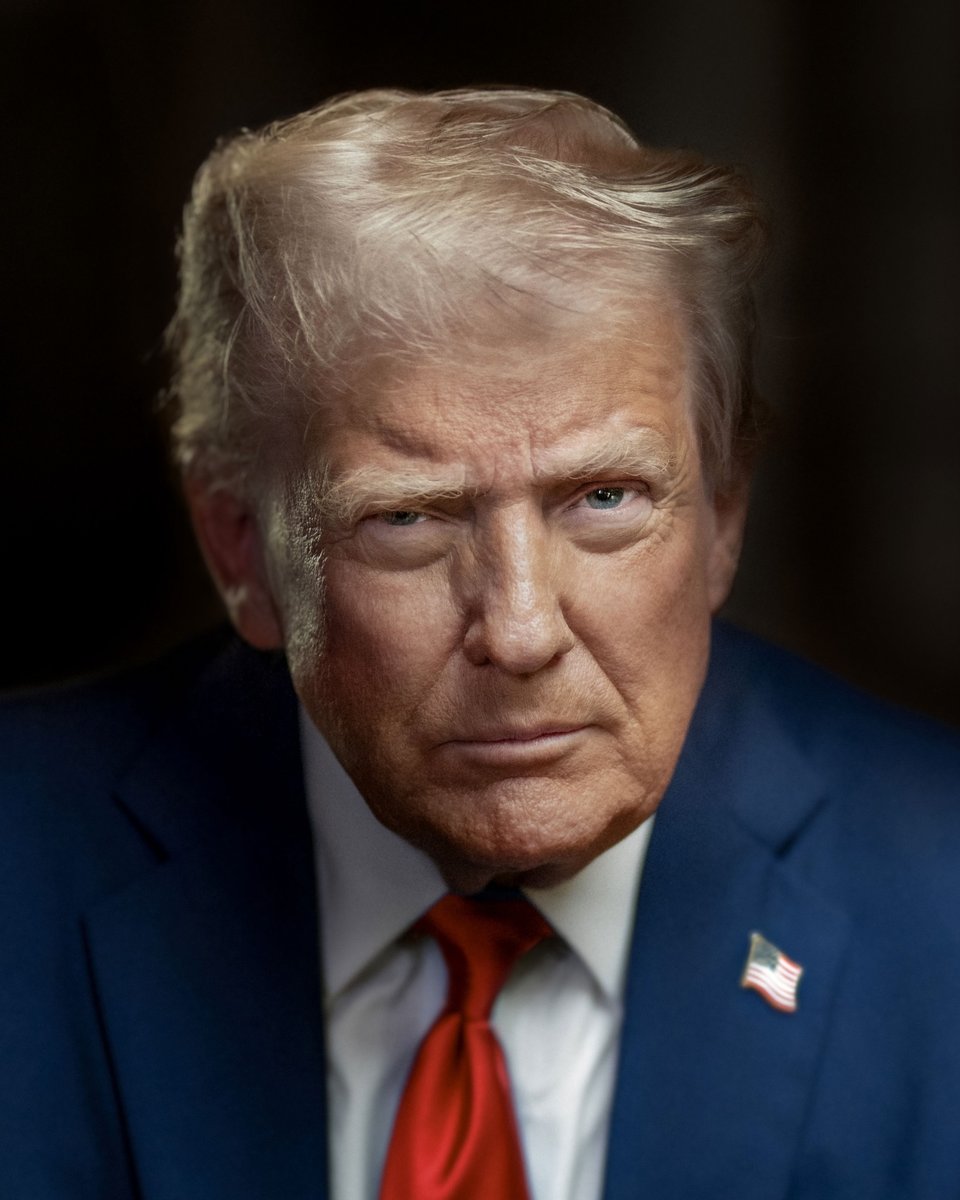
Friedrich Merz
German Federal Chancellor for the CDU.
Why here: During the approval of the reform was on extended leave, the cabinet was led by the vice chancellor.
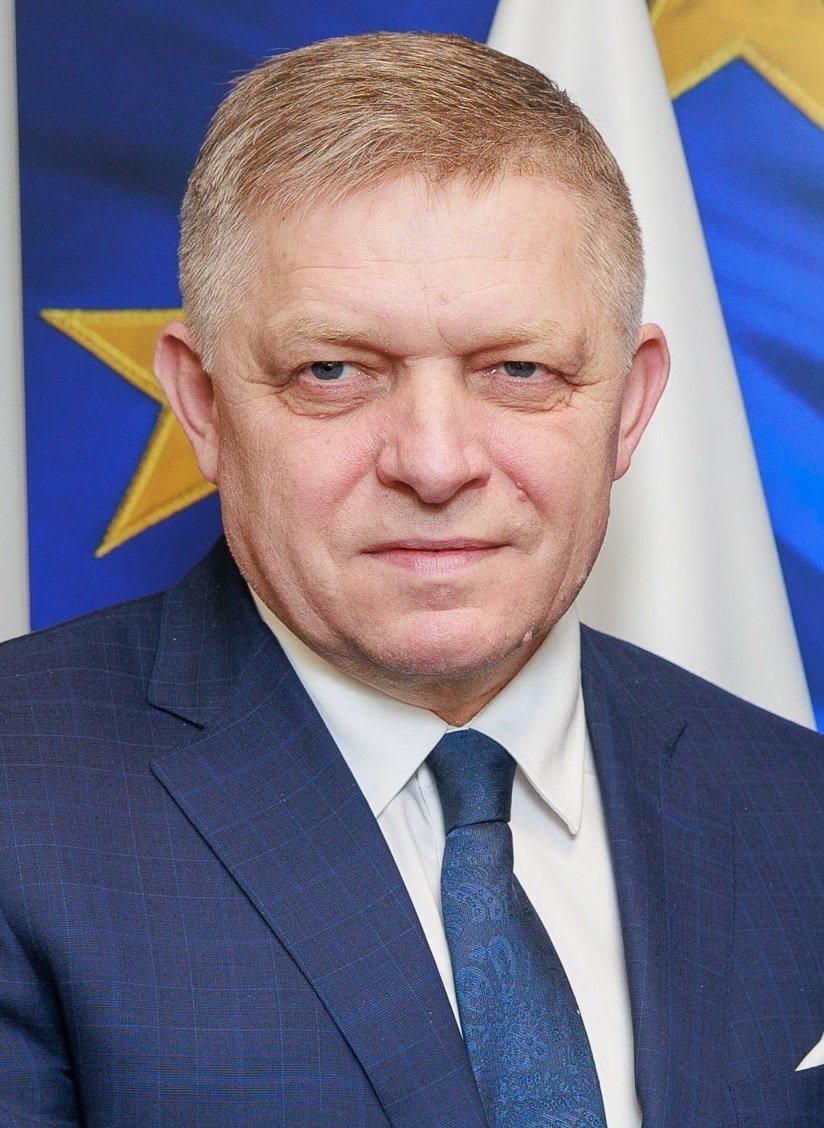
More info →Pavol Gašpar
Director of the Slovak Information Service since August 2024.
Why here: His personal data appeared among those that the state published from a collection of documents.
More info →What the reform now allows
The cabinet approved a package of more than seven hundred pages that simultaneously changes both the law on the BND and the law on constitutional protection. The government published the proposal in early July, it was prepared by the Interior Ministry together with the Chancellor's Office and in agreement with the Ministry of Justice. Legal Tribune Online ↗At the core are so-called active measures. According to the government, the BND should remain a service that gathers intelligence, but will receive a series of supplementary powers, called Annex-Befugnisse in the proposal, to avert immediate threats it encounters during its own activities — for example, to delete victim data when discovering a hacking group's system or to introduce a faulty component into a shipment. In the case of a specific threat, it should also be tasked with acting on it preventively, and for that a broad spectrum of interventions including penetration into systems of drone factories. beck-aktuell ↗
The Federal Office for the Protection of the Constitution, that is the internal counterintelligence service, gets narrower boundaries. It may intervene only if there is a threat of "serious unrest in large parts of the population" or "particularly severe damage as a result of intelligence activities of foreign powers," the intervention may concern only material goods and is permissible only when no one else can achieve the purpose. beck-aktuell ↗
Less is said about the data part, which is nevertheless more extensive. The BND will be allowed to retain collected data without prior sifting for six months for content and up to twelve months for metadata, so it will be able to retroactively find what no one had read before. Artificial intelligence is being added for evaluating large volumes and comparing biometric data with what is on the internet. The handover of data to other agencies and private entities is also being simplified, with the government particularly mentioning the Bundeswehr. ZDF ↗
From intelligent refrigerators to mobile phones — and to cameras in cars
Access to computer systems is graduated according to how deeply it intervenes. The government gives an intelligent refrigerator as an example of a minimally invasive intervention, and a privately used mobile phone as an example of a deep intervention. beck-aktuell ↗Here is a point that affects most people and was barely mentioned in the main political debate about the reform. According to the proposal, automakers and auto repair services should be obligated to provide information about the data they have available. Frankfurter Allgemeine Zeitung commentator Johannes Winterhagen summed it up by saying that the law is meant to disable German data protection precisely in this, and reminded that modern cars record their surroundings in high resolution and automatically save the recording after an accident. His own objection, however, is not panic: for millions of live streams, the volume of data would be too large anyway, but technology evolves and with it the oversight of services should also evolve. FAZ ↗
Why now
The reform has been in the works for longer, but the deadline is pressing. The Federal Constitutional Court gave the government a deadline until the end of this year to rewrite the rules for wiretapping at the border between domestic and foreign affairs. According to Karlsruhe, such surveillance is in principle permissible, but it requires adequate regulation, more effective control, clear rules for excluding purely domestic communication, and better protection of the privacy of foreigners abroad. To this is added what security forces describe as a significantly growing threat of espionage and sabotage, primarily from Russia. Legal Tribune Online ↗How very concrete that threat is was shown in the same month. Investigators found a cache with two pistols in a forest near Berlin; the prosecutor general sees it as preparation for a serious violent act threatening the state, and Dobrindt does not rule out the involvement of foreign powers. The suspect was detained last autumn in Romania. Tagesschau ↗, Digi24 ↗
Read also: Germany opens anti-drone center against hybrid attacks
The cabinet approved the reform of this scope under the leadership of the vice chancellor — Chancellor Friedrich Merz was extending his vacation at the time. Tagesspiegel ↗
Who is against — and why the word gestapo will be mentioned in Germany
The sharpest rejection came from the Left. Its defense expert Ulrich Thoden speaks of activism and reforms that "essentially only expand the competencies of secret services and executive bodies, while simultaneously reducing control". According to him, the principle of separation between police and intelligence services is "a bitter lesson from our history, above all from the Gestapo, which we had to learn and which our allies gave us as a warning on the way". He considers dual structures, where both police and services both investigate and intervene, to be ineffective and constitutionally highly questionable. ZDF ↗The same historical comparison was used in the ZDFheute live discussion by criminal law professor Mark Zöller from Munich University, who questions whether the services even need such powers. FDP General Secretary Martin Hagen objects to something different: that the BND will be allowed to operate within the country against its own citizens, which is historically problematic and damages Germany's reputation as a liberal state under the rule of law. The Greens under the leadership of Felix Banaszak say the direction is correct, but the government won't get a blank check. The Social Democrats welcome the expansion and want to verify control once more in the legislative process. ZDF ↗
The defenders argue two points. Incumbent chairman of the Bundestag committee on interior affairs Josef Oster claims it is not about creating a secret police or abolishing this principle, but about precisely circumscribed cases where there is no other option. Chairman of the parliamentary oversight body Marc Henrichmann admits that "we are entering completely uncharted territory, and we are not doing this for fun, but because we live in times of real external threat, sabotage and disinformation". He also promises that the deeper the intervention, the more thorough the prior and subsequent control. beck-aktuell ↗
Security analyst Hans-Jakob Schindler goes even further and calls the reform a revolution. According to him, Germany has maintained one of the most restricted intelligence services in Europe for years, and compared to the Union it is merely catching up. The same argument is also in the coalition agreement. ZDF ↗
What journalists say about it
The layer that has barely made it into political debate concerns journalistic sources. According to Reporters Without Borders, the reform essentially eliminates the distinction between foreign-to-foreign communication and foreign-to-domestic communication, while unifying the thresholds for intervention at the lower level. The competencies of the so-called G10 commission, which oversaw this type of wiretapping, are being transferred to an Independent Oversight Board. netzpolitik.org ↗The practical consequence was named by Maximilian Jung from this organization specifically. For a journalist communicating from Germany with a source abroad, it would no longer be necessary to prove that he is participating in a crime or its preparation. It would be sufficient for the service to place him in a broader context with a serious threat, because it assumes he exchanges information that interests it. According to him, the protection of journalists and their sources is thus systematically dismantled. netzpolitik.org ↗
What applies to Slovakia from this
Germany openly describes its change as catching up to the European average, which means the argument "others already have it" will be heard in other countries with reference to Berlin. Slovakia is in a similar threat environment, since drone incidents, sabotage, and cyberattacks do not stop at borders.Also interesting is the contrast offered by those same August weeks. While in Germany there is a dispute about how much data the state may take, in Slovakia the state distributed its own data wholesale: making the business register records publicly available revealed personal data of business owners, including data of the head of the SIS Pavel Gašpar and the head of the office responsible for data protection. SME ↗
Read also: What Slovakia is writing about: Blanár met with Russian minister
Limits of this view
This is still a government proposal, not a valid law. The Bundestag must approve it, the Federal Council can initiate conciliation proceedings, but its approval is not necessary — the text can still change and some controversial parts may not survive. ZDF ↗The sources of this text also have their angles. Netzpolitik.org and Reporters Without Borders read the proposal through the lens of press freedom, which is legitimate, but it is advocacy, not neutral analysis. Beck-aktuell and Legal Tribune Online are professional legal media — precise but not critical. And the text in Frankfurter Allgemeine Zeitung, from which the detail about cameras in cars comes, is a two-minute commentary from the Technology and Motor section, not a report.
The claim that German services were among the most restricted in Europe is the assessment of one analyst, not a measured comparison. And the question of how the Independent Oversight Board will be staffed and whether it will be able to handle prior review of all the most extensive powers has not yet been answered by any of the cited sources.
What hotinfo is monitoring
- The Bundestag approved the reform in the final vote
- Germany rewrote its surveillance rules by December 31, 2026, within the Federal Constitutional Court's deadline
- It became clear whether the G10 commission's powers passed to the Independent Control Council in the form originally proposed
- It became clear whether the obligation on carmakers and repair shops to hand over data stayed in the final text
- The Independent Control Council was fully staffed and began operating
- A reference to the German reform appeared in the debate on intelligence powers in another member state
- The Bundestag debated the reform in first reading→ Bundestag: Was dürfen Deutschlands Nachrichtendienste künftig?Bundestag 24.9.2026 zacal rokovania o komplexnej reforme spravodajskych sluzieb (BND aj Verfassungsschutz); Dobrindt hovori o premene na skutocne tajne sluzby (Tagesspiegel).