







Key actors — tap for context

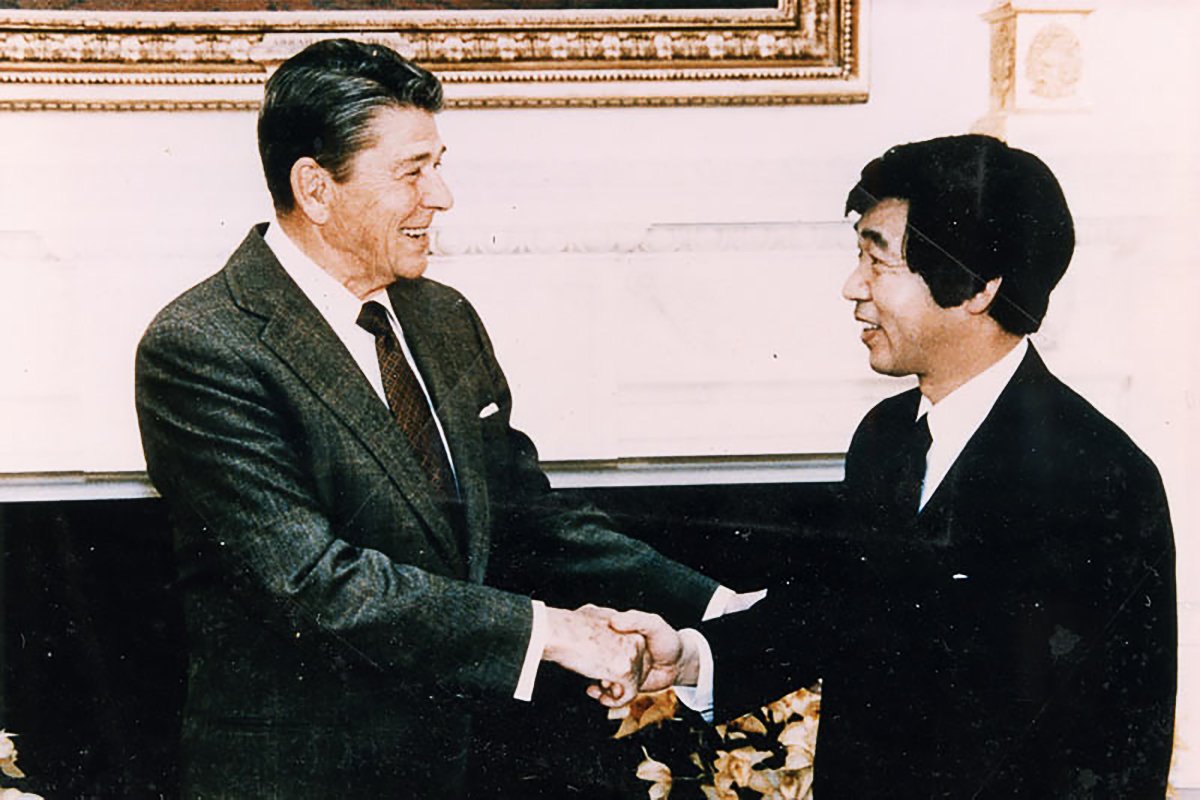
Sanae Takaichi
Japan's prime minister, president of the Liberal Democratic Party and the first woman to lead the Japanese government. She took office in October 2025, succeeding Shigeru Ishiba.
Why here: It is her government that the now-dissolved alliance was meant to counterbalance, and her party emerged from the February election with a two-thirds majority in the lower house.
More info →
Junya Ogawa
Japanese politician who has led the Centrist Reform Alliance since February 2026. Originally a lawmaker of the Constitutional Democratic Party of Japan.
Why here: It was he who announced on Wednesday that the alliance would cease operating, and apologized for the unmet goal of merging the parties.
More info →
Liberal Democratic Party
A conservative party that has governed Japan almost continuously since 1955.
Why here: In the February election it won 316 of 465 seats, the most any single party has ever won in a postwar lower house election.
More info →
Komeito
A Japanese centrist party with ties to the Buddhist lay movement Soka Gakkai, founded in 1964.
Why here: One of the two parties whose lawmakers made up the alliance. As a party it never ceased to exist, and its lawmakers are now returning to it.
More info →
Constitutional Democratic Party of Japan
A center-left party that, before the alliance was formed, was the country's strongest opposition force. It is now led by Shunichi Mizuoka.
Why here: The second of the two parties whose lawmakers made up the alliance. It, too, continues to exist, though its former lawmakers from the alliance want to found a new entity.
More info →Nippon Ishin no Kai
A right-wing populist party with a stronghold in Osaka, known in English as the Japan Innovation Party.
Why here: Since October 2025 it has been a coalition partner of the Liberal Democratic Party and shares its stance on revising the constitution.
More info →
Yoshihiko Noda
Japanese politician and prime minister from 2011 to 2012, later president of the Constitutional Democratic Party of Japan.
Why here: He was one of the alliance's two co-leaders and announced his resignation the day after the election defeat.
More info →
Tetsuo Saito
Japanese politician and longtime Komeito official, formerly minister of transport.
Why here: The second of the alliance's co-leaders, who announced his resignation after the election together with Noda.
More info →
Shigeru Ishiba
Japanese politician and prime minister, succeeded by Sanae Takaichi in the fall of 2025.
Why here: Under his government the then-ruling coalition with Komeito broke apart.
More info →House of Representatives
The lower house of the Japanese parliament, with 465 seats. The prime minister can dissolve it and call an early election.
Why here: This is where the ruling coalition holds a two-thirds majority and where the entire now-dissolved alliance operated.

House of Councillors
The upper house of the Japanese parliament, with 248 seats. Members are elected for six-year terms, with half the seats up for renewal every three years, and the prime minister cannot dissolve it.
Why here: It is here that the ruling coalition lacks the majority needed to propose a constitutional amendment, and the next election will not be until 2028.
More info →Eight Months and One Election
The Centrist Reform Alliance was formed on January 15, 2026. It was not a full merger of the two parties — lawmakers from the Constitutional Democratic Party of Japan and Komeito began acting as a single party in the lower house, while in the upper house and in local politics the two original parties continued to operate separately. The intent was to unite the fragmented opposition into a bloc capable of competing with the Liberal Democratic Party. The new formation put two co-leaders at its head: former prime minister Yoshihiko Noda and Tetsuo Saito of Komeito. Japan Today ↗The test came less than a month later. Prime Minister Takaichi called an early election for February 8, and the alliance suffered a rout. Of the more than one hundred sixty seats the two parties had brought into it, only 49 remained. Both Noda and Saito announced their resignation from leadership the day after the election, and Junya Ogawa took over as leader on February 13. Nippon.com ↗ Aktuality ↗
Over the following months, the alliance attempted to take a further step — merging with both parent parties into a single entity that would operate in both chambers. That is why the negotiations involved three parties, not two. It did not work out. The Constitutional Democratic Party announced on August 28 that it would not go through with the three-way merger, and on August 31 all three partners confirmed this jointly. The resistance came mainly from lawmakers and local organizations of the Constitutional Democratic Party, whose leader Shunichi Mizuoka offered closer cooperation in the upper house and coordination in local elections instead of a merger. Nippon.com ↗ Nippon.com ↗
So on Wednesday, Ogawa announced the end. "I am extremely sorry we were unable to achieve the one-party merger that was our primary objective,", he told reporters in parliament, according to Japan Today. The alliance will not disband immediately, however. At a press conference, Ogawa admitted that it carries substantial debts and said it can only be dissolved once they are paid off. Until then, only a single lawmaker will formally remain in it. TBS News Dig ↗ Japan Today ↗ The Japan Times ↗
How the 49 Seats Will Be Divided
The wire report speaks of the dissolution as a single event. But the breakdown of seats shows that the two branches are emerging from the alliance differently. Of the lawmakers now going their separate ways, 28 came from Komeito and 21 from the Constitutional Democratic Party. Japan Today ↗The smaller of the two parties thus holds the majority within what remains of the alliance. Before its formation the ratio was reversed, and by a wide margin — the Constitutional Democratic Party was the country's strongest opposition force, while Komeito was considerably smaller. There is also a difference in where the lawmakers are heading: those from Komeito are returning to their own party, while the others are founding a new entity, even though the Constitutional Democratic Party continues to exist. The cited reports do not explain why a new party is being formed instead of a return to it. Japan Today ↗ Nippon.com ↗
Ogawa described it with the image of a unicycle turning into a bicycle — two wheels instead of one, with both parties continuing to pursue the original goal. Japan Today ↗
How Takaichi Got to Two Thirds
The chain of events that concluded on Wednesday began last October, on the other side of the political spectrum. Komeito had been a coalition partner of the Liberal Democratic Party for 26 years. It ended that cooperation on October 10, 2025, over a dispute regarding political party financing rules. CSIS ↗The Liberal Democratic Party found a new partner within ten days. It signed an agreement on October 20 with the right-wing Nippon Ishin no Kai, which secured Sanae Takaichi's election as the country's first female prime minister. The two parties share a common stance on constitutional revision as well as on security policy. The Diplomat ↗
In the February election, the Liberal Democratic Party then won 316 of 465 seats. That is the most any single party has ever won in a postwar lower house election, and the first time a single party alone has crossed the two-thirds threshold. With Nippon Ishin no Kai's 36 seats, the coalition holds 352 votes. Among other things, this allows it to override the upper house if it rejects a bill. Nippon.com ↗ CSIS ↗
A Constitution That a Majority in One Chamber Isn't Enough to Change
A two-thirds majority holds special significance in Japanese politics. It is the threshold parliament needs merely to propose an amendment to the 1947 constitution. Takaichi has long pushed for a revision of its Article 9, the pacifist clause under which Japan renounced the use of force and the right to wage war. After the February victory, she named constitutional revision a permanent goal of her party. The Korea Times ↗The lower house alone is not enough for this, however. Under Article 96 of the constitution, a proposed amendment must pass with a two-thirds majority of all members in both chambers, and voters must then also approve it in a referendum. In the upper house, the House of Councillors, the ruling coalition holds roughly 120 of 248 seats — not even a simple majority, let alone two thirds. The Korea Times ↗
Changing that will be harder than in the lower house. The prime minister cannot dissolve the upper house; its last election was in July 2025, and the next one will not come until 2028. The coalition would therefore have to win over part of the opposition for its proposal, which remains an open question on a topic that has divided Japanese politics for decades. Experts cited after the February election therefore considered a constitutional amendment unlikely in the near term, even as they saw the debate over it growing stronger. The Diplomat ↗ The Korea Times ↗
What Happens to the Opposition
The lawmakers are going their separate ways, but they do not want to end their joint work in parliament. At the fall extraordinary session of parliament, a single parliamentary group is to be formed in the lower house under the name Chūdō — the alliance's existing Japanese name. It is to be made up of three components: the new party of former Constitutional Democratic Party lawmakers, Komeito, and the residual alliance with its single lawmaker. Together, they hope to retain their position as the strongest opposition grouping. TBS News Dig ↗ Japan Today ↗Even if the group is assembled at full strength, that is 49 votes against 352. After the ruling Liberal Democratic Party and the dissolving alliance, the chamber's third-strongest party is the coalition's Nippon Ishin no Kai with 36 seats, followed only after that by the opposition Democratic Party for the People with 28 and the newer Sanseito with fifteen. The opposition is thus not only weak but also fragmented among several entities, none of which comes close to the ruling party in size. Nippon.com ↗
Slovak media carried a wire report on the dissolution on Wednesday afternoon. In our own review of sources, we found four covering the topic — TASR, Aktuality, Pravda, and SME — and all of them draw on the same wire dispatch citing AFP. None of them breaks down how the 49 seats are divided between the two original parties, nor do they mention the upper house. Pravda ↗ TASR ↗
What hotinfo Is Watching
- Bývalí poslanci Ústavno-demokratickej strany Japonska oficiálne založili novú stranu.
- Poslanci rozpustenej aliancie vytvorili spoločný poslanecký klub a udržali si postavenie najsilnejšieho opozičného zoskupenia v dolnej komore.
- Vládna koalícia predložila v parlamente konkrétny návrh zmeny ústavy.
- Komeito po návrate svojich poslancov obnovilo niektorú formu spolupráce s Liberálnodemokratickou stranou.
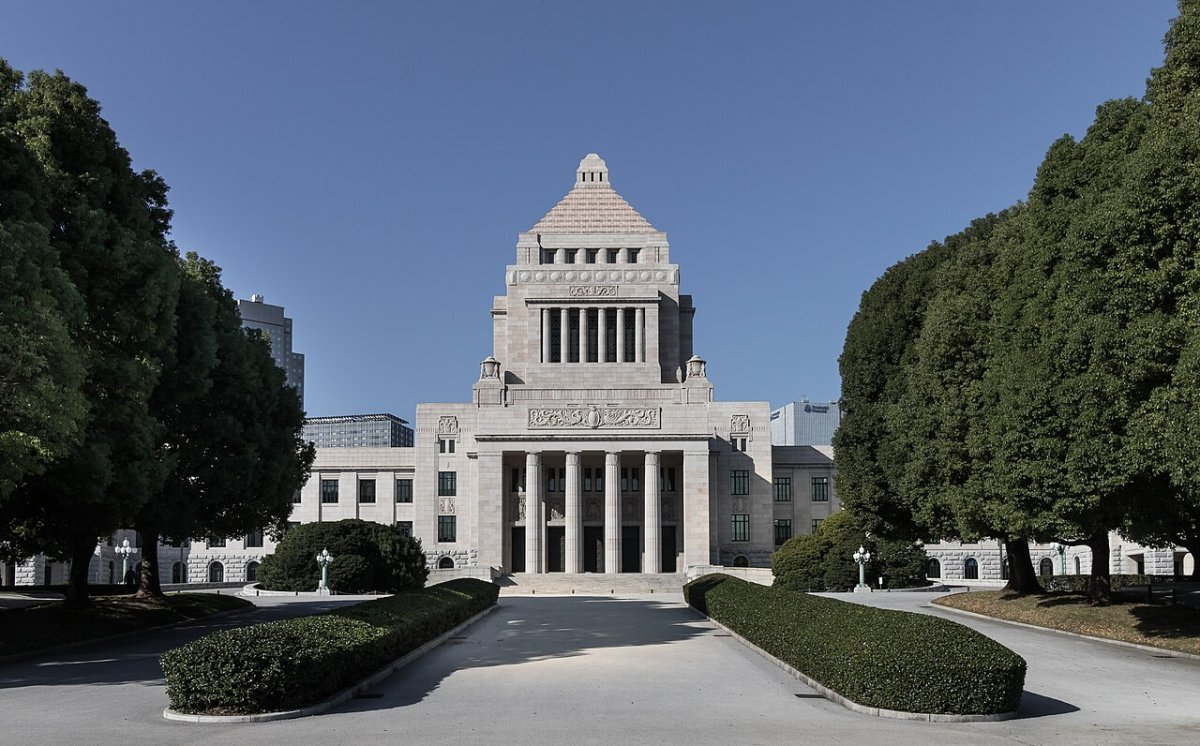
Illustrative photo: the Japanese parliament building in Tokyo's Chiyoda ward, home to both chambers. Photo: Kakidai / Wikimedia Commons, CC BY-SA 4.0