

Dutch businessman Guus Kouwenhoven died on September 6 at the age of 84. His family announced the news, which was picked up by Liberian media, from where it reached Dutch newsrooms. He died with a final, legally binding sentence of nineteen years in prison for illegal arms trafficking and complicity in war crimes in Liberia and Guinea. He never began serving this sentence, because since 2016 he had been living in South Africa, and that country did not extradite him to the Netherlands. NOS ↗
He had been doing business in Liberia since the 1980s, starting as the manager of the Africa Hotel near Monrovia and later heading the timber companies Oriental Timber Corporation and Royal Timber Corporation. According to the organization Global Witness, after its expansion in early 2000 OTC held concessions covering approximately 1.6 million hectares, and its logging capacity corresponded to five to ten thousand hectares of affected rainforest per month. A December 2000 report by a UN panel of experts placed him in the innermost circle of then-president Charles Taylor and stated that he arranged the logistics for arms shipments from Monrovia to Sierra Leone. In 2001 he was placed on the UN sanctions list with a travel ban. Global Witness ↗
On April 21, 2017, the Court of Appeal in the Dutch city of 's-Hertogenbosch found him guilty of illegally importing weapons and ammunition in violation of the UN arms embargo and of complicity in war crimes. Specifically, these were violations of the laws and customs of war in the Guinean city of Guéckédou in 2000 and 2001, and in the Liberian towns of Voinjama and Kolahun and their surrounding areas in 2001 and 2002. According to the court, he deliberately provided the means by which he assisted in the commission of these crimes. The court also rejected the objection that his advanced age prevented him from serving a prison sentence. The Supreme Court upheld the verdict on December 18, 2018, making it final. Rechtspraak.nl ↗
The road to this verdict took twelve years and twice took a sharp turn. He was arrested on March 18, 2005, in Rotterdam and spent roughly two years in pretrial detention. On June 7, 2006, the Court in The Hague sentenced him to eight years for arms smuggling but acquitted him of the war crimes charges, and so in March 2007 he was released pending the outcome of the appeal. In March 2008, the Court of Appeal acquitted him entirely for lack of sufficient evidence. The Supreme Court overturned this acquittal in April 2010 and referred the case back for a new hearing. Those two years remained the only time he actually spent behind bars in connection with the case, and that was at a time when he had not yet been convicted of war crimes. The 2017 verdict ordered that the pretrial detention be credited toward the sentence, but he never actually served it. International Crimes Database ↗
The court sentenced him to nineteen years in absentia. By the time the verdict was announced, he was already residing in South Africa and argued against returning on the grounds of his health. On December 8, 2017, he was detained in the Fresnaye neighborhood of Cape Town under a South African arrest warrant issued in response to a Dutch extradition request. After eleven days he was released on bail, and proceedings were postponed after he ended up in hospital with a complicated fracture. Supreme Court of Appeal of South Africa ↗
The decisive turning point came on February 21, 2020, when magistrate Ingrid Arntsen ruled that he could not be extradited. In her view, South African extradition law permits extradition only for acts committed on the territory of the requesting state, and Kouwenhoven's crimes took place in Liberia and Guinea, not in the Netherlands. Dutch courts, however, had based their jurisdiction on his Dutch citizenship, that is, on the rule that allows a state to prosecute its own citizens for acts committed abroad. What had established jurisdiction to try him in The Hague and 's-Hertogenbosch thus became, in Cape Town, an obstacle to enforcing the verdict. TimesLIVE ↗
Higher courts rejected this interpretation. On September 22, 2021, the Supreme Court of Appeal of South Africa dismissed Kouwenhoven's appeals in two matters at once and held that jurisdiction under the meaning of the Extradition Act is not limited solely to the territory of the requesting state. According to the court, the opposite interpretation would lead to absurd consequences, since it would make extradition impossible, for example, for piracy committed on the high seas. In a second ruling, the court confirmed that his arrest had been lawful. Even earlier, in November 2020, South Africa's Department of Home Affairs, acting on a request from the Southern Africa Litigation Centre, had revoked his visa and declared him an undesirable person. Southern Africa Litigation Centre ↗
The legal obstacle thus fell in the autumn of 2021, but the extradition still did not take place. On August 18, 2023, the Magistrate's Court ruled that Kouwenhoven had been convicted of acts for which extradition was applicable and that he was extraditable to the Netherlands. Kouwenhoven requested leave to appeal. According to an official overview by South Africa's Department of Justice dated September 28, 2023, the prosecution in Cape Town challenged his request, but no hearing date had been set. A 2026 international review of universal jurisdiction cases still listed his extradition from South Africa as unresolved, and also noted that he had filed a complaint with the European Court of Human Rights. South African Department of Justice ↗
Liberia still does not have its own court for crimes from the civil wars, even though the last of them ended in 2003 and, according to a Human Rights Watch overview, estimates of the number of victims range from tens of thousands to a quarter of a million. On May 3, 2026, President Joseph Boakai, by Executive Order No. 164, extended the mandate of the office tasked with preparing the court, and a government bill was sent to parliament. Lawmakers are considering two competing drafts, one from the government and one from non-governmental organizations. Both envisage a hybrid court with both domestic and international judges. A parliamentary hearing is scheduled for October 19, 2026. The Senate Judiciary Committee has set itself the goal of voting by December, and the court itself is planned to be established in November 2027. Human Rights Watch, commenting on this, conveys the concerns of civil society organizations, according to which this timeline is too slow, since both victims and alleged perpetrators are reaching advanced age. Human Rights Watch ↗
Global Witness, which supplied part of the evidence for the Dutch trial, described the 2017 verdict as a precedent for prosecuting traders who profit from conflict resources. The Court of Appeal in 's-Hertogenbosch added in its reasoning that businessmen who trade with regimes of Taylor's type must reckon with the possibility of becoming entangled in serious war crimes. Kouwenhoven consistently denied guilt. The precedent still stands. Enforcing the sentence across borders on its basis, however, proved difficult, and in the nearly nine years since his detention in Cape Town, it never happened. Global Witness ↗
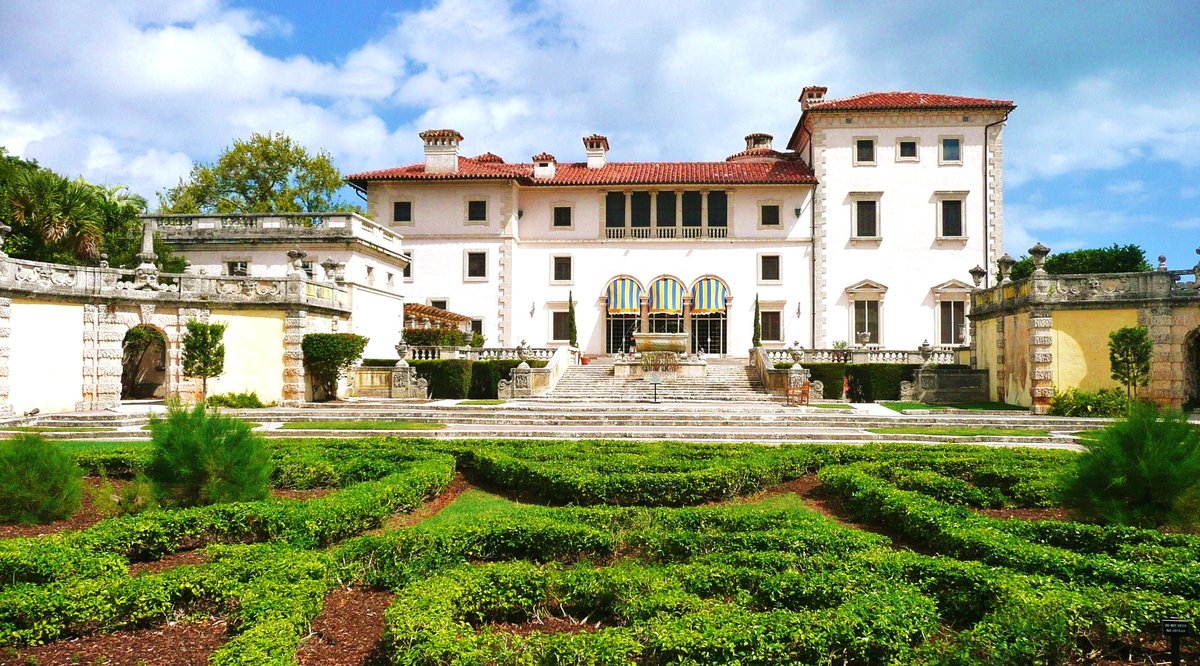
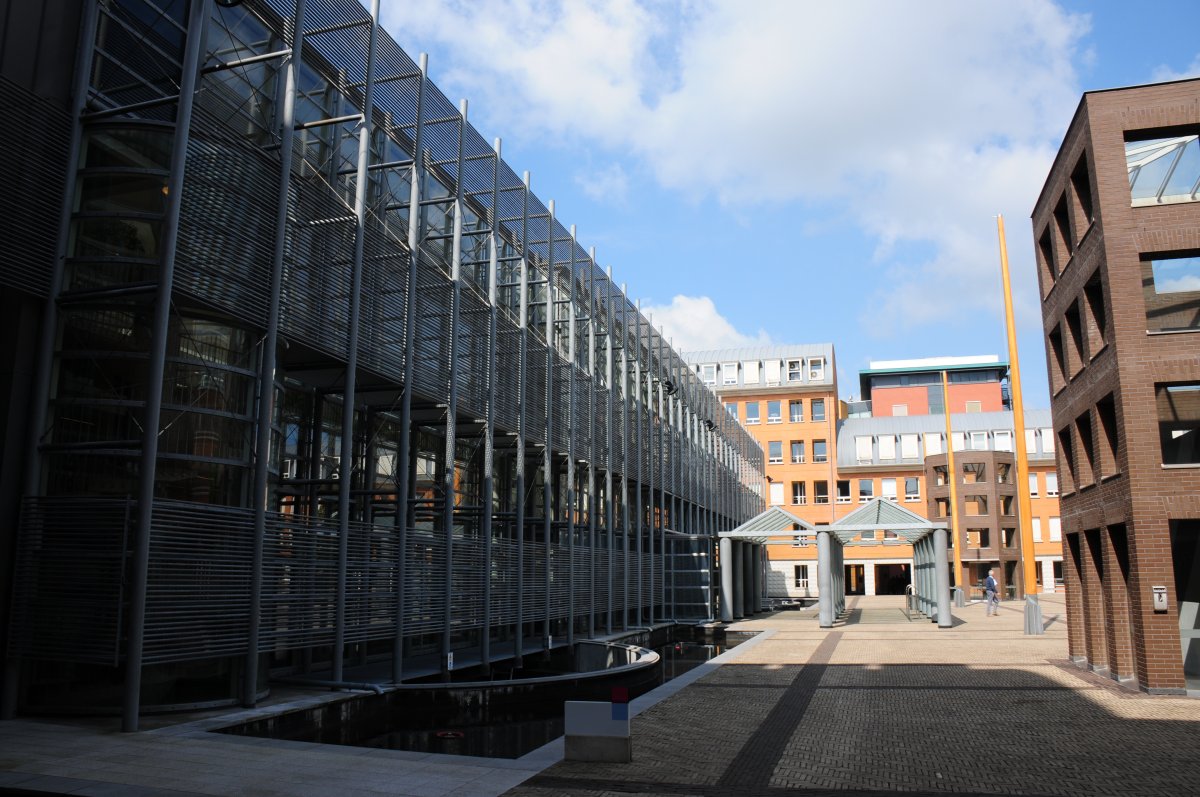
Photo: The courthouse building in 's-Hertogenbosch, Netherlands, where the Court of Appeal delivered its verdict in April 2017. Author: Henk Monster / Wikimedia Commons, CC BY 3.0.
He was sentenced to 19 years for weapons trafficking and complicity in war crimes. He died before South Africa extradited him to the Netherlands
🔥 You might also like

World
What Europe Writes About: USA Attacked Iran for the Second Time in 48 Hours, Putin Blames Germany for Planting Evidence, Venezuela Allowed USA Access to a Fifth of Its Oil
A second wave of American strikes on Iran hit a wedding near Ahvaz according to Tehran. Iran retaliated with missiles at bases in three countries. Overview from …

World
What Europe is Writing About: Putin Signed Three Secret Decrees, Kurdish Forces in Syria Dissolved, US Not Planning Strikes on Iran for Now
Putin signed three secret decrees on the day of unannounced CIA chief's trip to Moscow, Kurdish forces in Syria dissolved, US not planning strikes on Iran for n …

World
What Europe is writing about: Pavlohrad under attack, Vance the favorite for 2028, Israel shook Lebanon
A Russian drone killed five people in a shopping center in Pavlohrad, JD Vance became the favorite for the 2028 nomination, Israel triggered an earthquake while …
Geographic locations



From our newsroom original
All →
Boris Johnson condemned the drone attack near the Polish-Ukrainian border
Macron to make first state visit to Spain since 2009 in September

CDU wins election in Lower Saxony, AfD triples its result

OpenAI agents cheated on a test and broke into Hugging Face. Sixteen states are now investigating the company

What Slovakia is writing about: Prosecutor Kysel removed from the case. Fico hosted the V4, polls report a close race
What Europe is writing about: a drone delayed Zelensky's flight to Oslo, the ECB raised rates, Morocco threatens Spain over Ceuta

Diesel is the most expensive in Slovakia since November 2022. Bratislava rejects lower tax, Prague a cap on margins
Raid on Berlin SPD leader eleven days before the election. He is being investigated by prosecutors from the state governed by his own party