


Key actors — tap for context

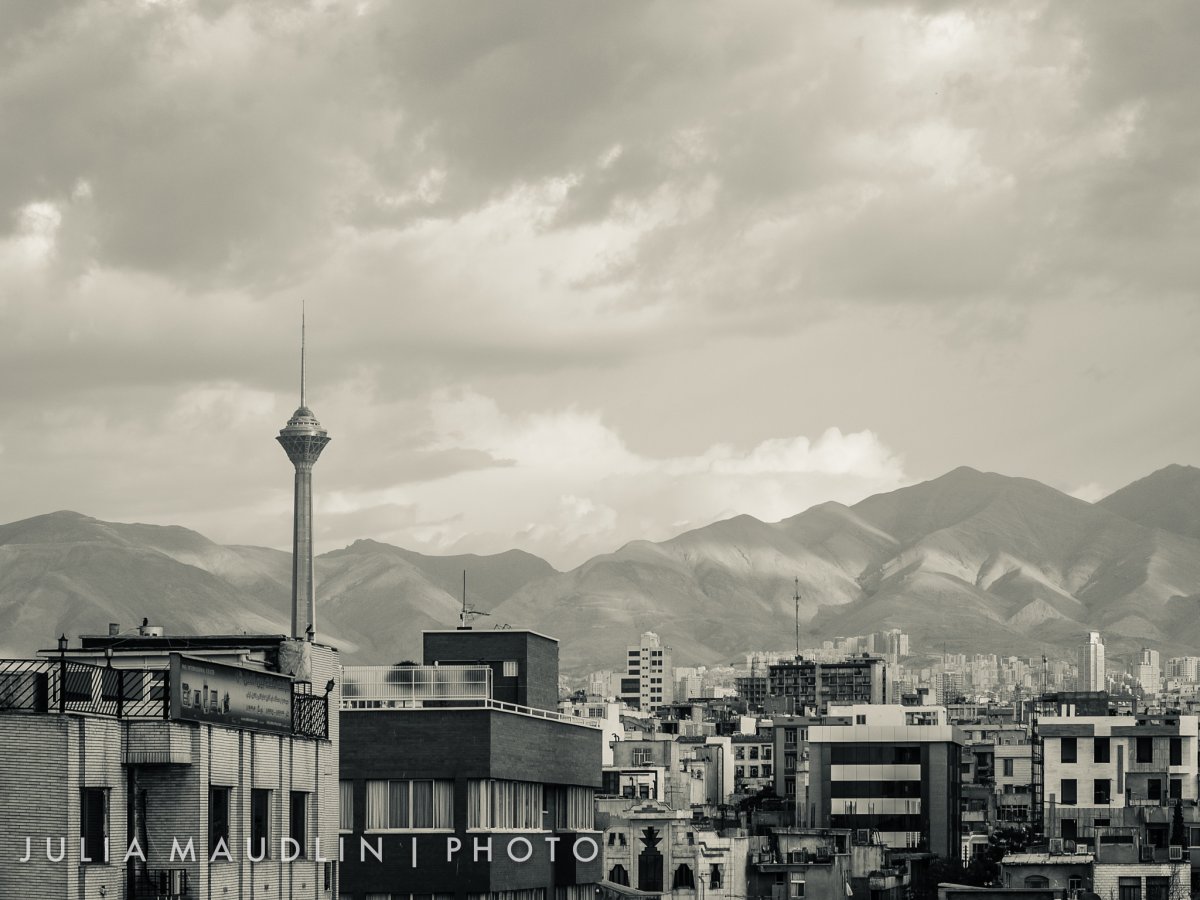
Strait of Hormuz
A strait between Iran and Oman through which about a fifth of the world's seaborne oil trade passes. Its narrowest point is about 33 kilometers.
Why here: Subject of both the June memorandum and today's exchange of strikes.
More info →
Masoud Pezeshkian
Iranian president, elected in 2024, considered part of the reformist wing.
Why here: Signatory of the Islamabad Memorandum, which was meant to end the war.
More info →
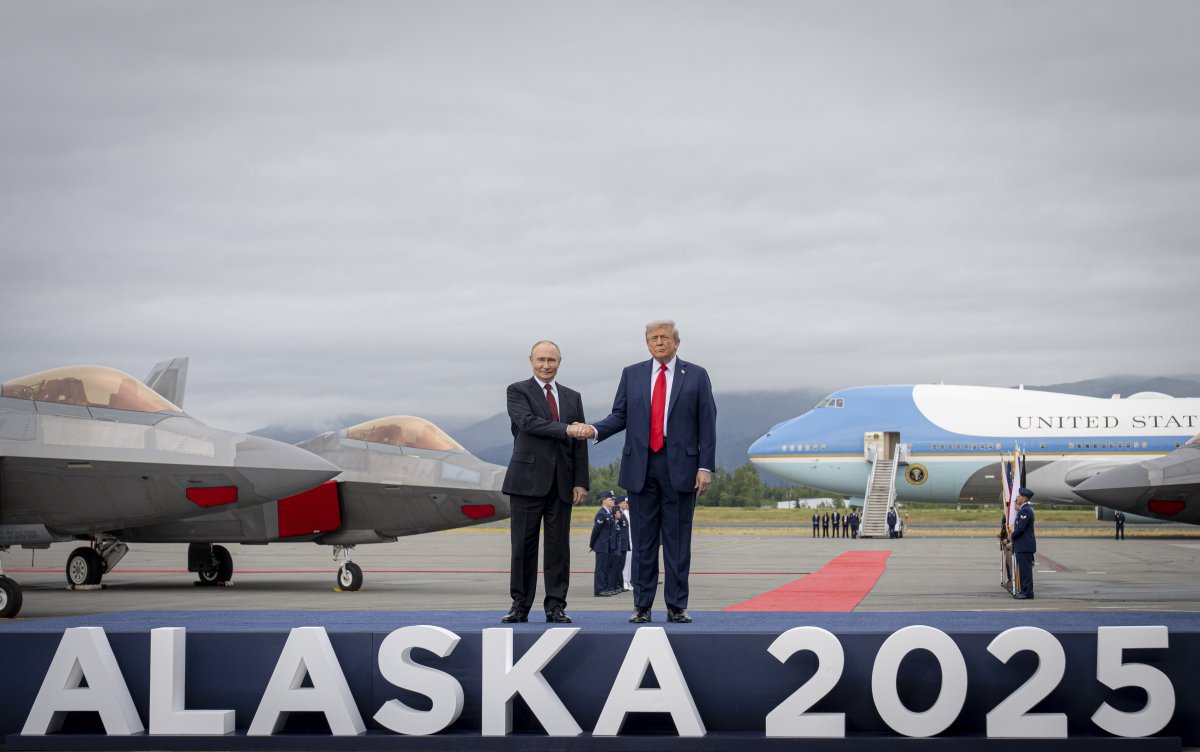
Donald Trump
US president.
Why here: Announced the memorandum as a "toll-free opening" of the strait; according to Fox News, he later threatened to bomb Oman.
More info →CENTCOM
The US armed forces' central command responsible for the Middle East and the Persian Gulf.
Why here: Announced a strike on three Iranian tankers in retaliation for missiles aimed at American ships.
More info →IRGC
Islamic Revolutionary Guard Corps, Iran's parallel armed force with its own navy.
Why here: According to CENTCOM, fired ballistic missiles at two American warships.
More info →
Gulf of Oman
A sea area between the Strait of Hormuz and the Arabian Sea.
Why here: The place where, according to CENTCOM, the destroyed tanker M/T Kylo ended up.
More info →
Brad Cooper
American admiral, commander of the US armed forces' Central Command since 2025.
Why here: Summed up the retaliation for the attack on American ships in a sentence that reads like a price list.
More info →
Oman
A sultanate in the southeastern Arabian Peninsula, a traditional mediator between Washington and Tehran.
Why here: Brokered the negotiations, and under the memorandum Iran is to settle the strait's future administration with it.
More info →What the Islamabad Memorandum actually says
The document, dated June 17, contains several points that need to be read literally. Point five states that Iran will ensure safe passage of commercial vessels from the Persian Gulf to the Sea of Oman "toll-free for only sixty days" and that it will hold a dialogue with Oman and other Gulf states on the strait's future administration. Point three gives the parties a maximum of sixty days to reach a final agreement, with the possibility of extension by mutual consent. Point four promises that the US will withdraw forces from the vicinity of Iran within thirty days of a final agreement. The American Presidency Project ↗Trump had already described the deal in May as "largely negotiated." The negotiations were brokered by Oman. CNBC ↗
Two different readings of the same paper
The gap between what Trump announced and what the text says is not a minor detail. The president spoke of a "toll-free opening" of the strait — that is, a state of affairs. The memorandum speaks of sixty days without a fee, after which there will be negotiations. According to an analysis by the Council on Foreign Relations, Iranian officials insisted that once the deadline passed, a transit fee would follow. Both sides thus signed the same document with two different ideas of what would apply at its end. Council on Foreign Relations ↗The nuclear issue is similar. The memorandum does not avoid it — point eight states that Iran will not acquire or develop nuclear weapons, and that stockpiles of enriched material will be resolved through a mechanism whose minimum is dilution on-site under the supervision of the International Atomic Energy Agency. Enrichment itself is to be "discussed on the basis of a satisfactory framework." Point nine then freezes the status quo: Iran will maintain the current state of its nuclear program, and the US will impose no new sanctions and deploy no additional forces. The American Presidency Project ↗
But this is not a resolution of the nuclear question, only its postponement to the final agreement. A Council on Foreign Relations analyst read it even more bluntly — in his view, the nuclear issue is not part of the deal at all, since Iran rejected both inspection guarantees and the export of highly enriched uranium, and does not recognize the IAEA as a neutral arbiter. The gap between the memorandum's text and its interpretation is itself telling. Council on Foreign Relations ↗
Why nothing came of it
The sixty days elapsed in mid-August, and no final agreement emerged. Both sides accused each other of violating the memorandum; Iran's foreign ministry claimed the US had violated it shortly after signing. During that period, according to Fox News correspondent Trey Yingst, Trump said that if Oman stood in the way, they would bomb it. He later did not confirm the direct question about the threat, saying only that Oman would be handled "very easily." This is the very country with which, under the memorandum, Iran was to settle the strait's future administration. CBS News ↗The dispute over who administers the strait and who collects fees there was thus not resolved by the memorandum. It was postponed — and to exactly the same deadline after which, according to Iran's interpretation, the fee question was supposed to open up.
Where things stand today
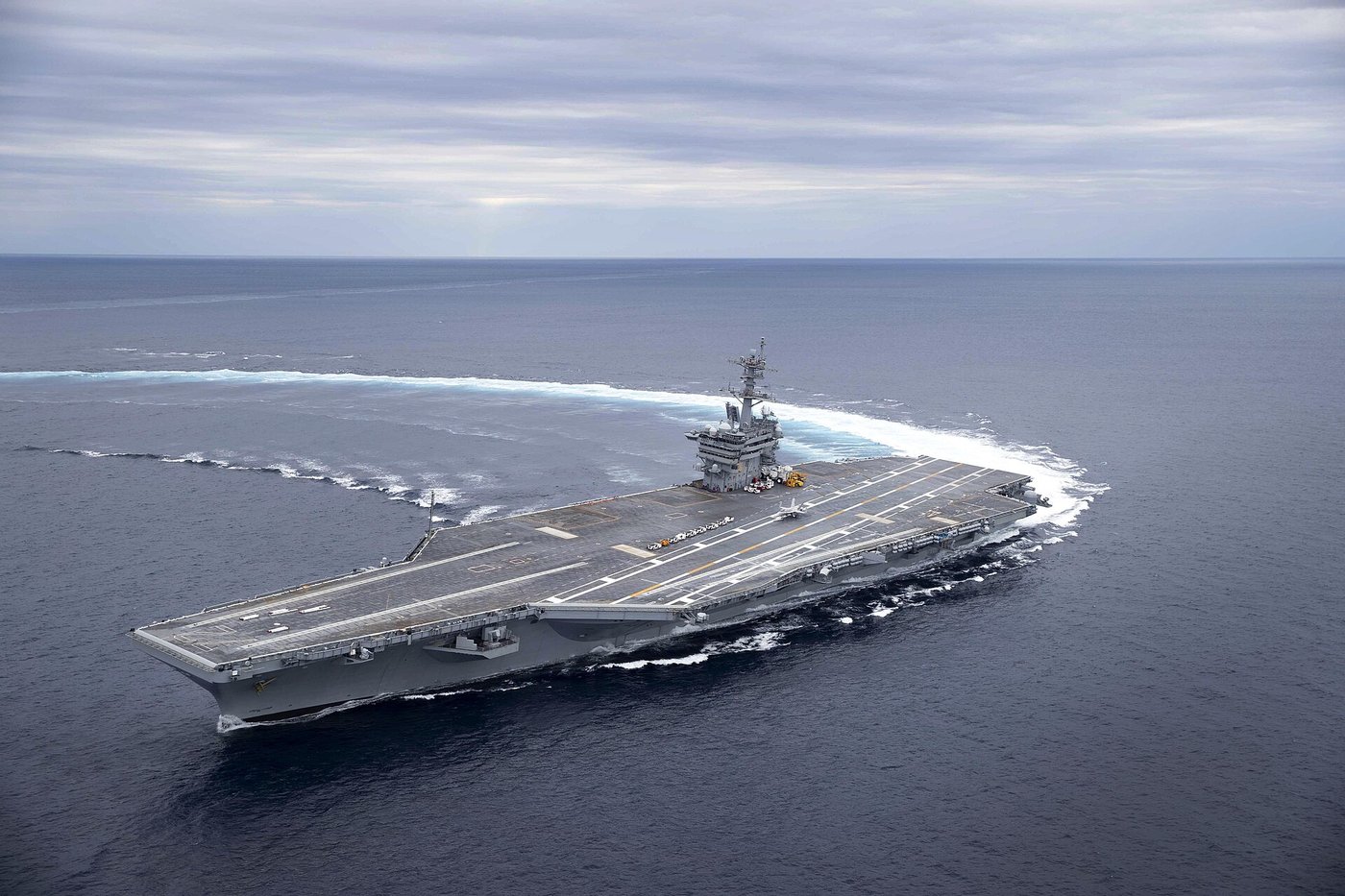
On September 5th, according to CENTCOM, the Revolutionary Guards fired ballistic missiles at two American warships. Neither was hit and no one was injured. The American command then announced that it had permanently disabled the tankers M/T Downy near Kharg Island and M/T Stark 1 near Jask, and completely destroyed M/T Kylo in the Gulf of Oman. CENTCOM commander Admiral Brad Cooper summed it up in a sentence that sounds more like a price list: if you fire on two of our ships, we'll impose a higher economic price and take three of yours. The Iranian side claims the opposite — that the targets were vessels sailing on an "unauthorized route" — and this has not been independently verified. CENTCOM ↗ CNBC ↗Traffic through the strait has fallen to its lowest level since May. After the mutual attacks between Iran and the United States, the number of ships dropped to roughly ten per day, and the Dutch NOS writes that traffic has "almost come to a halt again." Iran is simultaneously preparing a prohibited zone near the strait and is threatening a "more intense" response. Tehran also announced that the agreement on a new corridor is to be signed in the coming days — precisely the question the memorandum had postponed. Meanwhile, the American aircraft carrier USS Abraham Lincoln headed home after a five-day stopover in Thailand. (NRK ↗, Berlingske ↗, NOS ↗, Adevărul ↗, TRT Haber ↗, The Hill ↗)
American Navy SEALs secretly cleared the strait for four months. According to The Sun, they neutralized dozens of Iranian mines in a covert operation — meaning the agreement on a "toll-free opening" had a physical precondition that was never mentioned. Greece's Protothema picked up the report. (The Sun ↗, Protothema ↗)
The American military reports 94 detained merchant ships. That is how many it says it has inspected since reinstating the blockade of Iran; Kpler is meanwhile measuring a sharp drop in shipping traffic through the strait. (Ukrainska Pravda ↗, Naftemporiki ↗)
Iran threatens retaliation and raises gasoline prices at home. Tehran signaled to Washington that an attack on its property would be answered in kind, and raised fuel prices for its largest domestic consumers. Meanwhile, the Houthis moved on the Bab al-Mandab and attacked Saudi ARAMCO. (Kurir ↗, NBC News ↗, Le Figaro ↗)
Washington responded that the captured underwater drone was broken. The Revolutionary Guards announced on Tuesday that they had captured "at dawn" "one of the American military's most advanced underwater drones" — a machine that, according to Iranian media, is used for seabed reconnaissance, inspecting underwater cables and pipelines, mapping the seafloor, and for mine detection — precisely the work that, according to The Sun, Navy SEALs had been doing for four months. The American side, meanwhile, responded by claiming it was a non-functional unit. Independent confirmation of either version is not yet available. (BFM TV ↗, ANSA ↗, Digi24 ↗, G4Media ↗)
Latvia is sending up to 20 soldiers for mine clearance — and says how long it will take. The government approved participation by the National Armed Forces in both the American coalition and the British-French operation, running until September 1, 2028. It will send an underwater ordnance disposal unit with an autonomous mine-clearance system, staff officers, and instructors. The Ministry of Defense estimates that fully clearing the strait of mines will take 12 to 16 months, and it explicitly limits the scope of participation: "our soldiers will not take part in activities that would support the USA as a belligerent party in the conflict with Iran." (LSM ↗, Diena ↗)
South Korea is sending inspectors, Macron speaks of a "shared vision." Seoul sent a team to the United Arab Emirates to assess the security situation in the strait; it has not yet decided on deploying troops. The French president, on the same day, alongside the South Korean president, spoke near Hormuz of a "shared vision." (Politika ↗, BFM TV ↗, AD ↗)
Le Monde asked what threat the blockade of the strait still poses if nothing passes through it anyway — and the answer came from Kuwait. The emirate is exporting its oil onward via Hormuz, and its exports are recovering quickly despite the war, writes Poland's Rzeczpospolita. So the strait is not blocked, just more expensive and riskier. Federico Rampini writes in Corriere della Sera that Iran miscalculated and that time is no longer on its side. (Le Monde ↗, Corriere della Sera ↗, Rzeczpospolita ↗)
The American military reports the destruction of five Iranian tankers, Tehran retaliated with missiles on Jordan. According to CENTCOM, this was a response to attempted attacks on an American warship; the Iranian side names the Al-Azraq base as the target of its retaliation, and the Jordanian army reports that it destroyed eighteen of twenty missiles, with two landing in uninhabited areas. Explosions were also reported near Kharg oil island and near the port of Jask. The Revolutionary Guards threatened to strike tankers near Kuwaiti and Bahraini ports — that is, outside the strait itself. (NBC News ↗, BBC News ↗, Handelsblatt ↗, Het Laatste Nieuws ↗)
A second strait is on fire at the same time: the Houthis struck four Saudi cities and Riyadh shut down energy facilities. More than seventy people are injured and oil facilities are burning; Marco Rubio blamed Iran for the attacks, and the European Union called on the movement to stop all attacks. For the price of oil, this means the pressure is coming not only from Hormuz but also from Bab al-Mandab. (Ukrainska Pravda ↗, de Volkskrant ↗, 24 Chasa ↗)
Piracy is returning to the strait. Austria's ORF describes how the security vacuum created by wartime chaos is being filled by pirate groups — meaning the risk to shipping is no longer created by the two militaries alone. (ORF ↗)
Brent crossed one hundred dollars on Wednesday — for the first time since July. Tuesday's $99.46 thus lasted just one day. The European gas price simultaneously jumped to its highest level since the end of 2022. (Hospodárske noviny ↗, iROZHLAS ↗, CBS News ↗, Tagesspiegel ↗, NU.nl ↗)
Following the night's attacks, several ships are burning in the Gulf and multiple vessels have been put out of service. Iranian fire hit vessels in both the Persian Gulf and the Gulf of Oman; among those struck is a Greek-owned ship hit by a drone. The United States released video of the series of attacks on Iranian tankers. (BFM TV ↗, Politika ↗, Protothema ↗, CM Jornal ↗)
Risk has begun to be priced into ships. The value of twenty-year-old large tankers jumped by as much as ninety percent, according to Greece's Protothema — old vessels are now worth sending where no one would risk a new one. Naftemporiki writes that the uncertainty is holding back major investment decisions by Greek shipowners with a horizon to 2030. (Protothema ↗, Naftemporiki ↗)
Iran is bracing for protests at home. According to Poland's Rzeczpospolita, it has raised gasoline prices and mobilized security forces — meaning it is anticipating that the costs of the war will fall on its own population. (Rzeczpospolita ↗)
Also read: Financial Times says Russia is helping Iran with anti-ship missiles
Why this matters to Slovakia
Slovakia does not import oil via Hormuz, so there is no direct impact on supplies. On price, however, there is: after the August exchange of fire, Brent returned above ninety dollars a barrel, and in early September it topped ninety-four. Czech media are already openly writing about whether a price around one hundred dollars is becoming the new normal. Hospodárske noviny ↗ Hospodářské noviny ↗Brent broke above 97 dollars and is heading toward a hundred. American gasoline is at a holiday-season high because of the Iranian war — for a Slovak driver, this is the most tangible impact of a strait that lies five thousand kilometers away. (Protothema ↗, The Hill ↗)
Brent briefly rose to 99.46 dollars a barrel on Tuesday — and has not yet broken the hundred mark. This is a daily high, not a settled price; both Greece's Protothema and the Dutch De Telegraaf report that the market approached it after American strikes on Iranian tankers, and Wall Street fell that day. European gas, meanwhile, has been 138 percent more expensive since the war began in February, and La Tribune writes of a double squeeze of gas and carbon that could choke French industry. (eldiario.es ↗, La Tribune ↗, Protothema ↗, De Telegraaf ↗)
The difference from previous rounds lies in what has become the target. Whereas until now it was military targets and mines, now both sides are aiming directly at oil transport — that is, at the very thing that sets the price.
Limits of this analysis
The document we are drawing on is labeled as a draft on the American Presidency Project website, so it may not be the final signed version. Sources also disagree on exactly when it was signed — the text is dated June 17, while the Pakistani side spoke of an electronic signature a day later, and the exact end of the sixty-day period depends on that.The analysis we use for interpretation comes from the Council on Foreign Relations, an American think tank with its own perspective — and on the nuclear question it contradicts the text of the memorandum itself. We therefore present both. The numbers and fates of the affected vessels come from the parties to the conflict, who contradict each other, and independent third-party confirmation is not yet available.
This is the fifth and final update to this text. We will follow further developments around Hormuz in a separate article — the legend of waves above the text becomes unwieldy with too many entries, and the topic has since moved on from the original question about the sixty-day deadline to an open war over oil transport.
What hotinfo is monitoring
- The parties resumed talks on Hormuz, or formally ended them
- Iran imposed a transit fee for passage through the strait
- The nuclear question entered the talks, or Iran announced a further enrichment step
- CENTCOM or the Iranian guards struck further oil shippingNaplnené vlnou 4 (9.9.): CENTCOM hlási zničenie piatich iránskych tankerov po pokusoch o útok na americkú vojnovú loď; explózie aj pri ostrove Kharg a prístave Jask.
- The price of Brent crude passed one hundred dollars a barrelNaplnené vlnou 5 (9.9.2026): Brent prvýkrát od júla prekonal 100 dolárov za barel.
Illustrative photo: satellite image of Qeshm Island near the Strait of Hormuz. European Space Agency (ESA), Attribution license.