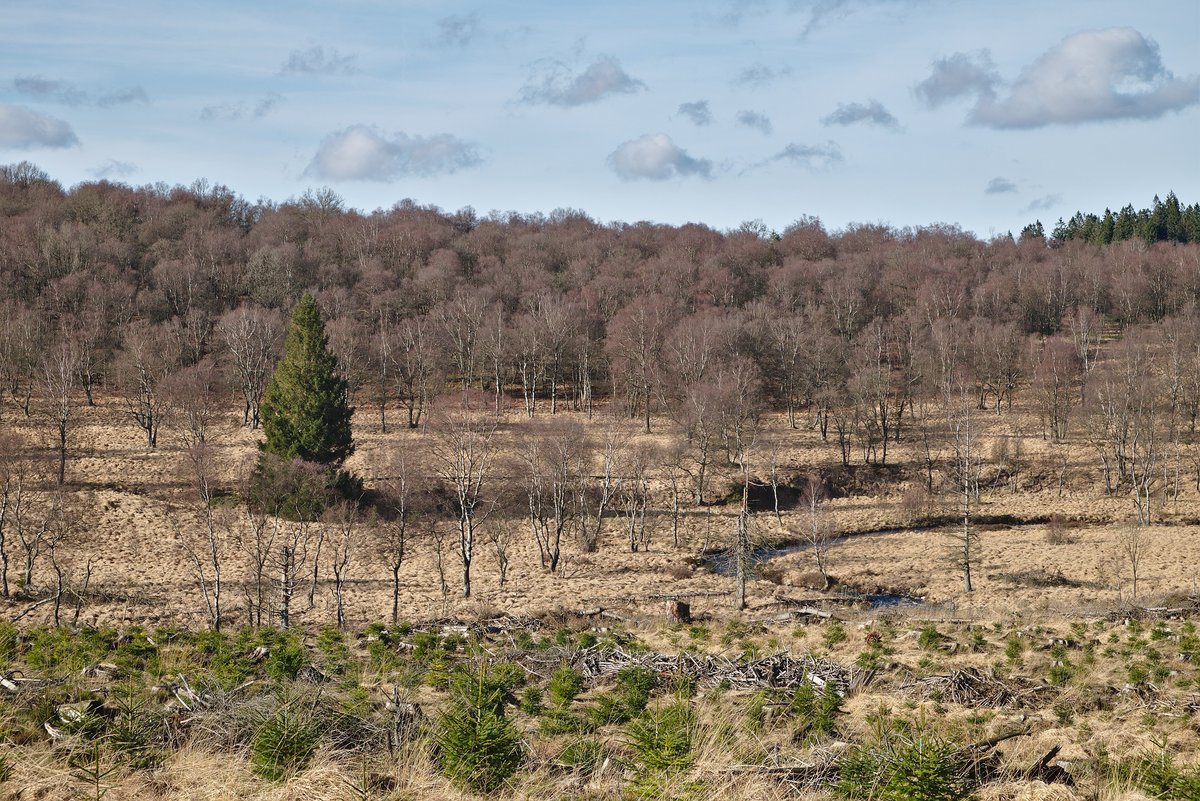


On Monday, one number made the difference tangible: according to VRT, the fire released 550,000 tons of CO2, and the Walloon minister says extinguishing it will take weeks longer. The same plateau, meanwhile, burned for months back in 1911.
Key actors — tap for context
Luc Burette
Belgian fire commander who described the response in Hohes Venn.
Why here: His line about peat under the grass is the only explanation of the mechanism that made it into Slovak reports too, but only halfway.
Nicolas Yernaux
Spokesman for the Walloon public administration (SPW).
Why here: He was the first to officially admit that it may take days to weeks before the fire can be declared extinguished.
Holger Sticht
Peatland expert from the German conservation organization BUND.
Why here: He named the cause others skipped over - the raised bog only burns when it is not intact.

BUND
German non-governmental nature and environmental organization, the German member of the Friends of the Earth network.
Why here: Its expert described the Hohes Venn bog as extensively drained.
More info →
Hohes Venn
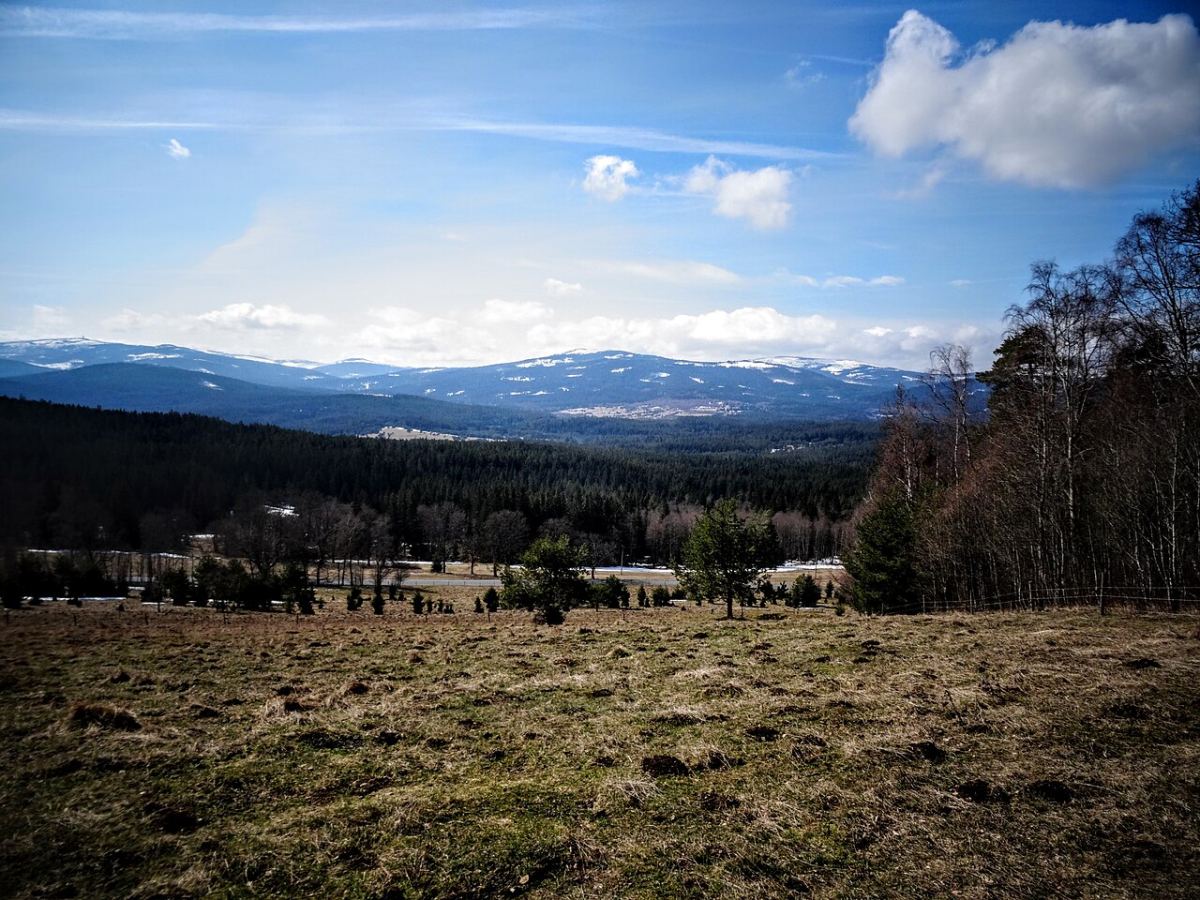
A peatland plateau on the Belgian-German border, containing the highest point in Belgium.
Why here: Site of the largest recorded forest fire in Belgium's history.
More info →
Monschau
A German town in the Eifel, just by the Belgian border.
Why here: On Sunday evening around thirty people were evacuated here, with flames three hundred metres from homes.
More info →
Liège
The capital of the Belgian province of the same name, in whose territory the fire is burning.
Why here: The local prosecutor's office is investigating how the fire started.
More info →
IUCN
The International Union for Conservation of Nature, based in Gland, Switzerland.
Why here: Its figures show why a peat bog is a different category of fire than a forest.
More info →
Suchá Hora
A village in the Upper Orava region in the Tvrdošín district.
Why here: Near it lies the Rudné peat bog, once the largest non-forest peat bog in Slovakia.
More info →The Fire Underfoot
- At night, the fire flared up again in several places, and a storm is complicating the firefighting. Belgian firefighters report a "very difficult night", while French and Dutch outlets write about repeated flare-ups that are being contained, although the flames are still not gone. BFM TV ↗Le Monde ↗
- Swiss NZZ sums up the situation in one sentence in its live coverage: "The fire in the High Fens is surrounded, the situation remains tense." NZZ ↗
- A report directly from the smouldering forest showed a new problem: falling trees. "Because of the wind and the burning ground, pine trees are falling," firefighters say - the root system burned beneath them, so the tree is standing on nothing. (De Standaard ↗)
- The fire is practically surrounded - but on Tuesday not a single firefighting aircraft took off. Fog and low cloud grounded aerial assets for the entire day, so firefighters dug out soil on the eastern side to box the fire in from the ground. According to the command, "there are no active flames anymore, only flare-ups". De Standaard ↗Het Laatste Nieuws ↗La Libre ↗
- "Our conclusions were dismissed as panic-mongering." Luc Bas, head of the Belgian climate centre CERAC, says they had warned about exactly this scenario in advance - and nobody took them seriously. De Morgen ↗
- After the Fagnes came fear for the Sonian Forest near Brussels - a forest within reach of the capital, where the same scenario could happen again. La Libre ↗
Belgian fire commander Luc Burette summed it up on Dutch television with a line picked up by agencies: "We are facing a problem here. The ground is peat, there is grass on the surface. That is why the fire can spread quickly." Die Presse ↗
Slovak media carried this quote, but stopped at the first half - at the speed of spread. TERAZ.sk ↗ The second half is more important. The peat layers in Hohes Venn reach several metres deep, and the hotspots are partly underground. That is why Walloon public administration spokesman Nicolas Yernaux warned that it may take days to weeks before the fire can be declared extinguished. The firefighting spokesman from German Monschau was more specific: "This will be an operation lasting weeks." taz ↗
The difference between "a forest is burning" and "a peat bog is burning" is fundamental. A forest fire goes out when you remove its fuel or drench it with water. Peat is compressed plant material that has decomposed over centuries - exactly the material people across Europe extracted and burned for centuries. It burns slowly and without flames, with limited but still necessary access to oxygen.
Why Water Is Not Enough
- The Canadair versus Chinook dispute also has a market dimension. De Standaard writes that the firefighting aircraft market is becoming a growing business thanks to warming - so the Belgian debate is a local version of European demand. De Standaard ↗
- How long such firefighting takes is shown by France: the fire in Var was declared extinguished after a month. Belgian media recalled it on the same day the peat bog was being put out at home. Het Laatste Nieuws ↗La Libre ↗
- Canadair or Chinook? After this fire, Belgium is arguing about what to fight it with - and the firefighting aircraft stationed in Limburg are meanwhile threatening to move elsewhere. La Tribune ↗7sur7 ↗
- "Seven climate ministers and barely one reaction." After a summer of heat and fires, Belgian media are noting that politics has little to say about it. Het Laatste Nieuws ↗
- Luxembourg read the fire as its own problem: "When Hohes Venn burns, it concerns us too." Luxemburger Wort ↗}
- {{upd2:The flames have consumed more than three thousand hectares. Portugal's RTP gives the first overall figure for the affected area. RTP ↗
- The eastern side is inaccessible to equipment: "Where we do not extinguish, it flares up again." Five hundred rescuers are therefore digging out soil and trying to surround the fire with a trench - exactly what water from above cannot do. De Standaard ↗De Morgen ↗
- The wind has shifted and eased Luxembourg's smoke problem, but the measures remain in force. Luxemburger Wort ↗Luxembourg Times ↗
- Luxembourg sent a firefighting robot to Saarland. Luxemburger Wort ↗
- Luxembourg Air Rescue had to refuse Belgium's request for help - and says openly that it regrets that. Luxembourg Times ↗
- The fire is now spreading only minimally, but it is still not under control. de Volkskrant ↗RTÉ ↗
- The smell of smoke can be detected as far away as Cologne. German media cite this as a measure of the scale - a distance of more than one hundred kilometres. Spiegel ↗Tagesschau ↗
- Firefighters want to "surround" the fire, Germany's public broadcaster reports after a day of fighting. ZDF heute ↗
- Drought is already changing events beyond the fire zone: after dry weeks, the Pukkelpop festival cancelled fireworks and introduced dust-control measures. De Standaard ↗
- Walloon minister Quintin says the firefighters' work will take "weeks" longer. Luxemburger Wort says the same thing - it will take weeks before the fire is extinguished. La Libre ↗Luxemburger Wort ↗
- On Tuesday morning the fire was no longer advancing, but it was still not under control and rain is being awaited. German media describe it as "unpredictable" because strong wind is coming in. 7sur7 ↗Süddeutsche Zeitung ↗Die Zeit ↗
- The same plateau had already burned for months in 1911. Belgian media found "striking similarities" between that fire and today's one - and noted that the fire from more than a century ago bypassed precisely the two bogs that are burning now. VRT NWS ↗La Libre ↗7sur7 ↗
Putting out a peat fire from above runs into physics. Dried peat repels water - instead of soaking in evenly, the water runs off through a few broad channels and the rest of the mass keeps smouldering. The top layer of soil also acts as insulation, so smouldering hotspots underground can survive even watering and, in extreme cases, even winter. Laboratory experiments show that deep peat can smoulder for weeks. ScienceDirect ↗ International Journal of Wildland Fire ↗
That explains why Belgium activated the European civil protection mechanism. Since 15 August, two Swedish firefighting aircraft and three helicopters have flown in for it, including two Dutch and one Czech. Seznam Zprávy ↗ Aerial assets can stop flames from advancing on the surface. They are short on what is smouldering a metre below.
Why There Is Something to Burn There At All
This is where the story turns. A healthy peat bog is a waterlogged sponge and basically cannot burn. Peatland expert Holger Sticht from BUND reminded WDR that a raised bog can burn only if it is not intact - and in his view the Hohes Venn bog was "extensively drained". Die Presse ↗Drainage therefore does not explain who or what ignited the fire. It explains why there is something there that can burn to such a depth. It is not intact wilderness that was merely dried out by summer, but a landscape that people drained decades ago so it could be used - and which, according to Die Presse, turned into a fuel layer several metres thick during the fifth heatwave of this summer in Europe. How the fire started is being investigated by the prosecutor's office in Liège. Kurier ↗
Carbon Stored for Millennia
- The fire released 550,000 tons of CO2, and replacing that by planting a new forest is practically unattainable, according to VRT. VRT NWS ↗
- The destruction of fauna and flora was described by conservationists as catastrophic: "We have to start again from zero." According to de Volkskrant, the iconic black grouse "may never return". De Morgen ↗de Volkskrant ↗
- The smoke brought dramatic concentrations of fine particles. "They are the most dangerous because they penetrate the lungs and the bloodstream," La Libre quotes an expert as saying. Air quality is improving in Belgium, but worsening in Luxembourg and France. De Morgen ↗La Libre ↗La Libre ↗}
That is why peat fires are not measured by area alone. According to the International Union for Conservation of Nature (IUCN), peat soils contain more than 600 gigatons of carbon, which is up to 44 percent of all soil carbon and more than all the vegetation on Earth, including forests, holds. Drained peat bogs are already estimated to emit 1.9 gigatons of CO2 equivalent per year, or five percent of global human-caused emissions. Yet they cover only 0.3 percent of land. IUCN ↗
Heather above the bog returns in years. The peat itself, once burned, builds up again over centuries.
What This Means for Slovakia
Slovakia has its own peat bogs, especially in Upper Orava, and one thing links them to the Belgian one. Before extraction began in the 1950s, the Rudné peat bog near Suchá Hora was the largest non-forest peat bog in Slovakia. According to conservationists, extraction and drainage significantly changed its water regime and destroyed most of the area. Zelené správy ↗So the question raised by the Belgian case is not whether something like this will burn here too. It is whether we know which of our protected areas sit on drained peat - and what we would do with such a fire.
Limits of This View
- {{upd5:Mobility and Climate Minister Jean-Luc Crucke is calling after the fire for better coordination among Belgium's seven climate ministers. This is exactly the problem described above - fragmented authority - now named from within politics rather than from outside. 7sur7 ↗
- "They warned us, but nothing was done." Belgian media are openly weighing the political consequences of the fire - the question has shifted from how to extinguish it to who knew and what was done about it. 7sur7 ↗
- This is the final update wave for this article. The fire has moved from the firefighting phase into the investigation and political-responsibility phase - further developments will therefore be handled in a separate text, not as additional highlights here.
- The difference between ignition and flammability has become a political issue. De Morgen asks where the political response is and reminds readers: "It is not climate change that sets the fire." Le Monde writes that the fire has sparked a debate in Belgium about the country's lack of preparedness for climate change. De Morgen ↗Le Monde ↗
- The Chamber convened an extraordinary meeting of the interior committee and the fire federation is calling for more resources and a fully fledged European firefighting fleet. VRT NWS ↗VRT NWS ↗
- Belgium's climate risk centre hopes the fire will be a "last wake-up call". The country already has 234 natural fires this year. VRT NWS ↗De Morgen ↗
Sticht explains the state of the bog and speaks about arson as his assumption, not as a finding. Who or what ignited the fire is being investigated by the prosecutor's office, and it has not been confirmed yet.
It is not publicly quantified what share of the three thousand hectares is actually peat bog and what share is heath or forest. The figure for the largest fire comes from the European Forest Fire Information System and from agency reports that cautiously describe it as the largest recorded or the largest in modern history. Older weekend reports spoke of the second largest - the fire has since grown.
And the comparison with Slovakia has its limits. Our peat bogs are smaller and more fragmented, so a three-thousand-hectare scenario is not a real threat here. The risk that a drained peat bog cannot be extinguished with conventional equipment is, however, the same regardless of size.
What Hotinfo Is Watching
- When Belgium declares the fire definitively extinguished and whether that confirms the "weeks" estimate.
- Whether prosecutors in Liège confirm human fault.
- Whether the final tally includes an estimate of emissions from the peat, not only the number of hectares.
- Whether the State Nature Protection agency or the fire service publishes which Slovak protected areas sit on drained peat.
- Whether, and how, the water regime on the Orava peat bogs can be restored.